
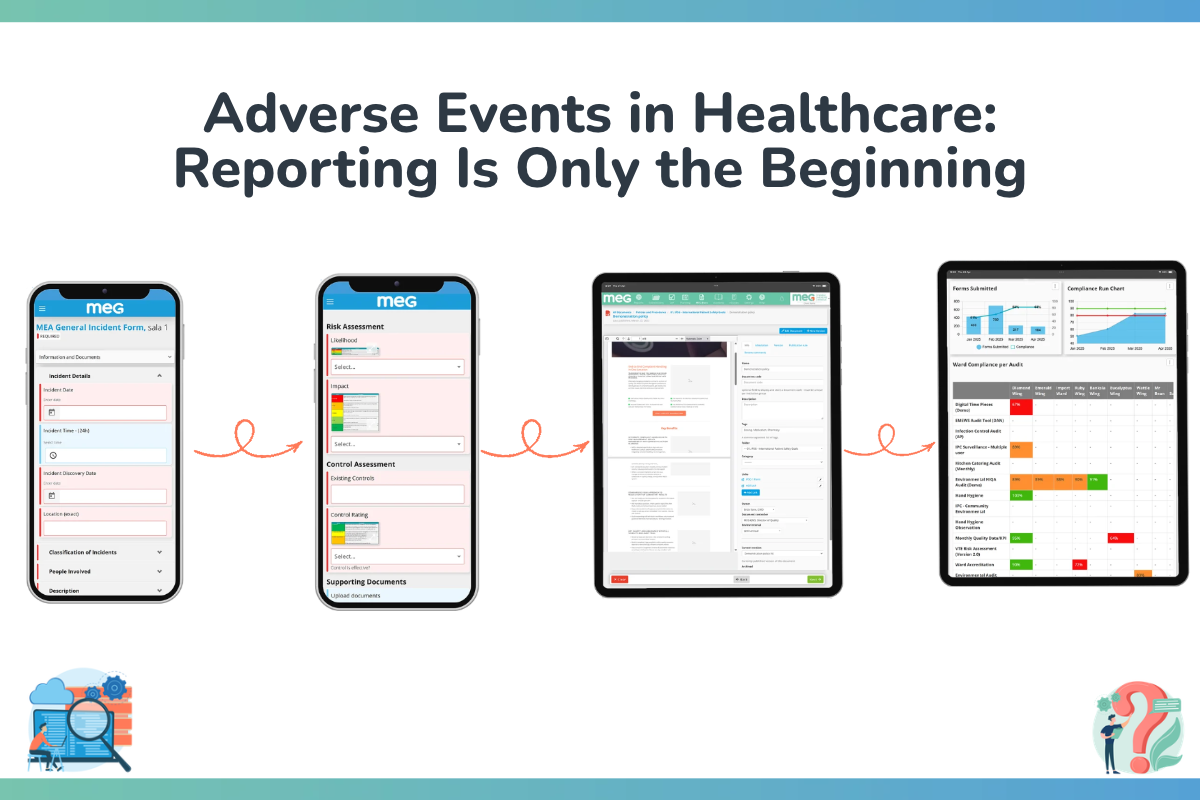
An adverse event is reported. The immediate concern is addressed. The appropriate people are notified. The event appears on a patient safety dashboard. What happens next determines how valuable that report becomes.
Terminology varies across healthcare systems. Depending on the region and reporting framework, organizations may refer to adverse events, patient safety incidents, clinical incidents or patient safety events. These terms are not always interchangeable, and their definitions and reporting requirements may differ. However, each forms part of the wider effort to identify and learn from risks to patient safety.
For healthcare organizations, the objective of event reporting should not simply be to build a record of what has gone wrong. Adverse events and near misses provide information about vulnerabilities within care delivery that can inform investigations, reveal emerging risks and ultimately prevent future harm.
The challenge is connecting those activities.
When event reporting, investigations, risks, actions, audits and policies exist in separate processes, important learning can become fragmented. A mature approach instead treats every report as the potential beginning of a wider improvement process.
This article looks at adverse events in healthcare through that lens: what they can tell an organization, why near misses deserve equal attention and how hospitals can turn event data into meaningful patient safety improvement.
An Adverse Event Is a Signal, Not Just a Classification
For healthcare quality and patient safety teams, classifying an event is only the starting point. An adverse event in healthcare generally refers to an event associated with care delivery that results in patient harm, rather than harm attributable solely to the patient's underlying condition. Examples include medication-related harm, patient falls, healthcare-associated infections and certain procedural or medical device complications. Healthcare incident reporting systems may also capture related safety concerns, including workplace violence affecting staff, although these are not necessarily classified as patient adverse events.
However, an event classification tells an organization what happened, not necessarily why it happened or what the findings mean for future patient safety.
Two apparently similar medication events, for example, could arise from entirely different contributing factors: storage arrangements, prescribing processes, medication reconciliation, labeling, communication or technology. Recording both under the same event category provides a useful starting point, but further investigation is needed to understand the circumstances behind each event.
The value of event reporting therefore depends on what happens beyond classification: examining contributing factors, identifying potential system weaknesses and determining whether additional safeguards or improvements are required.
Adverse Events and Near Misses Tell Different Parts of the Same Story
Not every patient safety incident results in harm, but the absence of harm does not necessarily mean the absence of risk.
According to the Agency for Healthcare Research and Quality (AHRQ), an adverse event involves patient harm caused by medical care rather than the patient's underlying condition. A near miss, also referred to as a close call, is an event that does not result in patient injury because of chance or a timely intervention.
A no-harm incident is commonly distinguished as an event that reaches the patient without causing discernible harm. However, classification frameworks differ, and AHRQ's near-miss definition can also include events where the patient was exposed to an error but escaped injury through good fortune.
Imagine a nurse preparing to administer medication when a barcode scanning alert identifies that the medication selected is incorrect. This is a near miss. The error is detected before administration. No patient was harmed.
It would be easy to consider the safety system successful and move on. But the more useful questions are: Why was the wrong medication available to select? Has this happened before? Could the same circumstances result in harm next time?
Near misses provide organizations with an opportunity to investigate weaknesses before those weaknesses contribute to an adverse outcome.
A Medication Near Miss Can Reveal a Much Bigger Risk
Consider a hospital where a nurse identifies that two medications with similar packaging have almost been confused during preparation. The discrepancy is caught during the medication check, before the wrong medication reaches the patient.
Viewed individually, the report may appear relatively minor. No patient was harmed. But suppose the hospital's event reporting system reveals three similar near misses across two nursing units over the previous six months.
Now the picture changes.
Reviewing these events may reveal that the medications are being stored in close proximity in certain clinical areas, despite existing procedures intended to reduce the risk of confusion between look-alike products.
The investigation might identify inconsistencies in how storage controls are applied, or highlight a medication pair that requires additional safeguards. Rather than simply reminding staff to take greater care, the organization can review the contributing factors with pharmacy and clinical teams, assess whether existing controls are adequate and assign appropriate improvement actions.
A targeted follow-up audit can then help establish whether the agreed changes have been implemented consistently across the affected areas.
What began as a near miss has revealed a potential system-level vulnerability. The next question is whether the organization can translate that finding into effective controls and demonstrate that those controls are being followed.
What Should Hospitals Look for in Event Reporting Data?
The most useful patient safety insight isn't always the event with the highest severity. Patterns matter. Several low-harm events involving the same process may reveal an emerging vulnerability that would be difficult to recognize from individual reports alone.
Patient safety teams need to examine event data across factors such as event type, location, severity, contributing factors and changes over time. Dashboards and reporting can help reveal recurring issues across departments or facilities, particularly where similar events have been reported by different teams.
However, a recurring pattern is a reason for further investigation, not proof of a shared underlying cause. Understanding whether events are connected requires examining the circumstances in which they occurred.
This is where event reporting becomes more valuable: it helps organizations identify where a wider patient safety investigation may be warranted.
Connecting Event Reporting and Risk Management
An incident investigation may reveal a risk that requires ongoing oversight long after the event itself has been reviewed. Equally, an incident may demonstrate that an existing risk has materialized or that the controls intended to manage it were insufficient
For significant patient safety events, Root Cause Analysis (RCA) provides a structured approach to examining how and why an event occurred, including the underlying system factors that contributed to it. As outlined by the AHRQ and The Joint Commission the purpose is not simply to identify causes, but to inform corrective actions that address the weaknesses uncovered. Not every event requires a formal RCA, but investigation findings can reveal risks that warrant ongoing oversight.
MEG's Incident Reporting & Risk Management solution supports this relationship by allowing information to be transferred between incident and risk records, reducing the need to re-enter details when a related record is created.
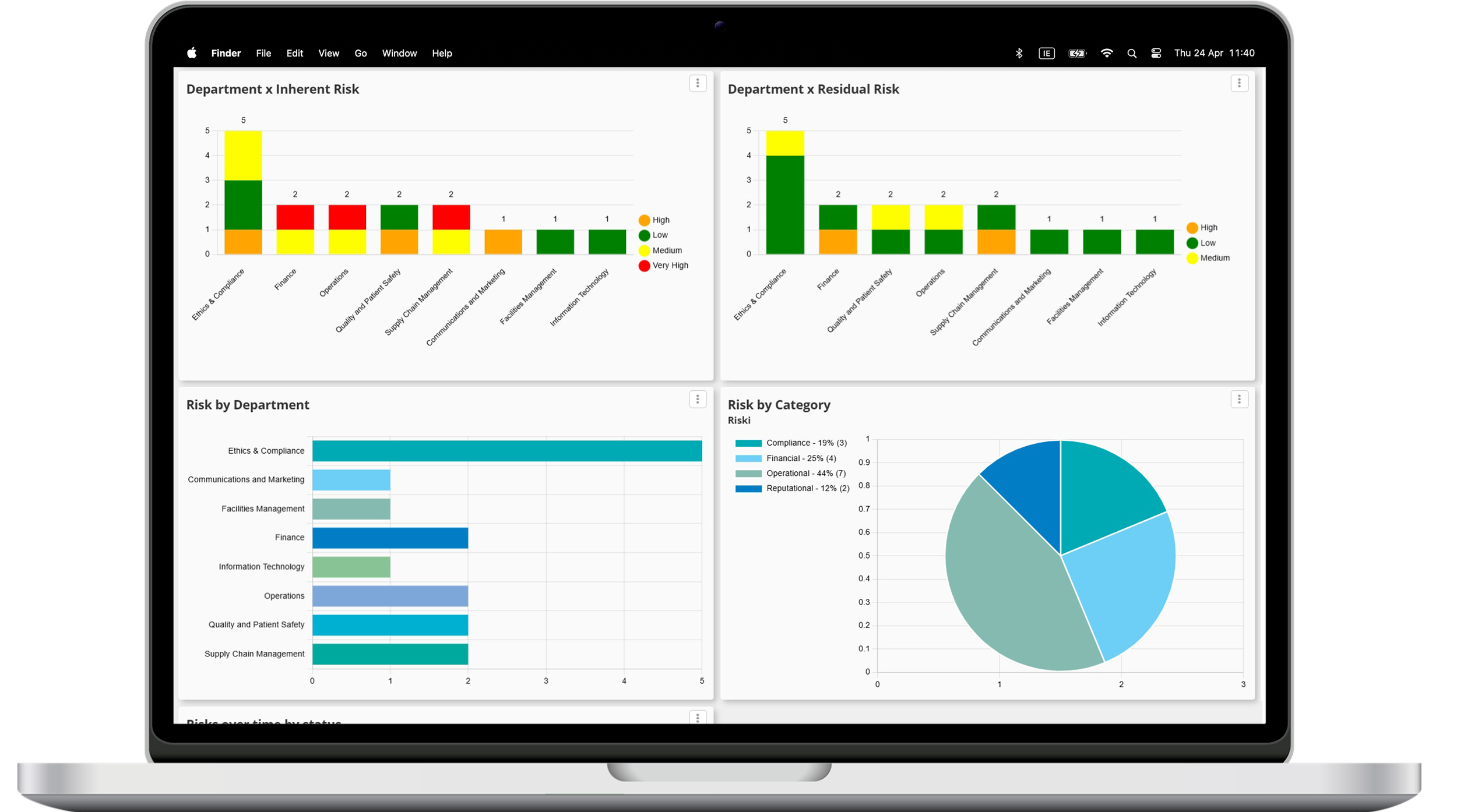
Where investigation findings warrant continued risk management, teams can assess the risk using a 5×5 impact and likelihood matrix, assign ownership and schedule periodic reviews.
This distinction matters. Incident investigations establish what happened and examine the contributing factors. Risk management provides a mechanism for assessing potential future harm, monitoring controls and reviewing whether the level of risk remains acceptable. Connecting the two helps organizations ensure that significant findings are not lost when an individual incident investigation is closed.
Adverse Events, Medical Malpractice Claims and Organizational Risk
The consequences of an adverse event can extend beyond the immediate clinical outcome. Depending on the circumstances, an event may lead to a patient complaint, a medical malpractice claim or regulatory scrutiny. However, an adverse event does not automatically establish negligence or legal liability.
For US healthcare organizations, malpractice claims can also provide valuable patient safety intelligence. As highlighted by the Agency for Healthcare Research and Quality (AHRQ), analyzing claims can help identify recurring system weaknesses and opportunities to improve patient safety.
While incident reporting and claims management serve different purposes and are subject to different legal and confidentiality requirements, insights from both can inform organizational risk assessments and help healthcare leaders identify where additional safeguards may be needed.
Event Reporting Should Connect to the Wider Quality System
Let’s return to the medication near-miss example discussed earlier. Once the organization has identified inconsistencies in how medication storage controls are applied, the next challenge is implementing and verifying improvements.
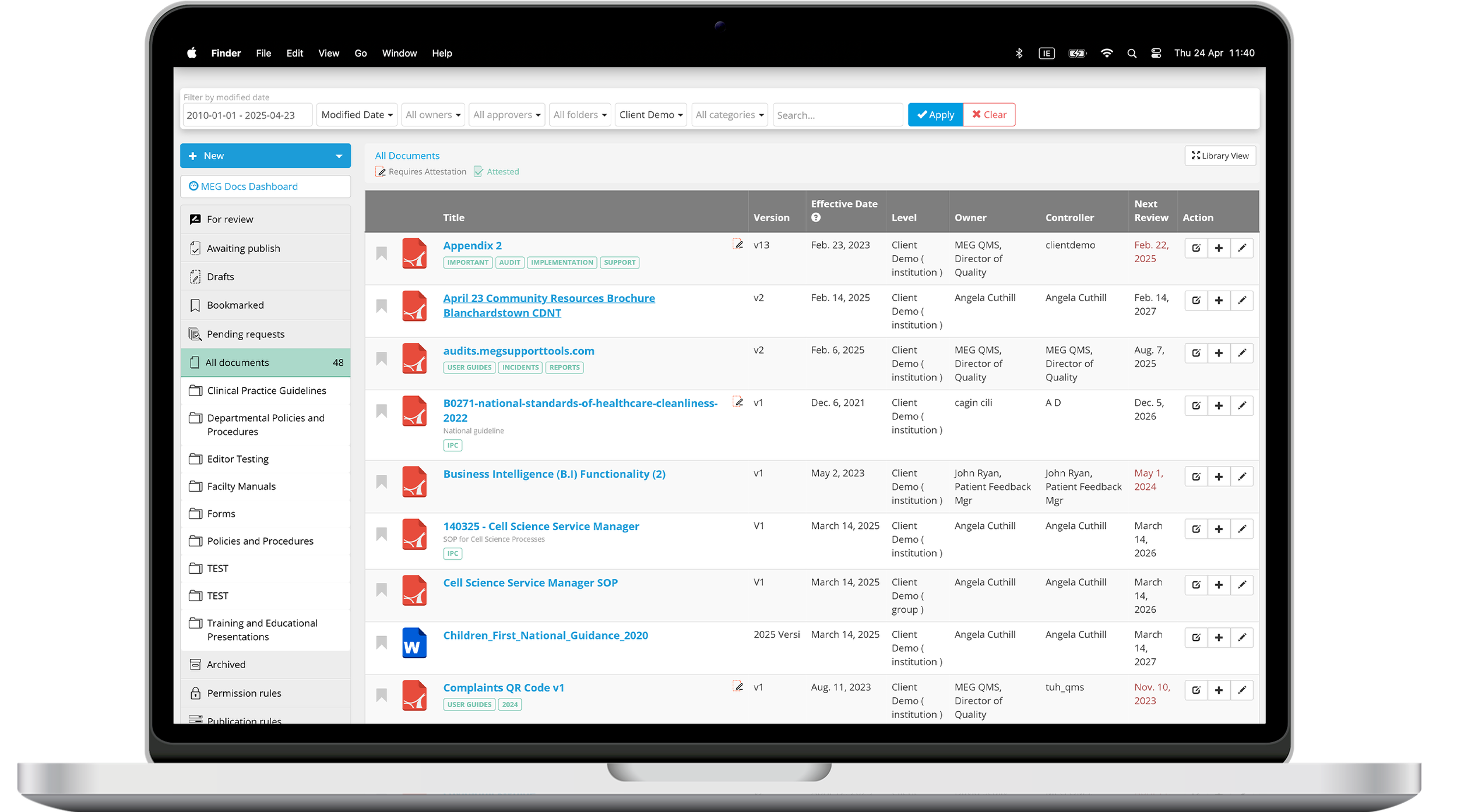
Through MEG an action plan can assign responsibility for reviewing storage arrangements, with progress and completion tracked against agreed deadlines. If the investigation identifies a need to revise local guidance, document management supports the review, approval and controlled publication of the updated policy.
A targeted audit can assess whether the agreed storage controls are being applied consistently across affected clinical areas.
For US hospitals, this approach also aligns with Quality Assessment and Performance Improvement (QAPI) requirements. Under the Centers for Medicare & Medicaid Services (CMS) Conditions of Participation, hospitals are required to measure, analyze and track quality indicators, including adverse patient events. QAPI also requires hospitals to examine the causes of medical errors and adverse events, implement preventive actions and evaluate whether improvements are sustained. Connecting event reporting with actions, audits and other quality processes can help organizations generate the evidence needed to support these activities.
These activities serve different purposes. Completing an action demonstrates that an intervention has been implemented. A follow-up audit provides evidence about whether the revised process is being followed. Further monitoring may be needed to establish whether the intervention is having the intended effect.
This is the value of connecting event reporting with the wider quality management system: organizations can follow a safety concern from its initial identification through to improvement actions and evidence of implementation, rather than treating the incident report as the endpoint
Conclusion
Adverse event reporting is most valuable when it helps healthcare organizations recognize risks that might otherwise remain hidden. Near misses can provide early warnings, recurring reports can highlight emerging patterns, and investigations can reveal where existing safeguards require further attention.
The challenge is not simply identifying these issues, but ensuring that findings lead to appropriate action and that the effectiveness of those actions is subsequently assessed.
Reporting an adverse event creates a record. Learning from it, acting on the findings and verifying improvement is what strengthens patient safety.