

proud to work with…








Incident Reporting and Risk Management Software for Healthcare
Record incidents in real-time, quickly and accurately.
Every patient safety incident represents an opportunity to improve care. However, many healthcare organisations still rely on paper forms, disconnected reporting systems or manual processes that make it difficult to investigate incidents, identify trends and ensure corrective actions are completed.
MEG provides healthcare incident reporting software that enables hospitals to efficiently capture and manage adverse events quickly, automate action plans, gain visibility of incident activity and risk event documentation across a single hospital or multiple sites.
Improve Patient Safety Through Better Incident Reporting

Every reported incident is an opportunity to improve patient safety. However, disconnected reporting systems, paper forms and inconsistent investigation processes make it difficult for healthcare organisations to identify trends and ensure improvements are implemented.
MEG's incident reporting software provides a structured approach to capturing incidents, managing investigations, assigning corrective actions and learning from every event. MEG provides structured workflows that help organisations:
Report incidents quickly
Standardise investigations
Capture supporting evidence
Perform root cause analysis
Assign corrective actions
Monitor implementation
Analyse trends
Demonstrate continuous improvement
Report Every Type of Healthcare Incident
MEG supports configurable reporting workflows for virtually every healthcare incident, allowing organisations to standardise reporting while remaining flexible enough to meet local governance requirements.
Common incident types include:
Patient safety incidents
Near misses
Adverse events
Medication errors
Falls
Clinical incidents
Violence and aggression
Occupational health and safety incidents
Security incidents
Every organisation can configure its own categories, forms, workflows and approval processes without software development.

go Mobile to help combat under-reporting of incidents
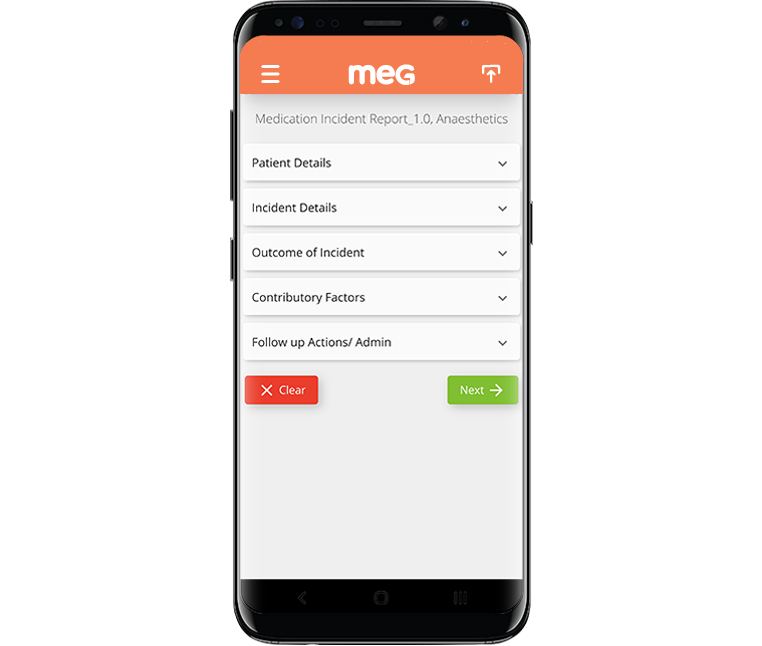
From falls to medication incidents, pressure ulcers to faulty equipment, carry out any investigation faster by removing inefficient manual reporting from the process
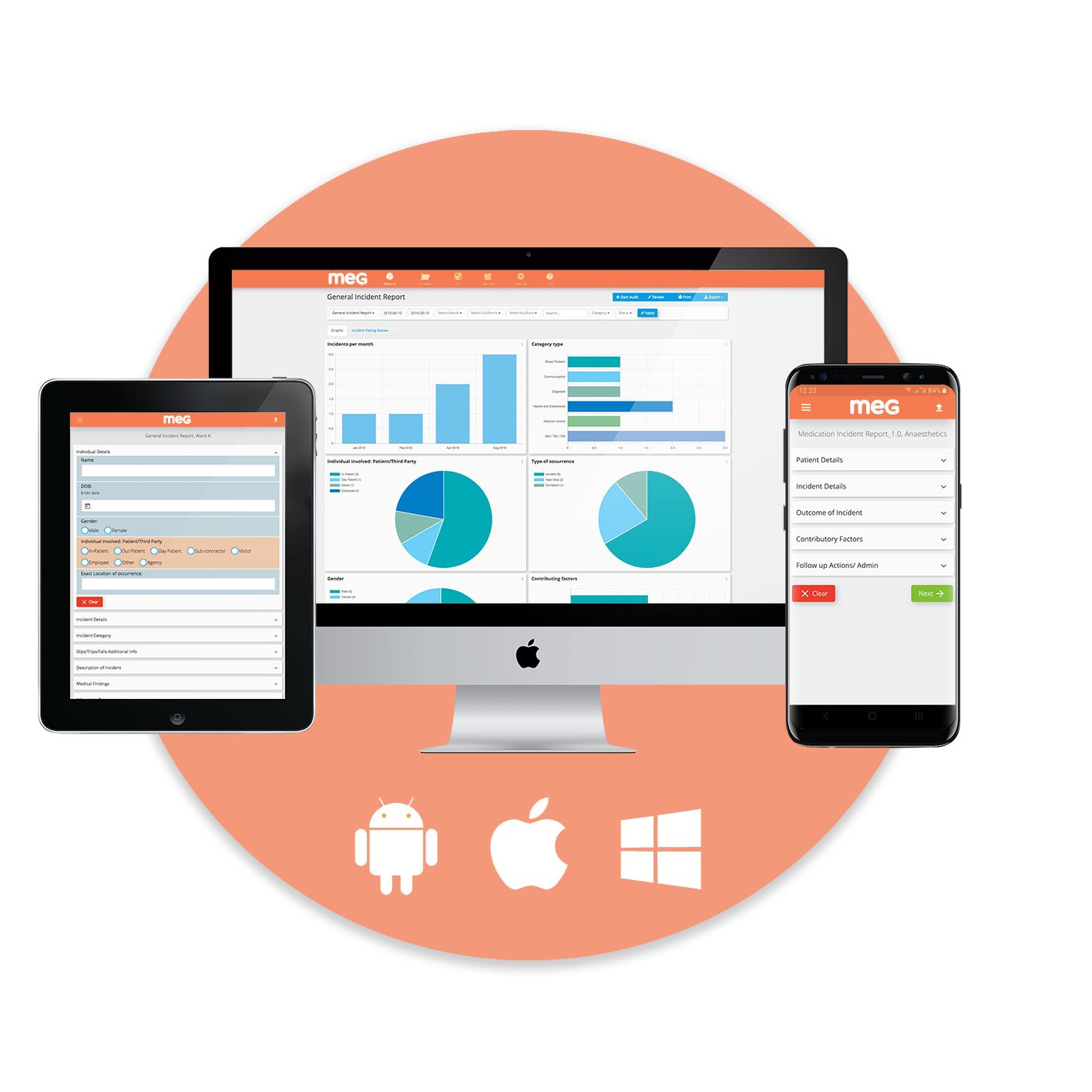
Use MEG’s robust mobile app to enable anyone to complete reports while on-the-go, quickly and accurately.
Report serious incidents immediately, when needed, to the relevant people.
Use online or offline; submit completed incident reports when connectivity has resumed.
gain assurance & visibility into incident reporting
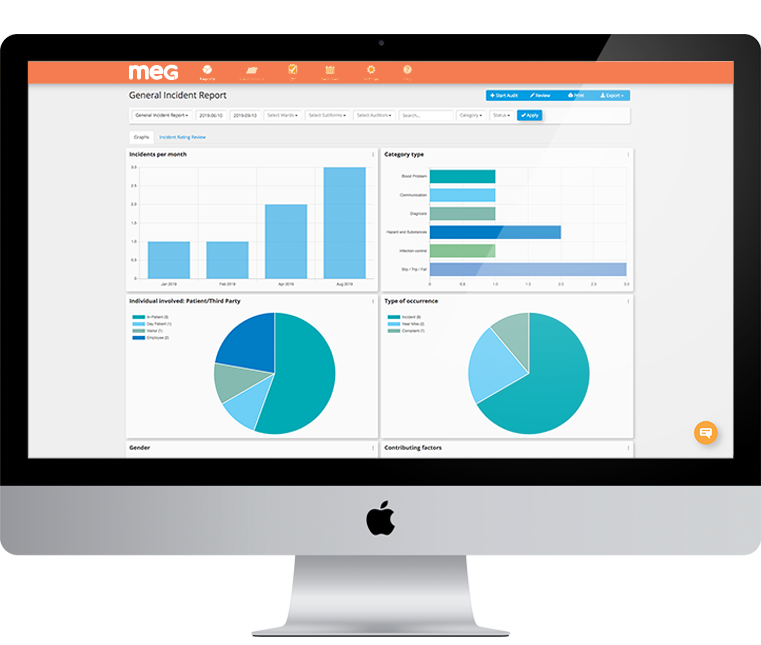
Understand what is happening at every stage of the incident reporting process, across departments or multiple hospital sites.
Configure workflows to capture incident information in a repeatable, standardised way.
Sort incident data by type, status, institution name, or a variety of other criteria.
Attach documents, test results, signatures and more; augment reports with supporting evidence to get a more complete picture.
improved staff engagement
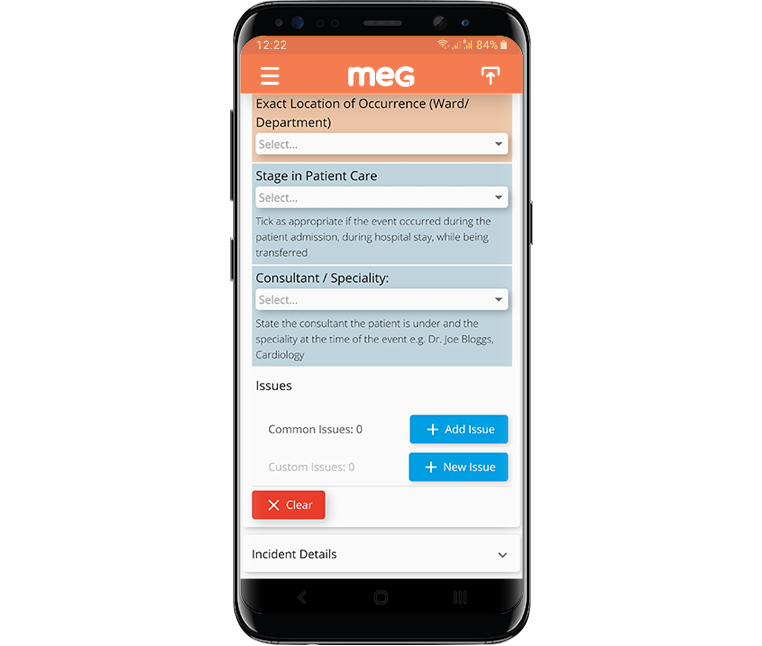
Mobile-friendly, with no tech barriers. Develop and scale a positive and proactive culture among staff, hospital-wide.
User-friendly, expandable forms encourage staff to capture the relevant details at any incident level.
Configure smart notifications (in-app or email) to let relevant personnel know when incidents are submitted, reported or at pre-determined key status changes.
Connected, for true quality improvement
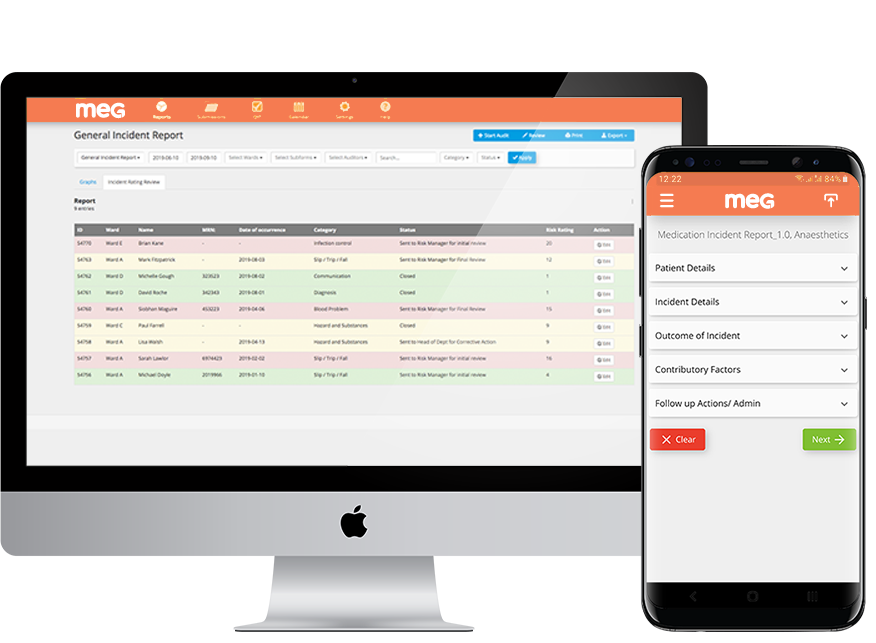
Take practical action following an incident by connecting to other MEG tools including the audit module and actions plans.
Easily interact with reference material, SOPs and guidelines using MEG’s Policy Management module integration.
Allocate and track follow-up actions to staff in reaction to an incident using MEG’s QIP (Quality Improvement Plan) tool.
Check whether Policies or Risk Assessments need revising following an incident by connecting to MEG’s Document Management module.
Incident Reporting Case Study
This case study highlights how a prominent private hospital, managed by our UK/Ireland team, tackled challenges with its outdated incident reporting system. The hospital streamlined its process by implementing MEG's Incident Reporting Module, achieving significant improvements and seamless integration.
KEY Features


Book a demo today with one of our product specialists
Frequently Asked Questions
-
Incident reporting software enables healthcare organisations to report, investigate and manage patient safety incidents, near misses and adverse events.
-
Hospitals use incident reporting systems to improve patient safety, identify trends, investigate incidents consistently, reduce organisational risk and meet governance and accreditation requirements.
-
Healthcare organisations typically report patient safety incidents, medication errors, falls, pressure injuries, near misses, equipment failures, infection control incidents, and workplace safety events.
-
Incident reporting helps organisations identify risks, investigate underlying causes, implement corrective actions and prevent similar incidents from occurring in the future.
-
Incident reporting focuses on recording and investigating events that have occurred, while risk management identifies, assesses and mitigates potential risks before they result in harm. Together, they form a key part of an organisation's governance and patient safety strategy.
-
Yes, it provides comprehensive evidence of investigations, corrective actions and continuous improvement, supporting accreditation programmes such as JCI and national healthcare quality standards.
-
Healthcare organisations should look for configurable reporting forms, mobile access, investigation management, corrective action tracking, dashboards, analytics, audit trails and integration with broader quality management processes.