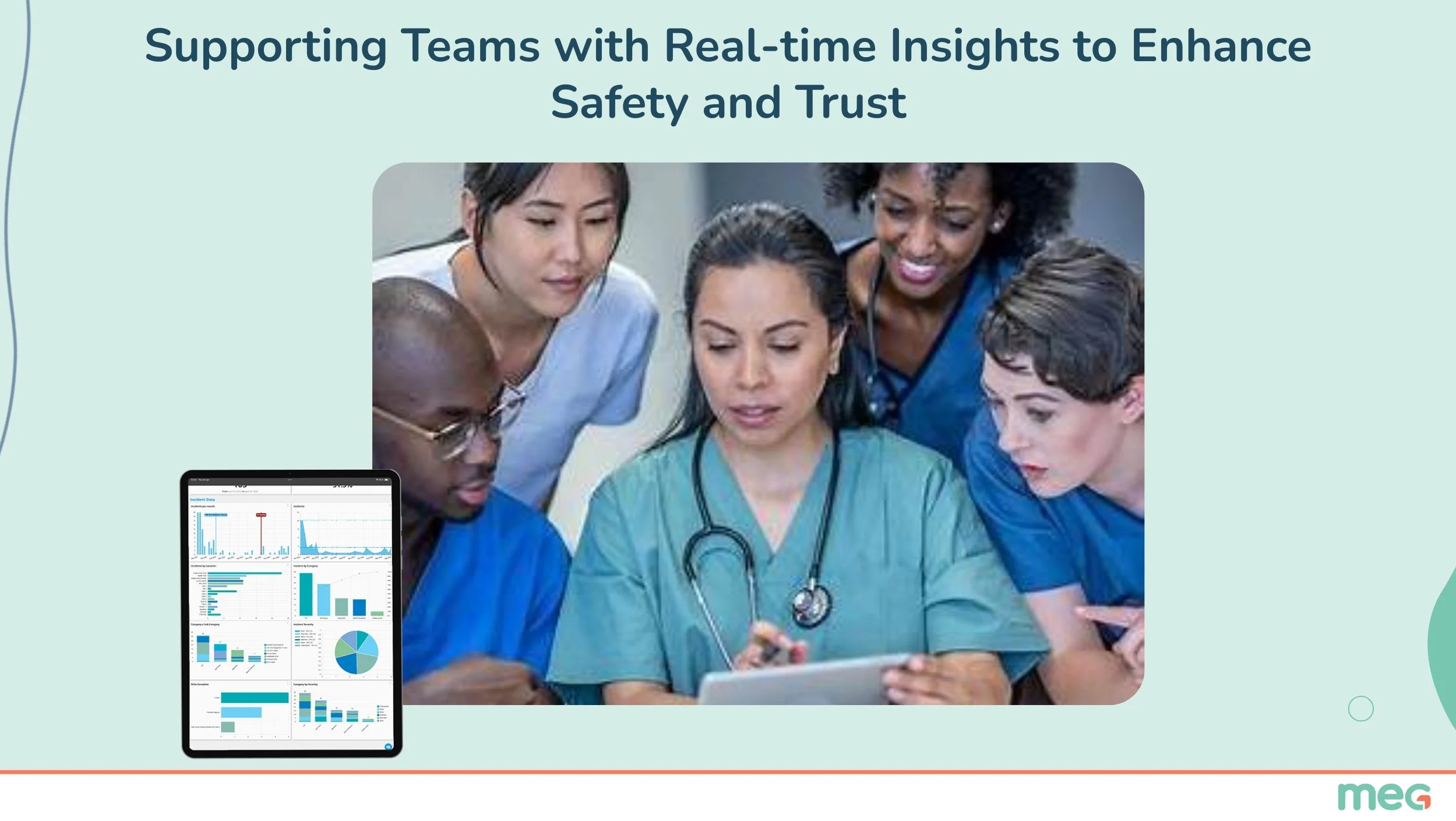
How MEG Strengthens Risk Oversight & Patient Safety in Every Role

From Governance to Frontline, One Connected View

Healthcare leaders share a common mission: reduce patient harm, meet regulatory requirements, and strengthen safety culture.

Yet risk oversight is often slowed by scattered systems, under-reporting, and delays in acting on insights. The result? missed risks, reactive inspections, and staff disengagement.

MEG’s Connected Quality & Safety Platform changes this. It gives every role,  from board to bedside a single, trusted view of quality and safety: issues are surfaced earlier, actions are tracked to closure, and inspection-readiness becomes the everyday state.

Executives & Directors

Lead with confidence and evidence

Board and executive leaders are accountable for safety culture, regulatory readiness, and organisational reputation. MEG equips them with real-time oversight and defensible data:

  • Inspection-ready, always: With MEG, one provider reduced inspection prep time by 70+%. Instead of weeks spent compiling spreadsheets, leaders had a single dashboard with defensible records, ready for regulators.

  • Governance underpinned by data: Track organisation-wide safety performance in real time, with evidence to show how issues were resolved.

  • Reduce liability and reputational risk: Early warning dashboards flag patterns before they escalate.

  • Defensible accountability: Every corrective action is tracked to closure with a timestamped audit trail, critical in litigation or board review.

“Since adopting MEG, we have experienced a significant improvement in our quality management practices. In a single platform, NSFT now has centralised all quality-related information, including clinical audits, pharmacy, and risks, saving us countless hours”.
— Tracey Holland, Chief Nursing Information Officer (CNIO) and Associate Director of Quality

Senior Managers

Eliminate delays in incident response and risk investigation

Operational leaders are measured by how quickly risks are addressed and closed. MEG gives them the tools to stay ahead:

  • Audits are completed 60% faster, allowing risks to be fixed before they escalate.

  • Action closure rates improved by 70% in one MEG pilot site, thanks to automated reminders, escalation workflows, and RAG flagging.

  • Every incident is traceable: From assignment to resolution, MEG provides a timestamped audit trail that strengthens legal defensibility.

  • Cross-department visibility: Share real-time compliance status without chasing data or email chains.

“Since adopting MEG’s software, we’ve seen clear improvements in compliance and risk management. Faster, more transparent audits mean risks are identified and resolved earlier, reducing escalation.

Staff feel empowered by the system’s clarity and support, while patients benefit from the assurance of safer, higher-standard care.”
— Louise Talisen, Deputy Director of Nursing for Quality & Accreditation within the Chief Nurse’s Office

Consultants & Advisors

Deliver measurable safety improvements, fast.

Consultants and advisors need to show results quickly. MEG is built for speed and flexibility:

  • Deploy in days, not months: no complex EHR integration required.

  • Tailor workflows to each client’s risk profile, local regulatory or accreditation needs, and cultural context.

  • Provide boards with a complete, current view of organisational risk, driving informed decisions.

  • In one acute hospital, MEG’s rollout drove a 300% increase in medication error reporting - not more harm, but more visibility of hidden risks. This enabled earlier interventions and strengthened safety culture.

“...MEG was chosen for its advanced reporting capabilities, organisation-wide dashboard view, ability to monitor compliance at every level, and real-time results, highlighting areas of potential risk.”

Benefits for All Roles

  • Accessible anywhere: Easy to use and available on any device, even offline.

  • All data, one view: Incidents, audits, risk registers, policies, training/credentialing, and patient experience & feedback are connected for a single source of truth.

  • Proven globally: Trusted in 25+ countries across diverse care settings.

  • Enterprise-grade assurance: HIPAA, GDPR, SOC 2 Type II, ISO 27001 compliance.

Your Next Step

Every leader wants confidence that risks are surfaced early, actions are traceable, and governance is defensible.

See how MEG brings all your risk, compliance, and safety data into one connected view. Request a tailored demo to explore how the platform supports executives, managers, and frontline staff in strengthening oversight and accountability.
Top 3 Innovations Shaping Patient Safety in 2025

Accelerating safety with clear focus, responsibility, and prompt action.

Healthcare leaders understand that technology alone doesn’t make systems safer. What really counts is how innovations are used to provide staff with clarity, reinforce responsibility, and enable swifter responses. Here are three areas where providers are already experiencing measurable improvements.

1. Digitised Global Trigger Tool (GTT) Reviews

From paper delays to real-time learning

The Global Trigger Tool (GTT), developed by the Institute for Healthcare Improvement (IHI), uses “triggers” - cues in patient records such as lab results, medications, or readmissions - to flag potential adverse events that might otherwise go unnoticed. Traditionally, GTT reviews have been manual and paper-based, taking weeks or months to complete.

A 2019 study in the International Journal for Quality in Health Care found that reviewing 1,000 records with the original manual GTT took 411 hours. With a digital approach, the same review required just 23 hours; that’s a 95% reduction in time (1). That’s the difference between waiting months for insight and having actionable findings in days.

➡️ How MEG helps:

  • MEG’s Digital GTT module uses AI-powered trigger detection (via Gemini) to scan records and categorise potential adverse events in seconds.

  • Quickly consolidates data from your EHR or other patient systems, even through a simple Excel upload, so leaders can access insights without waiting months for complex integration projects.

  • Supports customisable trigger lists, so hospitals can tailor reviews to their services (e.g. obstetrics, oncology) 

  • Provides live dashboards and action-tracking, giving leaders immediate visibility of themes and responses.

💡 Leadership lever: Faster, more consistent reviews free up hundreds of hours of clinical time and bring potential harm signals to safety committees while action can still be taken, strengthening governance and continuous improvement.

2. Keep Safety Actions on Track Automatically

From static logs to proactive prevention

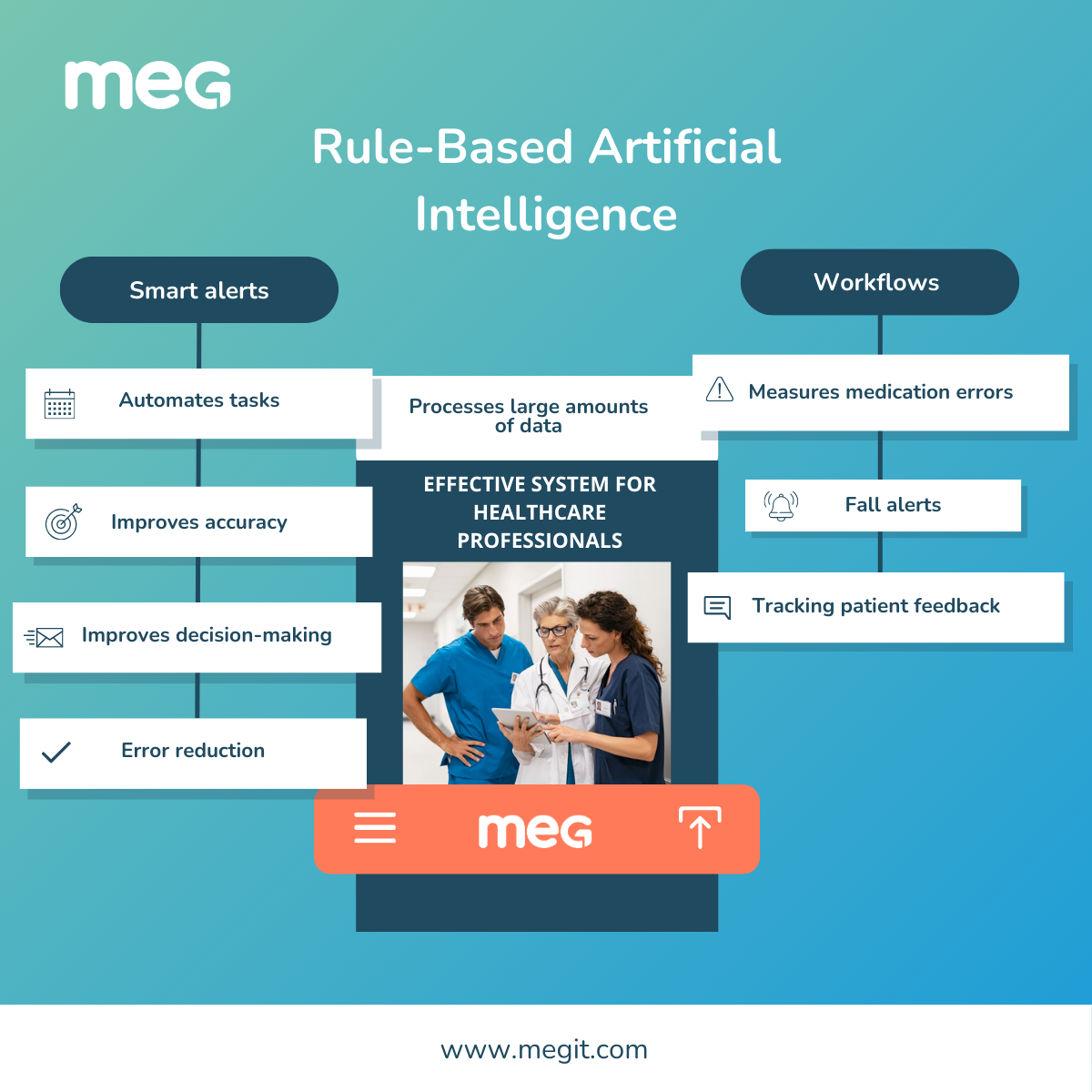
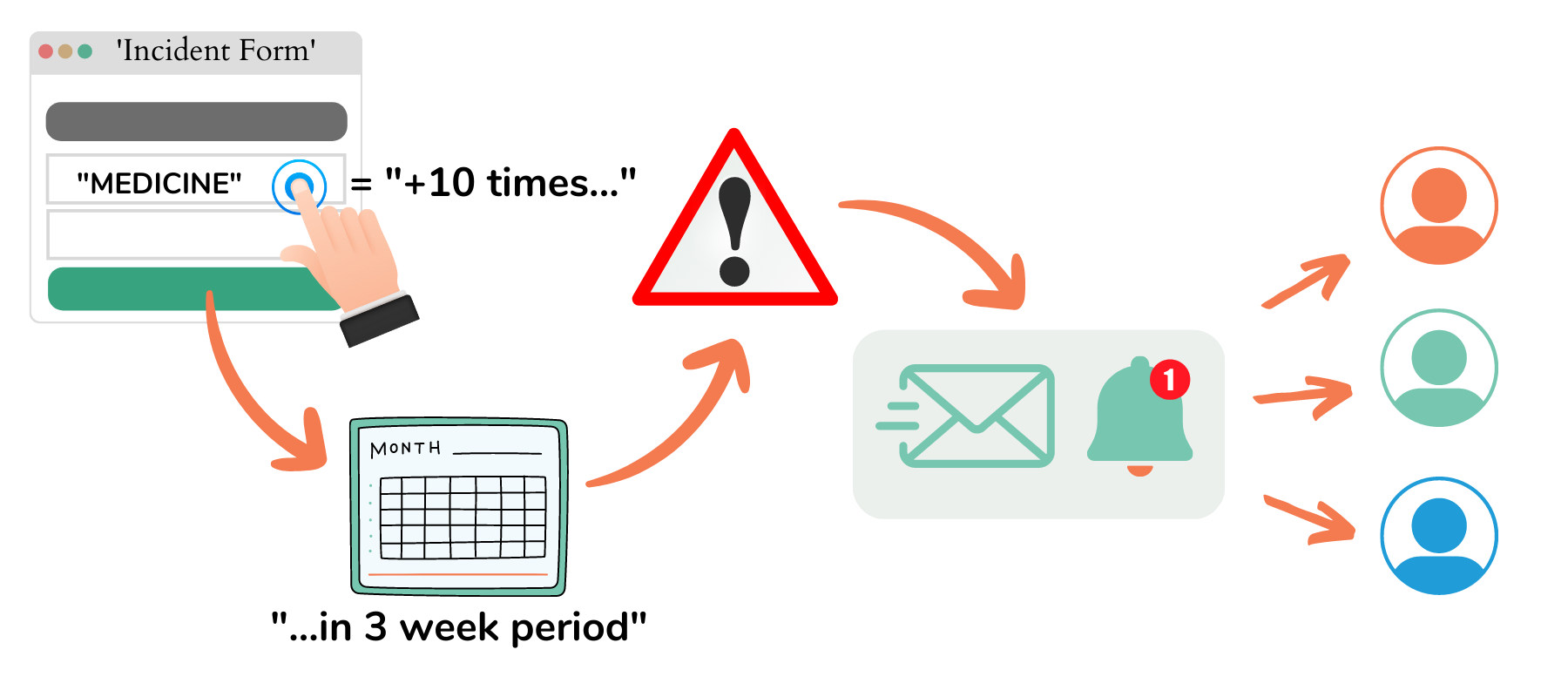
The real risk isn’t just unreported incidents; it’s reported issues that never get resolved. Manual spreadsheets and emails make follow-up hard to monitor, leaving leaders in the dark. Smart, rule-based alerts and automated workflows change that.

➡️ How MEG helps:

  • Assign actions immediately at the point of review, so ownership is clear from the start.

  • Smart alerts and threshold triggers keep teams on track, while Red/Amber/Green flags make overdue or at-risk items visible at a glance.

  • Automated escalations ensure nothing gets lost or delayed.

  • Board-level KPI dashboards display real-time closure rates across departments, giving executives constant oversight.

  • Providers using MEG have reported significantly reductions in average closure times in the first six months. At one pilot site, introducing automated escalations cut average ‘actions’ closure times by over 70%, a tangible leap in responsiveness.

💡 Leadership lever: Leaders can track closure rates as a live quality indicator, ensuring risks are not just logged but actively resolved, building accountability and resilience.

3. Turn Gaps and Feedback into Early Warnings

From fragmented data to proactive risk insight

Incidents show where harm or near misses have already occurred. But compliance data, risk registers, and patient complaints often highlight risks before they escalate into incidents. The challenge is that these sources are usually siloed. When they’re connected around a common identifier - such as a patient number, staff ID, or service area - leaders gain a clear, unified view of where vulnerabilities are emerging.

➡️ How MEG helps:

  • Connect the dots with a common identifier: link compliance checks, policy compliance, training records, and complaint themes directly to incident data.

  • Spot patterns quickly: dashboards reveal where compliance gaps overlap with incident trends, acting as early warning signals.

  • Enable proactive decisions: department-level views help local leaders take corrective action, while committee-ready reports provide system-wide oversight without extra admin.

💡 Leadership lever: By linking disparate data sources, boards and safety leaders gain visibility into the underlying drivers of risk,  making it possible to intervene early and prevent issues before they result in harm.

Moving Forward

These innovations are not distant possibilities. They are already being used in leading healthcare organisations. By digitising reviews, automating follow-up, and connecting risk, compliance, feedback data (and more!), leaders are seeing faster insight, stronger accountability, and measurable improvements in patient safety.

👉 Want to explore how healthcare leaders are applying these innovations? Join us at any upcoming conferences we’re attending, or connect with us to share lessons learned and approaches that are working in practice.

3 Quick Wins to Strengthen Risk and Safety Reporting

Practical strategies healthcare leaders are using MEG for to surface risks earlier and respond faster

In healthcare, delays in incident reporting and risk escalation don’t just slow processes; they can mean missed opportunities to prevent harm. The good news: reducing those delays doesn’t require a system overhaul.

Across hospitals and care providers, leaders are seeing success with three simple, practical changes. Together, they shorten reporting time, improve follow-up, and strengthen safety culture.


Quick Win #1: Make Frontline Reporting Frictionless

Leadership lever: Reinforce reporting as a core safety practice. Celebrate staff who report proactively, even when outcomes are near misses.

➡️ How MEG helps:

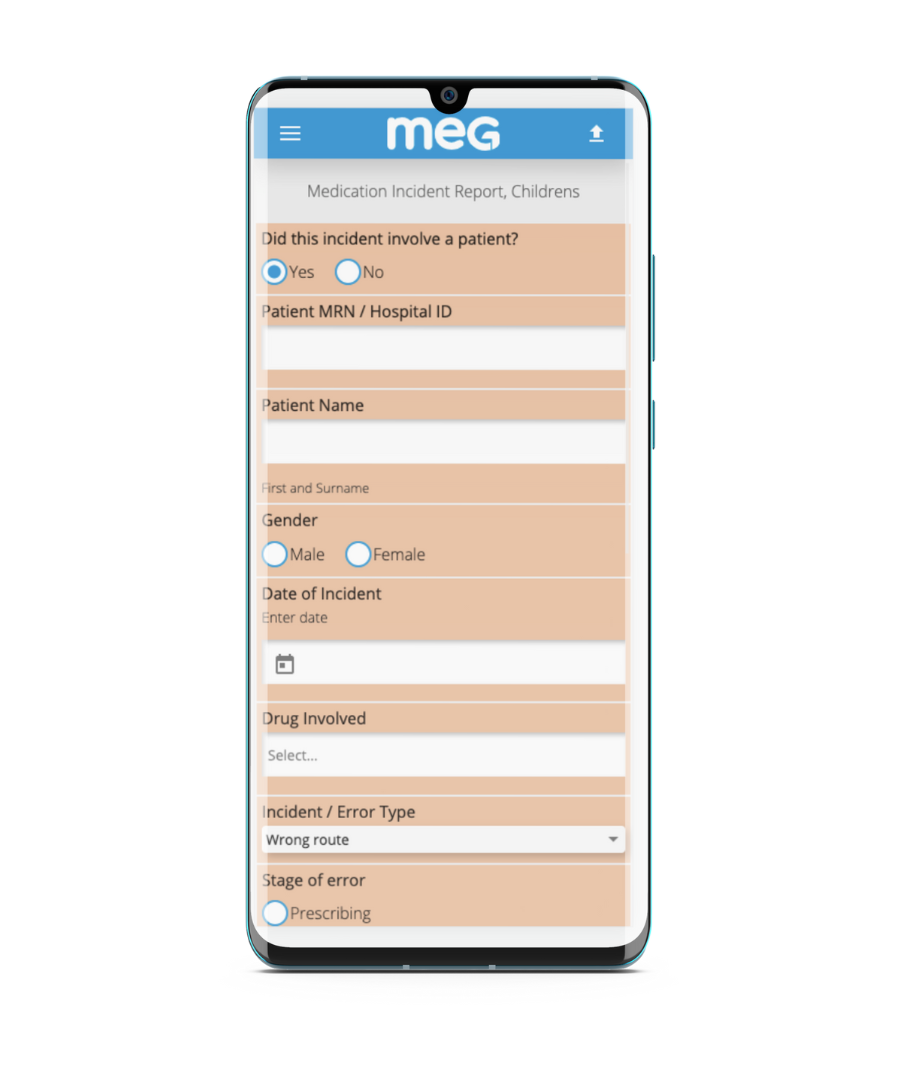
  • Easy-fill digital forms that adapt to the seriousness of the event: simple for minor issues, more detailed for higher-risk cases, saving staff time while capturing the right information.

  • Staff can report anytime, anywhere via the MEG mobile app, logging an incident on any device in under 2 minutes.

  • Built-in prompts and guidance ensure the right details are captured the first time, avoiding extra back-and-forth.

  • Leaders can add commendation notes on incident records, reinforcing recognition.

  • Use MEG’s 4Cs framework form (Compliments, Comments, Concerns, Complaints) to capture broader staff/patient feedback in the same platform.

💡 Impact: More incidents reported, fewer “I didn’t have time.” Reporting becomes accessible, efficient, and valued, encouraging earlier escalation of risks and stronger engagement.


Capture incident & event details on the move


Quick Win #2: Keep Follow-Up Actions Visible and On Track

Leadership lever: Use action/issue closure rates as a board-level quality indicator. Regularly review trends to ensure risks are mitigated, not just recorded.

➡️ How MEG helps:

  • Follow-up actions can be assigned immediately at the point of review, ensuring accountability is clear from the start.

  • Smart alerts and threshold-based triggers keep teams on track, while Red/Amber/Green status flags make overdue items instantly visible.

  • Automated escalations ensure nothing gets lost in spreadsheets or inboxes.

  • A board-level KPI dashboard provides real-time oversight of closure rates across departments.

💡 Impact: Faster closure rates, clear accountability, and stronger defensibility in audits or litigation, with leadership assured that risks are being actively mitigated, not just logged.

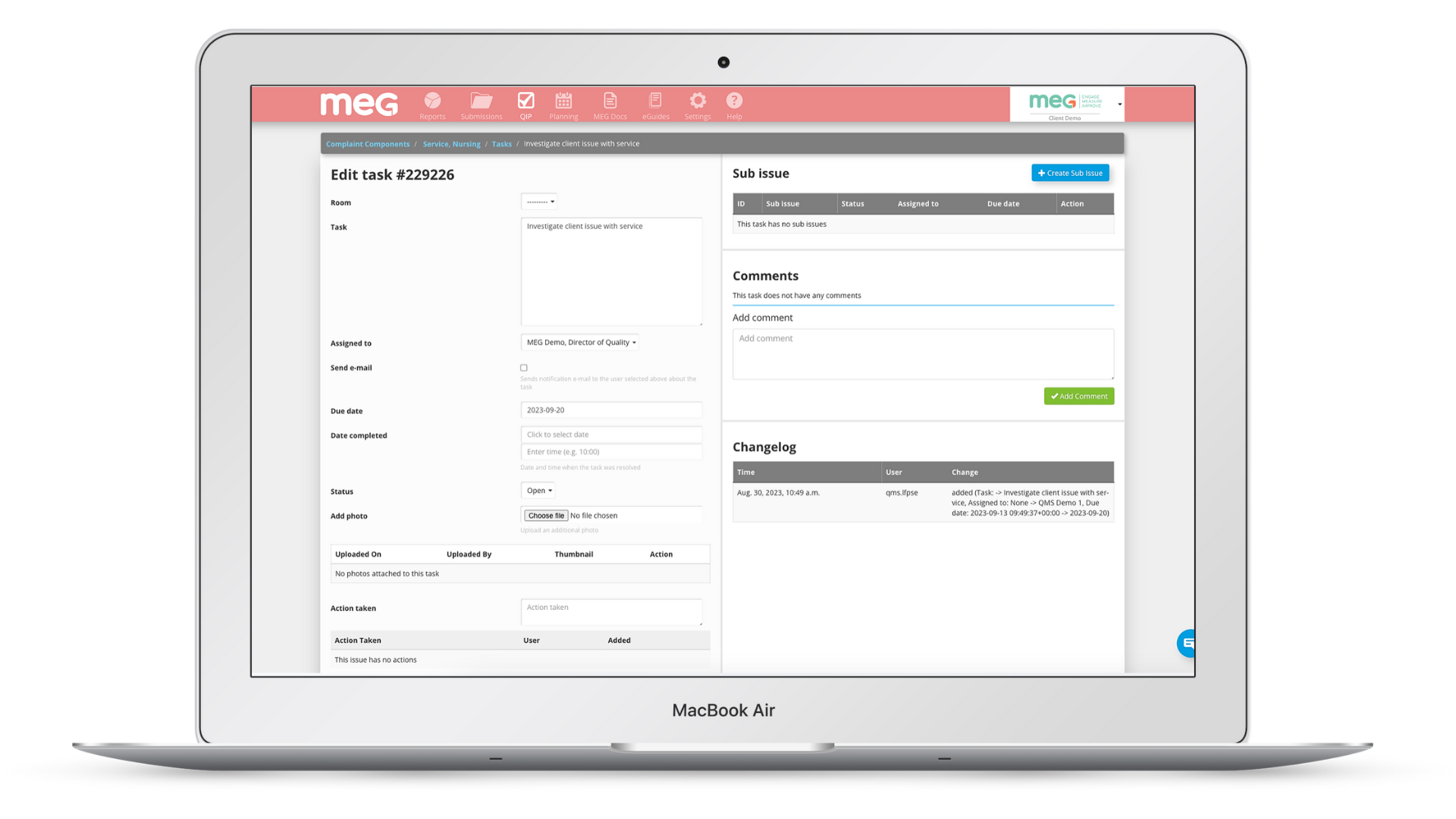
Comprehensive task management is built into MEG

Quick Win #3: Turn Gaps and Feedback into Early Warnings

Incidents tell you what happened, but compliance gaps, risk data, and complaints can reveal where problems are likely to happen next. Linking these sources together turns hindsight into foresight.

➡️ How MEG helps:

  • Connect the dots with a common identifier: Compliance data (e.g., audits, unread policies, expired credentials), risk registers, and complaints can be linked to incidents when they share a unifying identifier such as a patient number, staff ID, or service area.

  • Spot patterns early: Dashboards then highlight where gaps or feedback trends overlap with incidents, showing rising risk exposure.

  • Support faster action: Department-level views help local leaders intervene before issues escalate, while committee-ready reports provide system-wide assurance.

💡 Impact: Instead of reacting only to incidents after they occur, leaders gain visibility into the underlying contributors, so they can act earlier, prevent recurrence, and strengthen safety culture.

Example: Linking a patient (number) with complaints, incidents and risks

These strategies don’t require a system overhaul; they can be rolled out in weeks, not years. With MEG, they’re built into one connected platform.

Want to see how healthcare providers are reporting faster, closing actions sooner, and spotting risks earlier with MEG?

[Part 3] From Compliance to Culture: How Healthcare Leaders Drive Improvement

💡 Free resources included at the end of this post: Download MEG’s Document Management Maturity Workbook and watch our on-demand webinar with Clare Harney and Leonora O’Brien.


In Part 1, we surfaced the “digital document graveyard” problem — policies uploaded but effectively buried, leaving frontline teams exposed and leaders firefighting avoidable risk.

In Part 2, we shifted to the solution: how integrated, healthcare-specific systems turn documents into a dynamic driver of quality and safety, tightening governance and putting the right version in the right hands at the point of care.

Now in Part 3, we take the leadership perspective. Drawing on insights from Clare Harney and Leonora O’Brien, we explore how directors of quality can move beyond tick-box compliance to build a culture of safety and accountability.


The Maturity Journey

Every organisation sits somewhere on the document management maturity curve, from basic storage, to controlled systems, to fully integrated and intelligence-driven quality management.

This is what we call the maturity journey. The five dimensions of maturity, access, versioning, governance, engagement, and integration, provide leaders with a practical way to measure where they are today, and where they need to go.


The 5 Dimensions of Document System Maturity

1. Access — From Hidden Files to Usable Guidance

  • Level 1: Documents scattered, staff can’t reliably find what they need.

  • Level 5: Intelligent search delivers the right policy at the right time.

Cultural impact: Access is about trust. If staff can’t find current SOPs, they fall back on habit or hearsay. When access is reliable, the message is clear: leaders care about enabling safe, consistent practice.

“When staff follow up-to-date, standardised protocols, care is safer and more predictable.”

— Clare Harney

2. Versioning — From Chaos to Confidence

  • Level 1: Multiple uncontrolled versions in circulation.

  • Level 5: Live versioning ensures a single, trusted source of truth.

Cultural impact: Consistency breeds confidence. When staff don’t trust documents, culture drifts into workarounds. Strong version control signals leadership discipline, what’s published is what’s practiced.

3. Governance — From Paper Trails to Real Accountability

  • Level 1: No oversight, approvals undocumented.

  • Level 5: Every approval, attestation, and change is tracked automatically.

Cultural impact: Governance is visible leadership. Transparent audit trails tell staff that leaders don’t just write policies, they own them. It reinforces accountability at every level.

“Every document action, who approved, who attested, and when, is tracked. That’s real governance.”
— Leonora O’Brien

4. Engagement — From Compliance Chasing to Shared Responsibility

  • Level 1: Leaders can’t prove staff have read SOPs.

  • Level 5: Engagement dashboards show who’s read, who’s attested, and who needs follow-up.

Cultural impact: Engagement isn’t about nagging. It’s about shifting responsibility from compliance officers to every team member. Leaders who measure engagement are actually measuring culture of accountability.

5. Integration — From Silos to System-Wide Insight

  • Level 1: Policies, audits, risks, and training all managed in isolation.

  • Level 5: A fully connected quality ecosystem, where documents, audits, incidents, and training are dynamically linked.

Cultural impact: Integration is about connectedness. Leaders gain a holistic view of quality and safety — how policies, risks, training, and incidents interact and influence each other. This isn’t “box-checking” across separate modules; it’s comprehensive oversight that allows leaders to anticipate issues, understand cause and effect, and make proactive improvements.

“With MEG, everything is dynamically linked … SOPs, audits, training — one source of truth that’s accessible and reliable.”
— Leonora O’Brien

Why Leaders Must Own the Maturity Journey

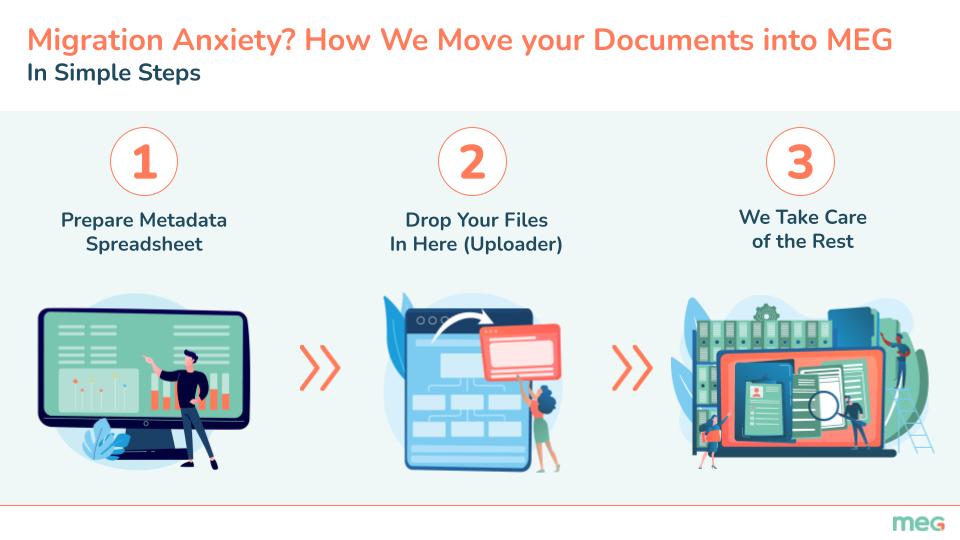
Moving up the maturity curve requires deliberate leadership. One of the biggest hurdles in the journey is migration: moving thousands of documents, often inconsistent, duplicated, or poorly tagged, out of legacy platforms like SharePoint and into a modern, integrated quality system. For many leaders, this feels daunting.

The key is to work with a vendor that has extensive experience in healthcare migrations. MEG has delivered this repeatedly, for example, DaVita International, a leading global provider of renal care operating over 400 centres across 13 countries, successfully migrated more than 5,000 documents into MEG through a streamlined process.

Migration isn’t just a technical task; it’s a leadership moment. It’s the opportunity to draw a line under fragmented systems, reset expectations, and set a higher standard of governance and culture. Done well, it becomes the first visible sign of change, showing staff that leaders are serious about moving beyond “document graveyards” to a culture of active quality improvement.

The Document Management Maturity Framework then provides the roadmap: benchmark your current state, define the target, and lead the organisation through each step of the journey.

This isn’t about IT. It’s about creating systems that staff can rely on and regulators can trust.


Practical Takeaways for Directors of Quality

  • Make documents cultural, not clerical. Staff must experience them as everyday guidance, not admin files.

  • Think holistically. Quality and safety require connectedness, not silos.

  • Use migration as a cultural reset. A moment to leave behind bad habits and build accountability.

  • Adopt the maturity framework. Progress step by step, from storage to governance, from compliance to culture.


Final Thought: From Storage to Leadership

Clare Harney put it simply: “You should be audit-ready at any time, not scrambling when inspectors arrive.”

That’s the essence of leadership in document management: creating systems that are always current, always accessible, and always aligned with safe care. For directors of quality, it’s not about storing documents, it’s about leading improvement.

📊 Next Step for Directors of Quality:


👉 [Click] Download the Document Management Maturity Workbook


👉 [Click] Watch the Document Management webinar with Clare & Leonora


👉 [Click] Book a leadership demo of MEG

[Part 2] Beyond Storage: Turning Documents into a Dynamic Driver of Quality and Safety

In Part 1, we explored the “digital document graveyard”, those legacy systems where policies sit online but remain effectively buried, inaccessible, and untrusted. We saw how SharePoint, static repositories, and clunky intranets expose organisations to clinical, compliance, and cultural risks.

In Part 2, we turn to the solution: how healthcare organisations can move beyond storage and build document systems that function as a dynamic driver of quality and safety, reducing risk, strengthening compliance, and empowering staff with the information they need, when they need it.

Why Storage Alone Fails

Traditional approaches, whether paper binders, SharePoint folders, or siloed platforms, often fail quality leaders in three important ways:

  • Accountability gaps: Limited ability to prove staff have read and understood policies.

  • Fragmentation: Documents disconnected from audits, incidents, and risk registers.

  • Version confusion: Multiple versions in circulation, creating inconsistency and risk.

These issues don’t just slow governance teams down, they undermine inspection readiness and increase the risk of non-compliance.

From Storage to Quality Engine

Healthcare organisations are increasingly turning to integrated document management systems built for governance. One example is MEG’s Document Management Module, which illustrates how the shift from storage to active quality management looks in practice.

1. Integration Across Governance Functions

MEG brings documents, audits, risks, and incidents into one interoperable platform. This single source of truth reduces duplication, closes governance gaps, and ensures consistent oversight across the organisation.

2. Attestation and Accountability

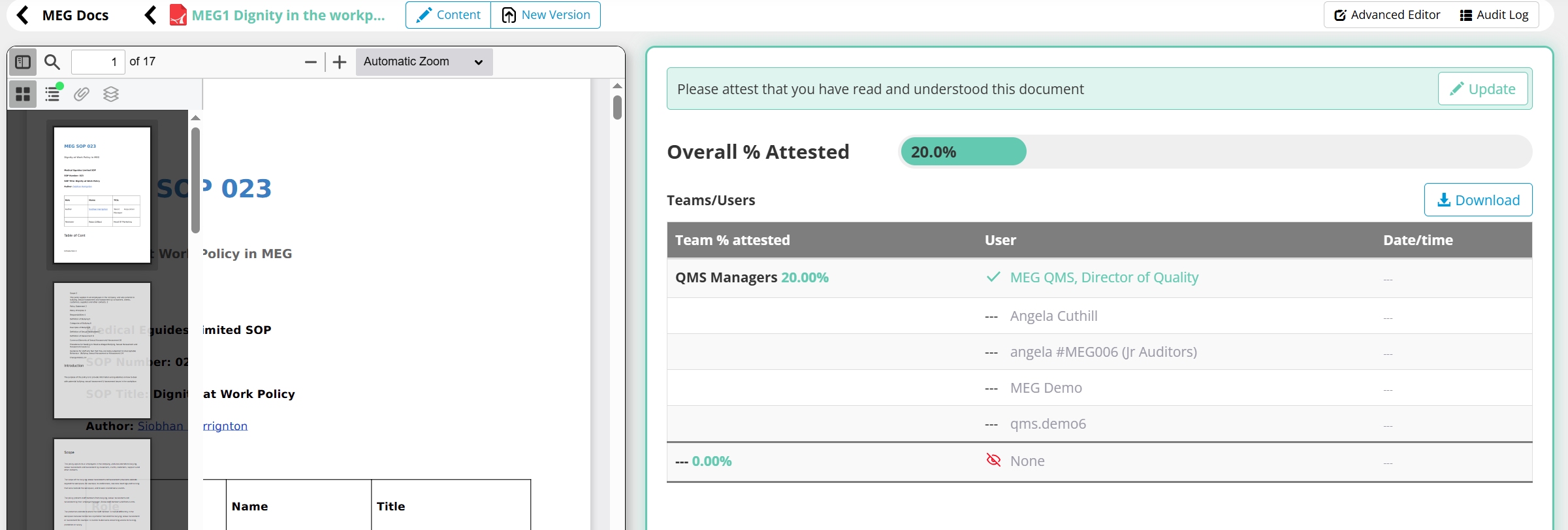
Beyond distributing documents, the system tracks who has read and acknowledged them. Attestation reports show compliance by user, department, or facility, and automated reminders ensure gaps are closed.

Attestation in MEG .png

Example of Attestation Records in MEG

3. AI-Enhanced Efficiency with Ask MEG

AI is most effective when applied to real-world problems. MEG’s in-built AI assistant - Ask MEG - allows staff to ask plain-English questions inside a policy, for example:

  • “What PPE is required for a patient with C. diff?”

  • “How do I escalate a safeguarding concern on night shift?”

The assistant responds instantly, with answers grounded in the live, approved document, never invented, always compliant.

For leaders, this means faster clarity for staff, fewer escalation delays, and evidence that policies are being understood and used.

4. Create, Collaborate, Control

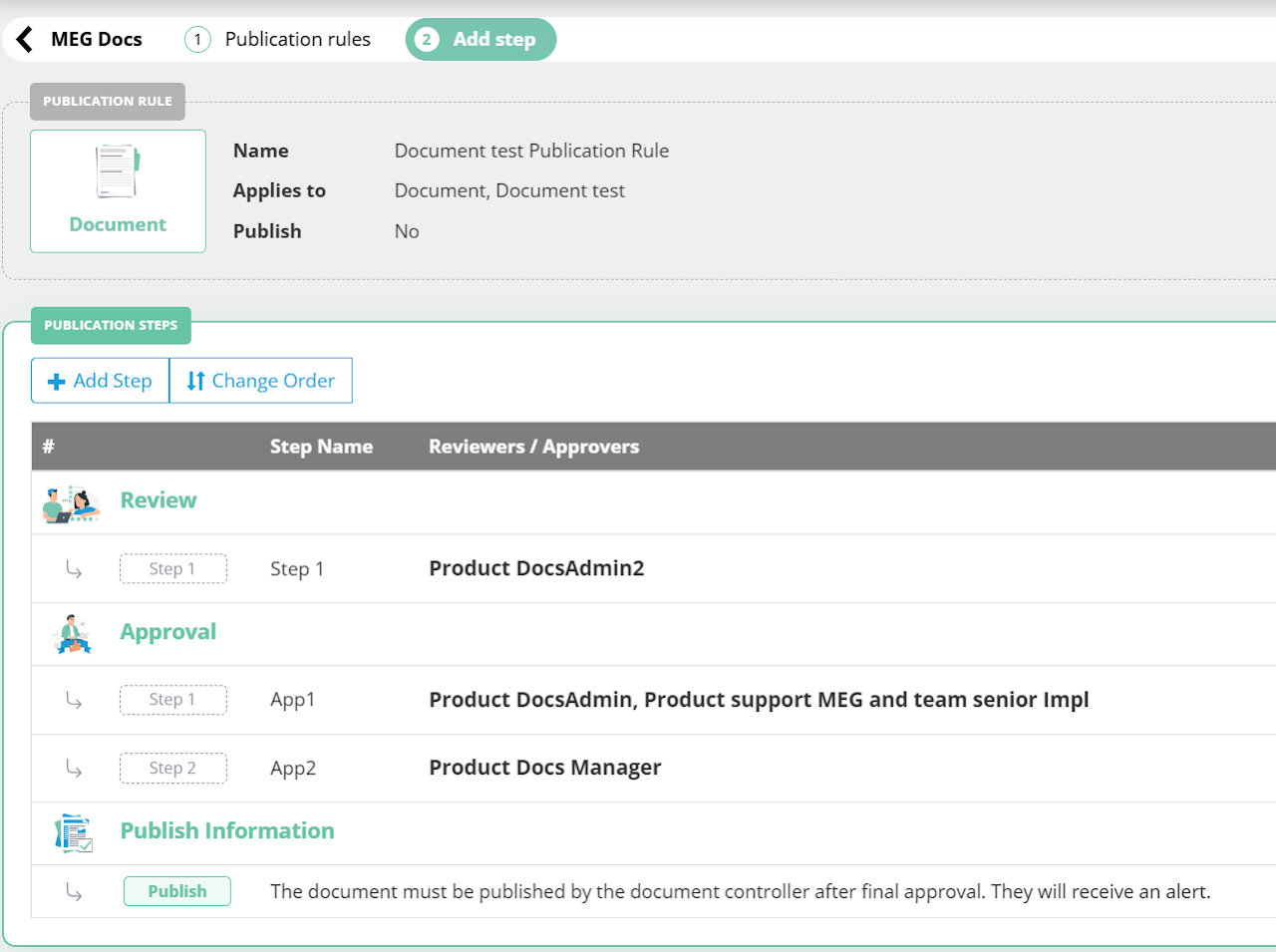
Policies can be drafted, reviewed, and published within the system. Review cycles are automated, version control is enforced, and full audit trails capture every action, from approval to staff attestation.

An example of a MEG Docs publishing approval workflow

Importantly, MEG also supports a configurable publication process. Documents can include an optional review stage before final approval, giving teams more flexibility in how policies are checked and signed off. This ensures critical content is carefully reviewed by the right people before moving to formal approval and publication, improving both clarity and confidence in the process.

Comparison: MEG vs SharePoint vs Paper

Here’s how an integrated, healthcare-specific platform compares with legacy tools still used in many organisations:

While SharePoint and paper can provide basic document storage and a partial audit trail, they leave teams dependent on manual effort, vulnerable to errors, and unable to demonstrate governance reliably.

Built to Be Audit-Ready, Every Day

Modern document systems embed inspection readiness by default. With features like version control, approval logs, attestation tracking, and expiry reminders, organisations can demonstrate compliance at any time, without weeks of preparation.

This shifts governance from reactive to proactive, a key expectation of regulators and accreditation bodies such as CQC, HIQA, JCI, and the Joint Commission.

What Quality Leaders Should Ask

When considering document systems, directors of quality should ask:

  • Does it integrate with other governance functions?

  • Can it track and evidence staff accountability?

  • Is it built to be audit-ready, every day?

  • Does it help staff access answers, not just files?

These questions move the focus from administrative storage to governance leadership.

Final Thought

Document management is no longer an administrative afterthought. Done well, it underpins culture, consistency, and compliance. Done poorly, it leaves staff in the dark and organisations exposed.

The challenge for healthcare leaders is to ensure their document system isn’t just a graveyard for policies, but a dynamic driver of quality and safety.

👉 In Part 3, we’ll explore how leaders are already making this shift, drawing lessons from real-world implementations and showing how integrated systems can support a culture of continuous improvement.


Watch the On-Demand Webinar

In this post, we explored how healthcare organisations can turn document systems from static repositories into a dynamic driver of quality and safety.

For a deeper dive, watch our on-demand webinar: “Is Your Document System Driving Improvement, Or Just Storing Policies?”

Featuring Clare Harney (Head of Advisory & Education Services at Santegic) and Leonora O’Brien (Chief Growth Officer at MEG), the session explores:

  • How to move beyond storage and build governance-ready systems

  • Practical steps for integrating documents with audits, risk, and training

  • The role of AI and attestation in driving compliance and accountability

[Part 1] The Digital Document Graveyard: Why Legacy Systems Still Put Healthcare at Risk

The dusty binders may be gone. Walk into most hospitals today, and you’ll find fewer filing cabinets stuffed with outdated policies. Instead, the graveyard has moved online.

Today’s “document graveyard” is SharePoint sites, intranet folders, and static PDF repositories. Policies technically exist in digital form, but for frontline staff, they might as well be buried six feet under. Clunky navigation, siloed folders, and poor search functionality mean that critical documents are effectively invisible when they’re needed most.

The risks are no less real than in the paper era. They may be greater. When leaders believe they’ve modernised simply because documents are “online,” they risk overlooking the ways these legacy digital systems fail to protect staff, patients, and the organisation itself.

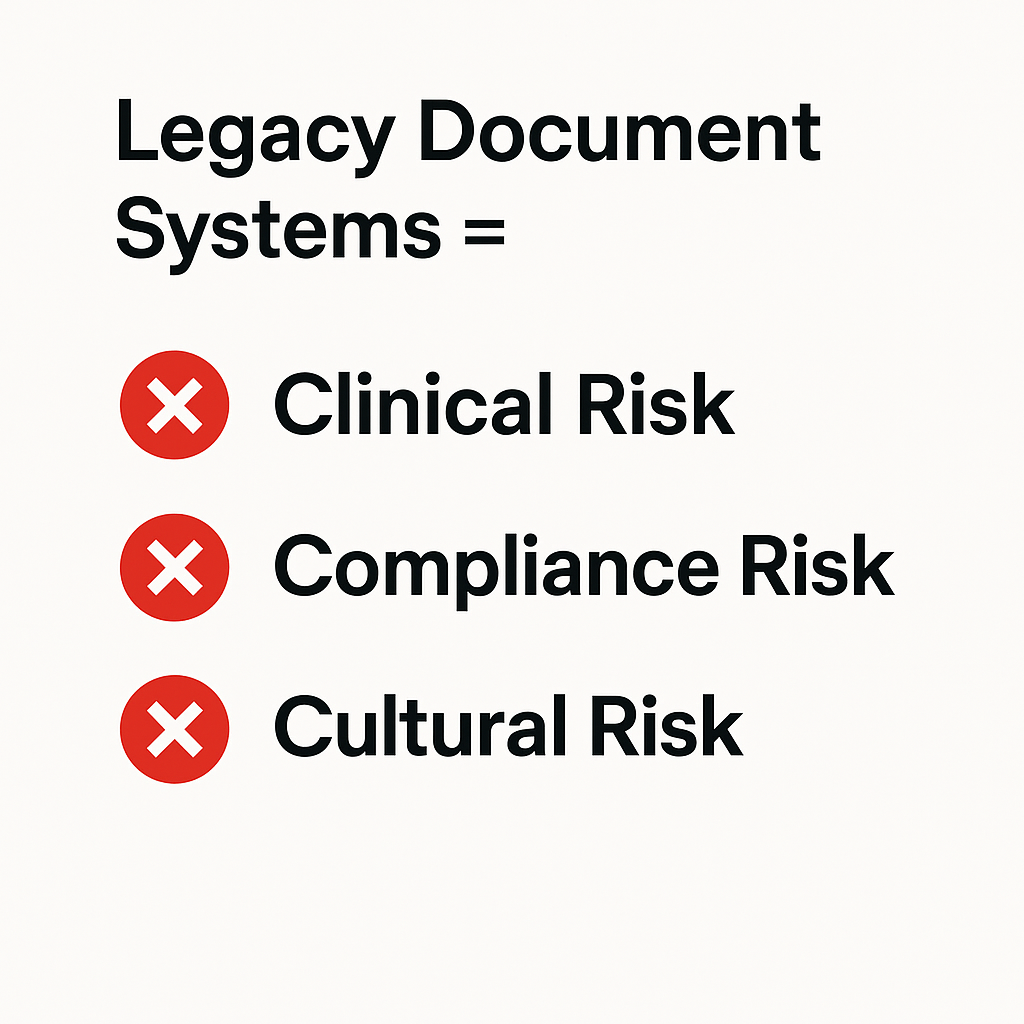
Clinical Risk: When ‘Online’ Isn’t Accessible

In healthcare settings, SharePoint and intranet-based repositories were an important first step in moving away from paper-based policy management. But they were never designed for the complex demands of modern healthcare. These systems are effective at storing documents, yet storage alone isn’t enough when staff and regulators need instant access, clear version control, and evidence of staff attestation.

The result?

Staff waste valuable time scrolling through endless lists of documents.
❌ Different teams create duplicate versions, leading to confusion about which is correct.
❌ Staff rely on memory, peer advice, or outdated hard copies because they can’t reliably find what they need.

Clinical risk doesn’t just come from the absence of policies. It also comes from policies that staff can’t quickly find, trust, or use.

“Healthcare can’t afford to treat policy management as an administrative afterthought. Outdated or inaccessible documents don’t just create inefficiency, they put patients, staff, and organisations at real risk.”
— — Clare Harney, Healthcare Policy Expert

Compliance Risk: Regulators Aren’t Fooled

Healthcare regulators expect more than “documents stored somewhere online.” All require clear version control, audit trails, and demonstrable accessibility as a minimum standard.

Legacy systems often fall short:

  • Multiple versions of the same policy may live in different folders.

  • No reliable audit trail shows who reviewed or approved changes.

  • Surveyors asking “show me the policy” are met with frantic searches and uncertain results.

Most critically: attestation is nearly impossible.

  • SharePoint and intranets can’t track whether staff have actually opened, read, and acknowledged a policy.

  • There’s no way to assign policies to specific roles and capture individual attestations.

  • Leaders are left hoping staff are compliant — but with no evidence to prove it when regulators ask.

In compliance terms, “we emailed it” or “it’s in SharePoint” doesn’t demonstrate accountability. Regulators want to see that staff received, read, and signed off on policies — and that organizations can prove it with a clear audit trail.

Cultural Risk: The Cost of Mistrust

Culture is built on trust. Staff need to believe that leadership equips them with the tools and information to succeed.

When staff can’t reliably find policies, frustration grows. Over time, disengagement sets in. They create workarounds, pass around shadow documents, or simply rely on “what we’ve always done.”

This doesn’t just weaken compliance; it corrodes culture. Staff begin to assume leadership doesn’t prioritise their needs. That mistrust spreads, undermining safety culture and reducing adherence to policies across the board.

A graveyard system doesn’t just bury documents. It buries staff morale.

The Illusion of Modernisation

The danger of legacy digital systems is that they create a false sense of progress. Leaders may think, “We’ve digitised our policies, so we’re fine.”

But digitisation is not the same as accessibility. Putting binders online doesn’t solve the problem; it only relocates it.

If a nurse spends 10 minutes searching for the infection control policy…
If a compliance officer can’t instantly demonstrate the current version to an inspector or accreditation surveyor…
If a new junior doctor downloads an outdated PDF from a shared drive…

…then the system isn’t modern. It’s a digital graveyard, and the risks are very much alive.

Why This Matters Now

Healthcare is under more pressure than ever:

  • Staffing shortages mean new hires must be onboarded quickly and reliably.

  • Regulatory scrutiny is increasing, with zero tolerance for “we couldn’t find it.”

  • Patient safety demands require information that is trusted, consistent, and easy to locate in the moment of need.

Legacy digital systems were an important step away from paper, but they simply weren’t built for this environment. What’s needed is not just digitisation, but transformation: systems designed for findability, trust, and accountability.

Retiring the Digital Graveyard

It’s time to face reality: SharePoint and other intranet repositories were built for document storage, not for the complex demands of healthcare policy management. They remain useful as general collaboration tools, but they can’t provide the speed, visibility, and proof that today’s healthcare environment requires.

Healthcare leaders must demand more:

  • Powerful search that delivers the right policy in seconds.

  • Real-time version control that eliminates duplicates and confusion.

  • Audit trails and reporting that satisfy regulators.

  • Attestation tools that prove staff have read and understood critical policies.

The graveyard metaphor still applies but the solution is clear. Policies must be living documents, searchable in seconds, validated by audit trails, and supported by staff attestations.

Conclusion

The binders may be gone, but the graveyard remains. It lives in outdated digital systems that are siloed, clunky, and difficult to search with confidence.

Legacy systems multiply clinical, compliance, and cultural risks. And in a healthcare environment where every second counts, that’s unacceptable.

Healthcare leaders must move beyond the illusion of digitisation. Retiring the digital graveyard means adopting policy management systems that are dynamic, searchable, and accountable.

Because when policies are buried, whether in basements, in outdated PDFs, or in SharePoint with no proof they’ve been read, risk comes to life.

👉 In Part 2, we’ll explore how MEG transforms document management from a passive repository into a living, connected quality engine, giving healthcare leaders the tools to reduce risk, improve compliance, and empower staff with information they can trust.


Watch the On-Demand Webinar

Want to explore practical steps for moving beyond the “digital graveyard”? Watch our on-demand webinar:

Is Your Document System Driving Improvement, Or Just Storing Policies?
🎙 Featuring Clare Harney, Head of Advisory & Education Services at Santegic, and Leonora O’Brien, Chief Growth Officer at MEG

King's College Hospital London – Jeddah chooses MEG as digital partner for clinical governance

MEG is delighted to announce our partnership with King's College Hospital London – Jeddah, the Kingdom's first UK-branded hospital and a flagship healthcare collaboration between the UK and Saudi Arabia. King's College Hospital London – Jeddah joins our growing family of prestigious healthcare clients committed to governance excellence, alongside facilities such as Tallaght University Hospital (Ireland), M42 (Abu Dhabi), and Reem Hospital (Abu Dhabi).

King's College Hospital London – Jeddah

King's College Hospital London – Jeddah opened its doors in February 2025 as a purpose-built, state-of-the-art medical facility on Jeddah's prestigious waterfront. Fully integrated with its London counterpart, the hospital represents a major milestone in Saudi Arabia's healthcare transformation under Vision 2030.

The hospital provides comprehensive healthcare services with planned Centres of Excellence in Women's Health, Cardiology, Metabolic Disease, and Orthopaedics, delivering world-class medical care that meets both UK clinical standards and Saudi regulatory requirements.

Why Choose MEG?

As Saudi Arabia's first UK-branded hospital, King's College Hospital London – Jeddah required a governance platform that could seamlessly integrate international best practices with local compliance standards, from day one of operations.

The hospital's leadership team recognised that traditional paper-based risk management and patient safety processes would not align with their vision for digital excellence and operational efficiency. They needed a comprehensive solution that would support both local and international healthcare standards while delivering the unified, scalable governance framework essential for world-class care delivery.

In just a few months, MEG's integrated platform was implemented to power the hospital's complete governance ecosystem, including:

  • Incident and Medication Error Reporting – real-time tracking, root cause analysis, and learning loops to prevent recurrence

  • Risk Register & M&M Reviews – tools for proactive risk identification and structured case reviews that support evidence-based decisions

  • Audit & Committee Management – end-to-end workflows to meet accreditation standards and maintain regulatory readiness

  • Task Tracking & Action Plans – clear accountability, follow-ups, and transparency across departments

  • Centralised Document Control – one platform to manage clinical guidelines, policies, safety manuals, and more with audit trails and version control built in

Together, these modules helped build a digital-first governance model aligned with both international best practices and Saudi Arabia's accreditation expectations.

A key focus area has been the development of comprehensive medication error and adverse drug reaction reporting capabilities, which have significantly strengthened patient safety practices across the hospital.

The new reporting system has been transformative. It helped identify trends, reduce adverse events, and promote a culture of transparency and accountability among clinical teams. MEG’s collaboration and flexibility were key to building a module that supports continuous improvement.
— Ali Saber, Head of Pharmacy at King's College Hospital London – Jeddah

"We're proud to support King's College Hospital London – Jeddah in its mission to deliver world-class care," said Nabeel Deek, MEG's Regional Business Development Manager – MENA. "This collaboration reflects our commitment to advancing healthcare innovation across the region and supporting Saudi Arabia's Vision 2030 goals."

As the hospital expands its Centres of Excellence across multiple specialties, MEG will continue to provide the digital infrastructure to support transparent governance, safe care, and continuous improvement.

The MEG team looks forward to supporting King's College Hospital London – Jeddah as it establishes new benchmarks for healthcare excellence in the Kingdom, demonstrating how governance systems can be proactive, integrated, and foundational to high-quality care delivery.


For more information about MEG and our healthcare governance solutions, visit www.megit.com

MEG Achieves SOC 2 Type II Attestation!

At MEG, protecting sensitive healthcare data is a core part of who we are. That’s why we’re thrilled to announce that MEG has achieved the prestigious SOC 2 Type II attestation, a globally respected benchmark that reflects our commitment to privacy, security, and operational integrity.

We recently spoke with Guvanch Meredov, MEG’s Head of Compliance and Data Protection Officer, to learn more about what this milestone means for MEG, our customers, and the wider healthtech ecosystem.

In this blog, you'll discover:

  • What is SOC 2 Type II and why does it matter?

  • What does SOC 2 Type II evaluate?

  • How MEG Achieved SOC 2 Type II

  • What does this mean for our customers and partners?

  • What’s next in MEG’s compliance journey

  • Final Reflection

What is SOC 2 Type II and why does it matter?

SOC 2 Type II is one of the highest security standards in SaaS. Developed by the American Institute of Certified Public Accountants (AICPA), it goes beyond a one-time review, instead, it evaluates how effectively an organisation operates its data protection and security controls over 12 months.

While SOC 2 Type I assesses design at a single point in time, Type II proves that those controls are consistently implemented over months of real-world operation.

SOC 2 Type II  shows that our controls don’t just exist on paper, they’re consistently applied in real operations.
— Guvanch Meredov, Head of Compliance/DPO at MEG

For healthcare providers and regulated organisations working with us, this is a meaningful assurance - MEG can securely manage their sensitive data at scale with the highest standards of protection.

What does SOC 2 Type II evaluate?

The audit evaluates MEG’s controls across five key trust service principles:

  • Security — Protecting data against unauthorised access

  • Availability — Ensuring systems are reliable and operational

  • Confidentiality — Keeping sensitive information private

  • Processing Integrity — Ensuring systems operate correctly and without error

  • Privacy — Safeguarding personal data in line with regulations

The scope included our cloud infrastructure, encryption protocols, access controls, incident response, and more, providing a thorough evaluation of both technical and procedural safeguards.

How MEG Achieved SOC 2 Type II

Our attestation covers June 2024 through May 2025, and was the result of a sustained, company-wide effort. The journey included:

  • Scoping and defining systems under audit

  • Implementing and refining controls aligned with trust service criteria

  • Rigorous internal readiness checks

  • Extensive evidence gathering to demonstrate compliance in practice

  • Third-party validation and testing

This builds on MEG’s existing ISO 27001 certification and GDPR adherence, enabling us to maintain a high standard of trust and transparency.

What does this mean for our customers and partners?

Whether you're an existing customer or evaluating MEG, this attestation brings key advantages like:

  • Independent validation of our ability to manage sensitive data securely

  • Alignment with major compliance frameworks — including GDPR, ISO 27001, Cyber Essentials, and the NHS DSPT

  • Faster procurement and onboarding, thanks to verifiable third-party assurance

  • Increased credibility with public sector buyers, supported by our UK G-Cloud 14 listing

Clients can also request executive summaries, audit reports, or attestations to support their own compliance requirements.

For our customers, it provides independent assurance that MEG can safely manage, process sensitive healthcare data at scale

What’s next in MEG’s compliance journey

SOC 2 Type II attestation is a major milestone but not the finish line. MEG is committed to ongoing compliance through:

  • Annual ISO 27001 and SOC 2 Type II surveillance audits

  • Biannual penetration tests and vulnerability scans

  • Continuous staff training and policy reviews

  • Automated real-time monitoring of security controls

  • Regular GDPR Data Protection Impact Assessments (DPIAs) and related processes

With growing interest in US and international markets,MEG is aligned with HIPAA requirements and is scheduled for an external audit to validate compliance in Q4 2025.

Final Reflection

SOC 2 Type II is more than a logo or a line on a slide. It reflects the reality that when organisations trust MEG, they’re trusting us with something sacred—the safety, privacy, and dignity of people’s health data.
We take that responsibility seriously. And now, we have the audit to prove it.

Want to review our SOC 2 report? Reach out at dataprotection@megit.com


If you are interested in discovering how MEG can meet your data protection, operational, and regulatory needs, our team is here to help.