MEG Docs: Where Policies and Procedures Are Not Just Stored, But Governed With.

Modern policy & document management for healthcare providers serious about care quality and accountability. 

MEG keeps your documents living, breathing and evolving.

โŒ Whatโ€™s Holding Back Policy Engagement?

  • No formal process for reviewing, declining, or resubmitting policy changes

  • Policies that staff canโ€™t easily find, understand, or act onโ€”when they need them

  • Approval workflows that rely on emails, not structure or escalation logic

  • Staff without accessโ€”especially those on the frontline or working offline

  • Documents are disconnected from the systems they impact: audits, training, risk, etc.

โœ… MEG Docs vs. Other Document Management Systems on the Market

Purpose-built for healthcare. No workarounds required.

You can tell when a system wasnโ€™t designed for healthcareโ€”like when frontline staff need a workaround just to open or edit a policy. MEG Docs doesnโ€™t need extra interfaces, third-party components or a โ€œsystem expertโ€ in the background. Itโ€™s intuitive from day one because it was designed to fit healthcare - not forced to fit.

How MEG Connects The Dotsโ€ฆ

Document Management is just one part of the full MEG QMS ecosystem, which also includes:

  • Audit & Accreditation Management

  • Risk & Incident Reporting

  • Staff Training & Credentialing

  • Patient Experience & Quality Insights

With MEG, policies donโ€™t sit in isolationโ€”they link directly to the quality, risk and compliance systems that power real governance.

What Our Users Say

โ€œMEGโ€™s Document Management software played a key role in helping us achieve JCI accreditation across all three of our sites.

During the survey, our policies, forms, and SOPs were easy to access thanks to the intuitive, user-friendly layoutโ€”each folder was structured around JCI chapters, making navigation seamless.

Iโ€™m especially grateful to the MEG team for their patience, guidance, and consistent support throughout the entire process. Their platform and expertise were truly invaluable.โ€

โ€” Helen Nolan Carty, former Head of Quality & Safety, Institute of Eye Surgery, Ireland
________________________________________________________________________________________

Ready to Experience the Difference?

For more information or to schedule a demonstration of the MEG Docs Document/Policy Management system, please contact us at:
Book a call

Enhancing Patient Data Management in Ireland: MEG and IPMS Integration

Timely access to accurate patient information is essential for effective care. To support this, weโ€™ve launched a powerful new integration between MEGโ€™s Quality, Risk & Compliance Management Software and the Integrated Patient Management System (IPMS). This new develoment aims to streamline how patient data will be managed across hospitals and clinics in Ireland.

In this post, weโ€™ll break down how the integration works, why it matters, and the impact itโ€™s expected to make in healthcare facilities across the country once fully rolled out.


Why This Integration Matters for Irelandโ€™s Healthcare

The Irish Health Service Executive (HSE) is on a mission to modernise healthcare through its eHealth strategy. The MEG-IPMS integration aligns perfectly with this initiative, offering a unified approach to patient management that addresses three major pain points:

  • Inconsistent Patient Data: Manually updating records can lead to errors and outdated information.

  • Administrative Overload: Healthcare staff spend too much time on paperwork, reducing their ability to focus on patient care.

  • Delayed Decision-Making: Lack of real-time data can slow down critical treatment decisions, impacting patient outcomes.

The Solution

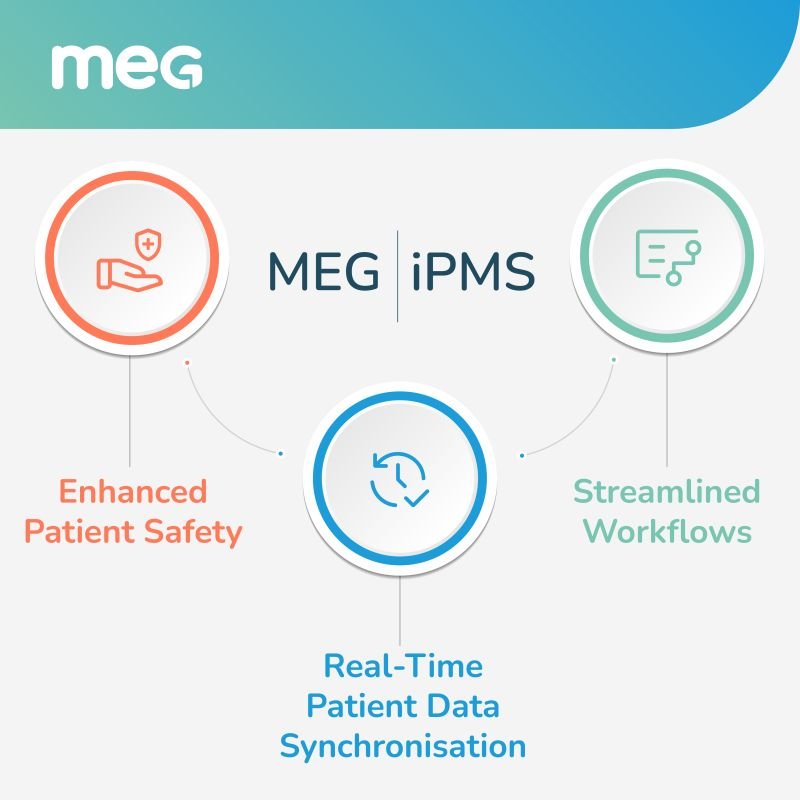
By combining the strengths of MEGโ€™s Quality, Risk & Compliance Management System and IPMS, this integration enables seamless data exchange, automated updates, and real-time access to patient information, ensuring that healthcare providers have the tools they need to deliver the best possible care.

How It Will Work: Seamless, Secure Integration

The MEG-IPMS integration is designed to be simple, secure, and efficient. Hereโ€™s a look at how the process functions:

1. Secure Data Connection

A secure site-to-site VPN is set up between IPMSโ€™s on-premise servers and MEGโ€™s cloud environment. This ensures that all patient data is transmitted safely, in line with the highest standards of data protection.

2. Real-Time Data Syncing

Using HL7 standards (a set of guidelines for healthcare data exchange), patient admissions, transfers, and discharges are automatically updated across both systems, eliminating manual data entry and reducing the risk of errors.

3. User-Friendly Interface

Healthcare staff can then view synchronised patient data through MEGโ€™s intuitive dashboard, simplifying clinical documentation and reporting.


Benefits for Every Role in Healthcare

This integration delivers tailored benefits across different roles in your facility:

โœ… For Nurses and Physicians:

  • Faster Access to Patient Data: Make timely treatment decisions with up-to-date, accurate information.

  • Less Paperwork: Automated updates will free up more time for direct patient interaction.

โœ… For Pharmacists:

  • Real-Time Medication Updates: Live access to admission and discharge info helps reduce medication errors.

  • Efficient Medication Management: Spend less time on manual entry, more on patient safety.

โœ… For IT Teams:

  • Simple Integration and Maintenance: HL7 compatibility ensures smooth data exchange with existing systems.

  • Enhanced Security: VPN-secured and GDPR-compliant, guaranteeing the safety of patient data.

Addressing Common Questions

We understand that adopting new technology can raise concerns. Here's what to expect:

  1. Is patient data secure?
    Yes. The integration uses a secure VPN, adheres to HL7 standards, and ensures full GDPR compliance. All data is encrypted and protected.

  2. Will this disrupt our current workflows?
    No. The integration rollout is designed to be smooth and minimally disruptive, following a phased approach that typically takes less than 4 weeks. Full training and support will be provided.

  3. What support will be available after implementation?
    24/7 support will be available, including dedicated account managers and technical teams to resolve issues quickly.

The Future of Patient Care in Ireland

The MEG-IPMS integration is a key step toward a fully digitised healthcare system in Ireland. By reducing administrative burdens, improving data accuracy, and enhancing patient safety, this solution will empower healthcare providers to deliver higher-quality care with greater efficiency.


Take the Next Step: Be Among the First to Experience the Integration

Want to see how the MEG-IPMS integration can transform your workflows? Book a call with the team to learn moreโ€ฆ

Book a Call

Document Management for Risk Control: Keeping Policies and Procedures Aligned

In the fast-paced world of healthcare, keeping policies and procedures aligned is a cornerstone of effective risk management. Hospital leaders face the critical challenge of ensuring that these documents are accessible, up-to-date, and actionable. Without proper document control, inconsistencies can lead to compliance gaps, inefficiencies, and increased risks. In this blog, we explore how MEG Docs supports healthcare organizations in managing policies and procedures seamlessly, offering practical examples and strategies for centralized document control. Improving processes, standardising them and integrating them with audit and risk management workflows reduces management waste.

The Importance of Accessible and Up-to-Date Policies

Policies and procedures are the backbone of healthcare operations, providing clear guidance for teams to ensure safety, compliance, and quality care. However, maintaining accessible and up-to-date documentation is often easier said than done. Hereโ€™s why it matters:

  1. Improved Compliance: Centralized and current policies help organisations meet regulatory standards, reducing the risk of fines or penalties.

  2. Streamlined Audits: Up-to-date documents facilitate smoother audits by providing accurate, readily available information.

  3. Enhanced Team Collaboration: When policies are accessible to all staff, it fosters alignment and reduces confusion in day-to-day operations.

For instance, a hospital facing recurring incidents of patient falls may discover outdated protocols contributing to the issue. Updating and sharing revised procedures ensures staff are equipped to prevent future incidents.

How MEG Docs Supports Document Control

MEG Docs is designed to address the complexities of document management in healthcare. Its features empower hospital leaders to:

  1. Centralise Document Storage: Keep all policies, procedures, and guidelines in a single, secure repository accessible to authorised personnel.

  2. Automate Version Control: Ensure staff always access the latest versions of critical documents, reducing errors caused by outdated information.

  3. Streamline Collaboration: Enable teams to review, edit, and approve documents in real-time, promoting accountability and efficiency.

  4. Integrate with Risk Management Workflows: Connect policy updates with incident data and audit findings to create a seamless feedback loop.

For example, a private clinic using MEG Docs integrated its incident reporting system with its document repository. When a medication error was reported, leadership swiftly updated the relevant policy and notified staff through the platform. This approach not only prevented recurrence but also strengthened compliance practices.

Practical Tips for Unified Document Repositories

To maximise the benefits of MEG Docs and other document management solutions, hospital leaders can implement the following strategies:

  • Conduct Regular Reviews: Schedule periodic audits of policies to ensure relevance and compliance.

  • Standardise Naming Conventions: Use consistent naming and categorisation for easy document retrieval.

  • Train Teams: Educate staff on accessing and using the document management system effectively.

  • Leverage Analytics: Monitor document usage and updates to identify gaps and improve processes.

These best practices create a robust framework for aligning policies and procedures, ultimately driving better risk control and operational efficiency.

Conclusion

In healthcare, effective document management is not just an administrative taskโ€”itโ€™s a critical component of risk control and quality care. By ensuring that policies and procedures are accessible, up-to-date, and integrated into broader risk management workflows, hospital leaders can create a culture of accountability and continuous improvement. MEG Docs provides the tools to simplify document control, enabling organisations to focus on what matters most: delivering safe, high-quality care.

Ready to take your document management to the next level?
Find out how MEG Docs can help your healthcare organisation stay aligned and compliant while driving meaningful change.

From Reporting to Action: Turning Incident Data into Risk-Reducing Workflows

In todayโ€™s healthcare landscape, strong leadership is essential to drive safety, efficiency, and innovation. For hospital leaders, the ability to transform incident data into actionable workflows is a critical step in reducing risk and improving patient outcomes. Effective incident management isnโ€™t just about collecting dataโ€”itโ€™s about turning that data into meaningful actions that foster accountability, learning, and continuous improvement. This blog explores the leadership value of transforming incident reporting into risk-reducing workflows and offers strategies for building a culture of proactive problem-solving.

The Leadership Value of Actionable Workflows

As a leader, you understand that data is only as valuable as the actions it drives. An effective incident reporting system does more than capture incidentsโ€”it provides the foundation for risk-reducing workflows that address root causes and prevent repeat events. Hereโ€™s why this transformation matters:

  1. Root Cause Resolution: Actionable workflows ensure that incidents arenโ€™t just logged and forgotten. They enable your team to dig deeper into the root causes, driving meaningful change and reducing the likelihood of recurrence.

  2. Data-Driven Decision-Making: A streamlined workflow system provides clear, organised data that informs leadership decisions, from resource allocation to policy updates.

  3. Use of the digital PDSA cycle in MEG: Use of Plan-Do-Study-Act for each process improvement cycle.

  4. Organisational Accountability: Leaders can set the tone for accountability by ensuring every incident follows a defined process, from reporting to resolution. This demonstrates a commitment to transparency and improvement.

For example, a hospital experiencing frequent medication errors can use incident data to identify trends, adjust training programs, and improve protocols. This not only enhances patient safety but also strengthens the trust of staff and patients in leadership.

Creating Repeatable Processes for Continuous Improvement

Consistency is key to achieving long-term improvement. By implementing repeatable workflows for incident management, leaders can ensure that every incident becomes a learning opportunity. Hereโ€™s how to build these processes:

  1. Standardisation: Develop standardised templates and workflows for incident reporting, investigation, and resolution. This ensures consistency across departments and sites.

  2. Feedback Loops: Establish mechanisms for sharing insights and lessons learned from incident reviews. For instance, monthly safety briefings can highlight trends and improvement areas, fostering a culture of learning.

  3. Follow-Up: Assign clear follow-up actions for each incident, whether itโ€™s revising a policy, conducting training, or improving equipment. Leaders can track these actions to ensure accountability.

Hospitals that create a culture of repeatable processes see measurable improvements in patient safety and staff engagement. Employees feel empowered to report issues, knowing their input leads to actionable changes.

Fostering a Culture of Accountability and Improvement

Leadership sets the tone for organisational culture. By prioritising actionable workflows, hospital leaders can foster a culture of accountability and continuous improvement. Consider these strategies:

  1. Lead by Example: Demonstrate commitment by actively participating in incident reviews and championing changes based on incident data.

  2. Empower Teams: Provide teams with the tools and training needed to effectively report and address incidents. Empowerment leads to ownership and proactive problem-solving.

  3. Celebrate Successes: Recognize and reward teams that identify and resolve issues, reinforcing the value of incident reporting and workflow adherence.

When leadership emphasises accountability and improvement, it creates a ripple effect throughout the organisation. Staff become more engaged, patients receive safer care, and the hospitalโ€™s reputation as a leader in quality care is solidified.

Conclusion

Transforming incident data into actionable workflows is a leadership opportunity to drive meaningful change in healthcare management. By addressing root causes, standardising processes, and fostering a culture of accountability, leaders can reduce risks and improve outcomes for patients and staff alike.

Ready to empower your organisation with actionable workflows?
Discover how MEG transforms incident reporting into risk-reducing workflows, equipping your team to make informed, impactful decisions.

Action Plans that Work: Using Incident Data to Drive Policy Changes

In a dynamic hospital environment, patient safety and quality care demand more than reactive solutions. For healthcare leaders, turning incident data into actionable strategies is vital for fostering lasting improvements. By leveraging incident reports, leaders can uncover systemic issues, identify policy gaps, and create action plans that drive meaningful change. This blog explores how hospitals can use incident data to adapt policies and improve outcomes, transforming isolated events into catalysts for organisational growth.

The Leadership Imperative: Turning Data into Action

Incident reporting is often viewed as the end of the process, but for effective leaders, it marks the beginning. Each reported incident holds valuable insights that, when analysed, can shape policies and drive better practices. Here are key leadership strategies:

  1. Identifying Systemic Issues:

    • Recurring incidents often point to deeper, systemic problems. For example, frequent medication errors might signal insufficient staff training or unclear policies.

    • By analysing patterns, leaders can address root causes rather than treating symptoms, ensuring sustainable improvements.

  2. Driving Policy Revisions:

    • Incident data provides evidence to support updates in protocols, guidelines, or standard operating procedures (SOPs).

    • For example, a hospital noticing high rates of patient falls might implement stricter mobility assessments or enhanced staff-to-patient ratios during high-risk periods.

  3. Fostering Accountability:

    • Action plans create clear accountability by assigning roles and deadlines for resolving issues.

    • When leadership actively monitors progress, it reinforces a culture of responsibility and continuous improvement.

Best Practices for Actionable Policies

  1. Leverage Annual Surveys and Audits:

    • Regular surveys and audits provide critical feedback to track the effectiveness of policies.

    • Leadership can use this data to identify gaps and prioritise areas for improvement, ensuring policies remain relevant and impactful.

  2. Implement Smart Action Plans:

    • Use tools like MEGโ€™s Action Plan and Task Management Software to create structured workflows that link incidents to specific corrective measures.

    • Smart notifications ensure that all stakeholders are informed of progress, promoting transparency and timely resolutions.

  3. Engage Teams in Continuous Improvement:

    • Leadership plays a pivotal role in creating a culture where staff feel empowered to report incidents and contribute to solutions.

    • Encourage cross-department collaboration during action planning to ensure well-rounded and practical policy changes.

Conclusion

For hospital leaders, incident data is a treasure trove of insights waiting to be acted upon. By turning this data into effective action plans, leaders can address systemic issues, revise outdated policies, and ensure continuous improvement in patient care. With tools like MEGโ€™s Action Plan and Task Management Software, healthcare leadership can transform challenges into opportunities, creating a safer and more efficient environment for patients and staff alike.

Ready to lead with actionable insights?
Discover how MEG empowers healthcare leaders to implement meaningful, long-term changes.

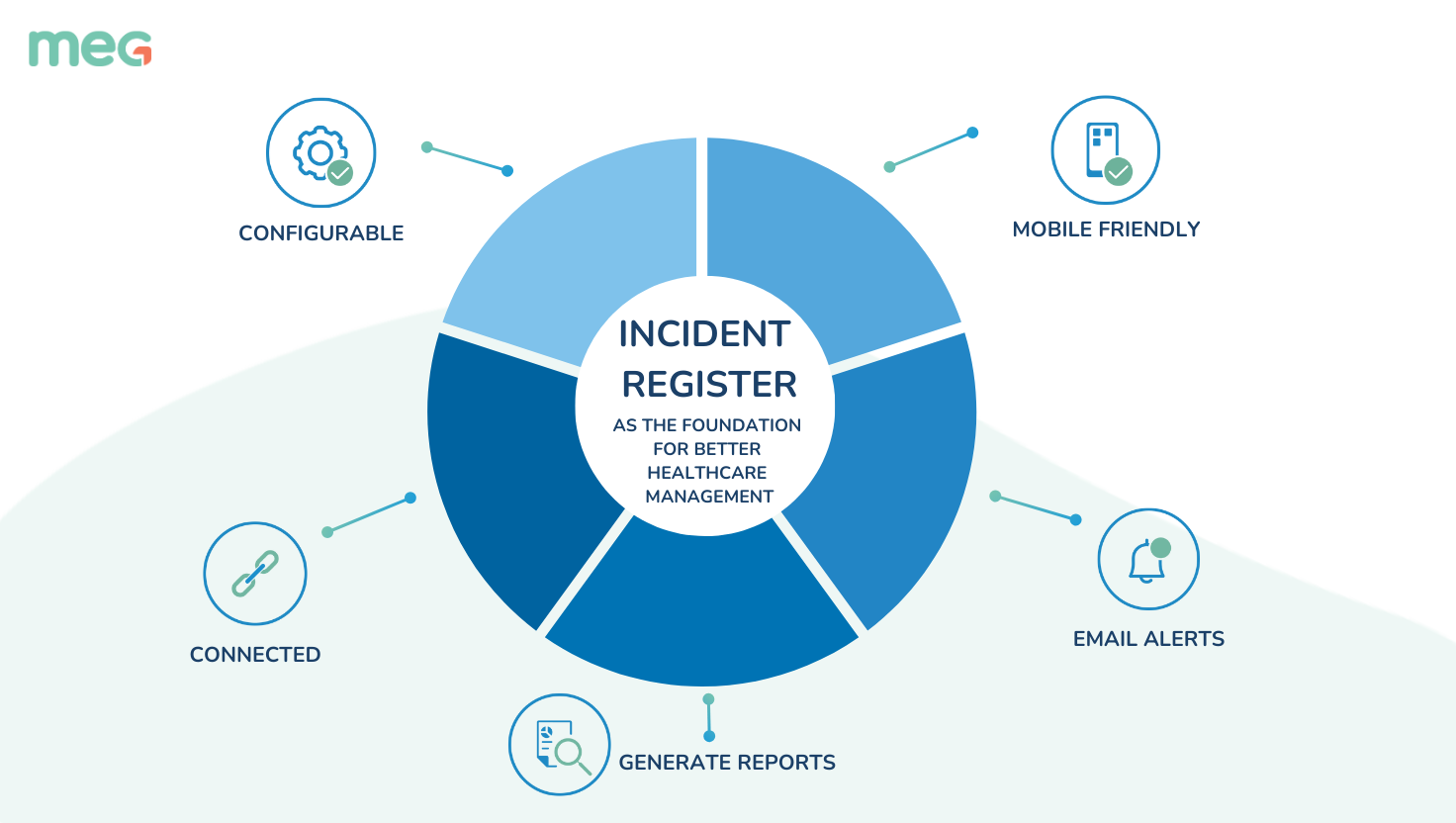
Building the Foundation: Why an Incident Register is the First Step to Better Healthcare Management

In todayโ€™s fast-paced healthcare environment, ensuring patient safety and delivering quality care requires efficient and reliable systems. One of the most fundamental tools for achieving this is an incident register. By capturing incidents in real-time, healthcare organisations can not only ensure accurate and timely data but also lay the groundwork for robust risk management workflows. This blog explores the critical role an incident register plays in transforming healthcare management, offering practical examples and insights.

The Importance of Capturing Incidents in Real-Time

Timely incident reporting is crucial in healthcare. Delays in reporting can lead to incomplete data, misinterpretation of events, and missed opportunities to prevent future issues. A real-time incident register ensures:

  1. Data Accuracy: When incidents are logged immediately, details are fresh and accurate, minimising the risk of errors or missing information.

  2. Timeliness: Quick reporting allows for faster responses, reducing the likelihood of escalation and improving patient outcomes.

  3. Transparency: Real-time updates foster a culture of accountability and transparency across teams.

For example, a nurse who identifies a medication error and logs it into the system immediately enables management to act swiftly, mitigating potential harm to the patient and initiating corrective measures.

An Incident Register: The Cornerstone for Risk Management

An incident register is more than just a log of events; it is the foundation for actionable risk management workflows. Hereโ€™s how it supports healthcare organisations:

  1. Centralised Data: By consolidating all incidents in one place, organisations gain a holistic view of risks, trends, and patterns.

  2. Workflow Integration: Incident registers feed into broader risk management systems, enabling seamless tracking, investigation, and resolution of issues.

  3. Proactive Prevention: With clear insights into recurring problems, healthcare teams can implement measures to prevent future incidents.

Consider a hospital where falls among elderly patients are consistently recorded in the incident register. The data enables leadership to identify patterns, adjust protocols, and implement preventive measures such as improved staff training and patient monitoring systems.

Real-World Impact: Proactive Incident Management

Registering incidents proactively can dramatically improve patient safety and organisational efficiency. Here are two examples:

  • Reducing Repeat Issues: A clinic identifies a recurring issue with surgical instrument sterilization after reviewing its incident register. By addressing the root cause, they eliminate future risks and enhance patient safety.

  • Improving Patient Outcomes: A hospitalโ€™s real-time reporting system highlights medication administration errors. Immediate corrective actions and staff training reduce such errors by 30% within three months.

These examples underscore the value of an incident register as a transformative tool for healthcare management.

Conclusion

An incident register is not just a system; itโ€™s the foundation for a safer, more efficient healthcare environment. By capturing incidents in real-time, healthcare organisations can ensure data accuracy, streamline risk management workflows, and proactively prevent recurring issues. Building this foundation is the first step toward better healthcare management and improved patient outcomes.

Ready to elevate your healthcare management?
Explore how MEGโ€™s Incident Management Software can streamline your reporting process and lay the foundation for effective risk management.

A New Approach to Improving Hand Hygiene Compliance at the Navarra Clinic with MEG

At the Navarra Clinic, patient safety is a top priority. Like many healthcare facilities, hand hygiene is essential to reducing healthcare-associated infections (HAIs)โ€”a persistent challenge in the sector. In 2024, at the 2nd International Electronic Conference on Clinical Medicine, Blanca Rodrรญguez shared how the clinic began implementing MEG, a tool that is helping them measure hand hygiene adherence more effectively, a critical factor in infection prevention.

Why is Hand Hygiene So Important?

HAIs are a serious issue in any healthcare system, and in Spain, they are estimated to cause around 6,000 deaths annually. They also represent a significant cost, nearing 2 billion euros. However, according to a systematic review by Mouajou et al. (2022), suggests that up to half of these infections could be prevented with proper hand hygiene, especially during five critical moments:

  1. Before touching the patient.

  2. Before performing aseptic procedures.

  3. After exposure to bodily fluids.

  4. After touching the patient.

  5. After contact with the patientโ€™s surroundings.

5 moments for hand hygiene - WHO

Implementing MEG: A Support in Data Collection

Hand hygiene monitoring at the Navarra Clinic combines direct observation with the MEG tool, providing a comprehensive approach to data collection. With MEG, the clinic can effectively track all five hand hygiene moments and record additional details, such as the type of hygiene performed (alcohol-based solution, soap and water, or none) and the duration of handwashing, ensuring it meets the recommended time.

Transforming the Process with MEG

Before MEG: Hand hygiene monitoring was based on manual observation, which, while useful, offered limited insights due to smaller sample sizes.

After MEG: With MEG, the clinic has completely transformed its monitoring process. They can now track all five key hand hygiene moments and collect detailed data, including the type of hygiene performed (alcohol-based solution, soap and water, or none) and the duration of handwashing (more or less than 20 seconds).

Since implementing MEG, the clinic has seen a remarkable increase in the number of observations. This significant growth in both the quantity and quality of data has provided a clearer understanding of average adherence. It has also enabled the clinic to tailor hygiene protocols to address specific needs more effectively.

As a result, the clinic now benefits from a more accurate and actionable view of hand hygiene adherence, driving meaningful improvements in their practices.

Hand Hygiene Audit Form (example only)

โ€œIt has been a pleasure to share the impact that using MEG has had in improving hand hygiene adherence at CUN. You canโ€™t improve what you donโ€™t know, and you canโ€™t know what you donโ€™t measure. Tools like MEG are essential for preventive medicine.โ€

-Blanca Rodriguez, Nurse in Preventive Medicine at Clinica Universitaria de Navarra

Enhanced Insights

Since adopting MEG, the clinic has seen a remarkable increase in the volume and quality of observations. This larger dataset has provided a clearer understanding of adherence rates and allowed the clinic to customise hygiene protocols to address specific areas for improvement. By minimising biases and collecting more statistically reliable data, the clinic now has actionable insights to enhance patient safety.

Advantages of using an electronic tool

Using an electronic tool for hand hygiene (HH) offers several advantages. It provides immediate reports sent directly to your email, ensuring quick access to up-to-date data. The tool allows for customised reports by date, area, profession, and hygiene moment, making it easier to track and analyse HH practices. It helps identify failures and target areas for improvement. Additionally, observations aren't limited to just IPC nurses, broadening the scope of data collection. Reports are easily accessible on the intranet, and monthly reports are shared in common areas to provide valuable feedback to staff.

  1. Instant Reporting: Access up-to-date data immediately via email.

  2. Custom Reports: Filter information by date, area, profession, or specific moments. Identify improvement opportunities and implement targeted corrective measures

  3. Use of quality management system: Implementation of a set of standardised processes, policies, and tools designed to ensure that the hospital consistently meets regulatory requirements. Helps improve efficiency, manage risks, monitor performance, and drive continuous improvement across all operations.

  4. Enhances Hand Hygiene Compliance: Ensures that healthcare staff consistently follow hand hygiene protocols by providing real-time monitoring, automated reminders, and data-driven insights to improve adherence to infection control standards.

  5. Intranet Access: Reports are accessible to all relevant staff members.

  6. Team Feedback: Monthly summaries are shared in common areas to engage staff and promote transparency. Observations can be done by trained professionals, not just IPC nurses.

Key Takeaways

  • Hand hygiene is essential to prevent healthcare-associated infections (HAIs).

  • Regular auditing is crucial for patient safety and effective improvement measures.

  • Benefits of electronic tools:

    • Enhance data collection.

    • Provide immediate feedback.

    • Save time for IPC teams.

    • Empower more professionals to collect data.

    • Offer a clearer picture of real adherence rates.

Efficient tools lead to actionable insights, fostering a culture of safety and improvement in healthcare.


Looking Ahead

While thereโ€™s still room for progress, the integration of MEG at the Navarra Clinic has already provided valuable insights to refine their hand hygiene practices. With more detailed data, the team can continue adapting protocols and training programs to meet their safety goals.

Blanca Rodrรญguez, Nurse in Preventive Medicine at Clรญnica Universitaria de Navarra, mentioned in her presentation that:

โ€œImplementing an electronic tool like MEG can be a great alternative for those seeking a more realistic and accurate approach to infection prevention.โ€

Transform Your Hand Hygiene Audits with MEG

MEG's Hand hygiene audit tool has empowered different clients to efficiently gather and analyse audit data directly on any device. This streamlined process has significantly reduced the time spent on manual tasks, allowing the team to focus more on enhancing audit quality and driving impactful improvements.

๐Ÿ‘‰ Contact us today to learn more!


Digitalisation and Patient Safety: A New Era

In healthcare, patient safety is a fundamental priority, and digitalisation is creating a turning point in how it is managed. Today, three key tools stand out as pillars in the identification and mitigation of adverse events: voluntary reporting, risk registers, and Global Trigger Tools (GTT).

In this blog, we explore the specificity and sensitivity of each tool, the transformative role of GTT, and how digitalisation and artificial intelligence (AI) are revolutionising their use.

How This Benefits Hospitals and Healthcare Workers?

Implementing digital tools like Global Trigger Tools (GTT) enhanced with AI doesnโ€™t just improve patient safety; it directly supports healthcare workers and streamlines hospital operations. These advancements empower frontline staff by reducing the administrative burden of manual reporting, allowing them to focus on what matters most: patient care. AI-powered systems detect risks in real-time, minimising human error and creating actionable insights that help healthcare teams address issues proactively.

For hospitals, this means a more resilient patient safety culture, faster responses to emerging risks, and enhanced compliance with international standards. The result? Safer environments for patients, more efficient workflows for staff, and an overall improvement in healthcare quality and outcomes. By embracing digitalisation, hospitals and healthcare workers can confidently move toward a future of smarter, safer care.

The Triad in Action: Voluntary Reporting, Risk Register, and GTT

Voluntary Reporting: A Frontline Perspective

  • Specificity: Highly specific since reported events often have a direct impact on care.

  • Sensitivity: Limited, as it relies on staff willingness to report, leaving some incidents undetected.

Risk Register: Mapping Potential Hazards

  • Specificity: Moderate, focusing on risks identified during audits and analyses.

  • Sensitivity: High for structural or systemic issues but may be less reactive to isolated events.

Global Trigger Tools: Detecting the Invisible

  • Specificity and Sensitivity: Combines the best of both worlds by identifying specific "triggers" that alert to potential adverse events, even those not voluntarily reported.

Why Are GTT the Future?

GTT doesnโ€™t rely on human memory or perception but on objective, data-driven analyses. It detects patterns, identifies areas for improvement, and provides insights that other tools might overlook.

The Technological Revolution: Digitalisation and AI Automation

Digitalising forms and incorporating AI are taking GTT to the next level:

  • Smart Digital Forms: Capture data more precisely and consistently, reducing human error.

  • AI in GTT: Processes large volumes of data in real-time, detecting triggers faster and more accurately. This not only accelerates the detection of adverse events but also optimises the organisational learning process.

Key Benefits:

  • Earlier risk detection.

  • Increased sensitivity and specificity in identifying events.

  • Faster and more effective corrective actions.

Conclusion

Digitalisation is not only modernising adverse event management but also transforming how we understand and prevent risks in healthcare. Adopting tools like GTT and enhancing them with AI is a crucial step toward safer and more efficient care.


Discover how this technology improves adverse event management.