
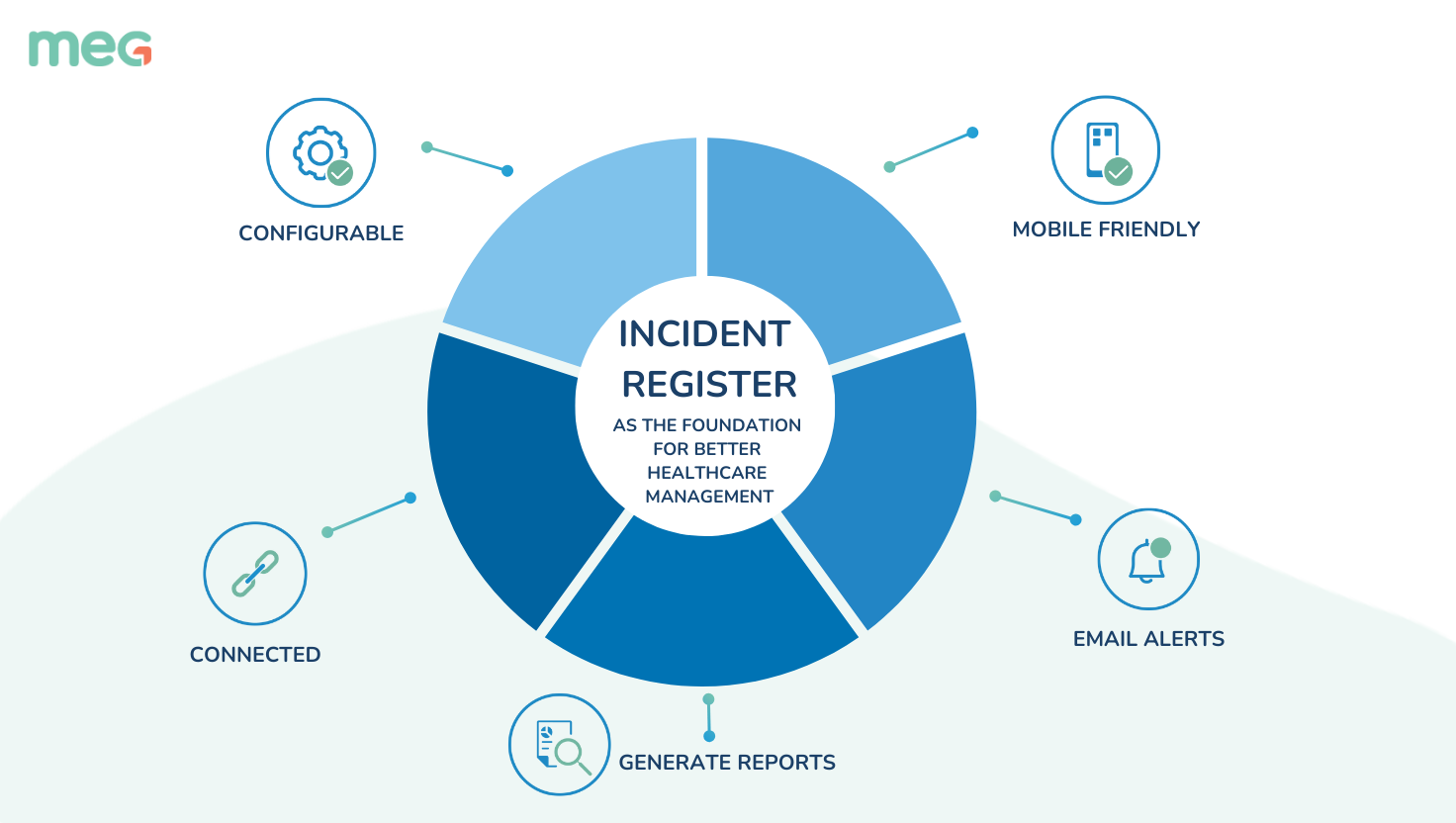
An incident register should do more than provide a record of what has already happened.
When incidents and near misses are captured consistently, healthcare organisations build a valuable source of patient safety data. Analysed collectively, this information can reveal recurring events, emerging patterns and underlying risks that may not be visible from individual reports.
The real value of an incident register therefore lies in what happens to the data afterwards.
By connecting incident reporting with investigation, trend analysis, action planning and a hospital risk register, healthcare organisations can move from reacting to individual events towards identifying and managing risks before further harm occurs.
WHO recognises incident reporting and learning systems as important components of patient safety, while emphasising that reporting data must be analysed and used for learning and sustainable risk reduction.
What Is an Incident Register in Healthcare?
An incident register is a central record of reported incidents, near misses and other safety events within a healthcare organisation.
Rather than information being dispersed across individual reports, emails or spreadsheets, an incident register gives patient safety and governance teams a structured view of events across departments, locations and time periods.
Depending on the organisation, this could include:
Patient safety incidents
Medication errors
Patient falls
Near misses
Staff safety incidents
Equipment-related events
Information governance incidents
Operational incidents
The register creates the data foundation for investigation and organisational learning. However, maintaining the register itself does not improve patient safety.
Its value comes from the organisation's ability to analyse what is being reported and act on what the data reveals.
The Importance of Capturing Incidents in Real-Time
A real-time incident register ensures:
Data Accuracy: When incidents are logged immediately, details are fresh and accurate, minimising the risk of errors or missing information.
Timeliness: Quick reporting allows for faster responses, reducing the likelihood of escalation and improving patient outcomes.
Transparency: Real-time updates foster a culture of accountability and transparency across teams.
For example, a nurse who identifies a medication error and logs it into the system immediately enables management to act swiftly, mitigating potential harm to the patient and initiating corrective measures.
Learn how to turn safety events into lasting improvements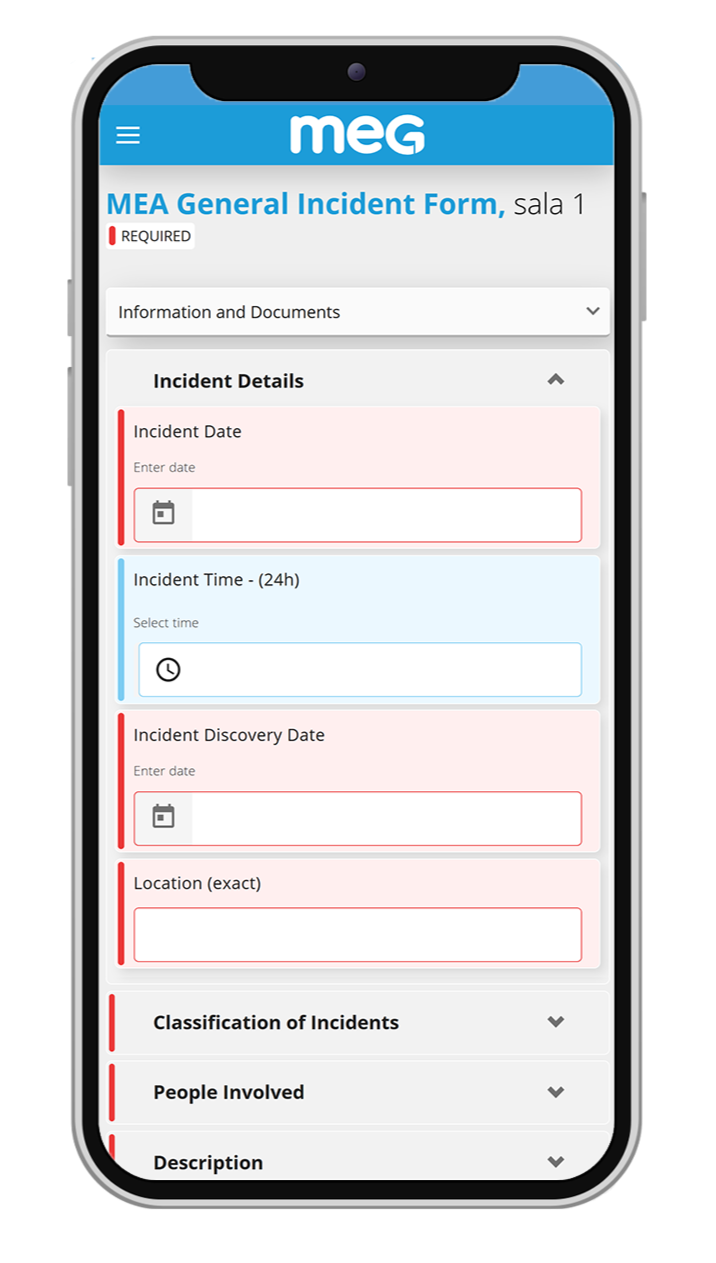
Incident Register vs Risk Register: What's the Difference?
An incident register and a risk register support different but closely connected parts of healthcare risk management.
An incident register provides a structured record of incidents, near misses and other safety events that have already occurred. It helps healthcare teams investigate individual events while building a dataset that can be analysed for recurring trends, contributing factors and potential areas of concern.
A hospital risk register, on the other hand, records identified clinical, operational and organisational risks that could affect patients, staff or the wider organisation. It allows teams to assess risks, document existing controls, assign ownership, implement mitigation actions and monitor whether the level of risk changes over time.
The important distinction is that an incident register primarily helps answer “What happened?”, while a risk register helps organisations consider “What could happen, and how are we managing that risk?”
However, the two should not operate in isolation. A single incident may require investigation and corrective action without becoming an organisational risk. But when analysis of the incident register reveals repeated events, common contributing factors or an emerging pattern, this may indicate a wider risk that needs to be assessed and added to the appropriate risk register.
The relationship can also work in the other direction. An existing risk may materialise as an incident despite controls being in place, providing new evidence about whether those controls are effective.
Connecting incident and risk management therefore helps healthcare organisations move beyond recording individual events towards understanding where recurring incidents may signal wider systemic risks and where further action is required.
From Incident Register to Hospital Risk Register
Imagine that a hospital records several patient falls. Viewed individually, each incident can be investigated and addressed. But when the incident register is analysed collectively, the organisation might discover that:
incidents are concentrated within particular wards;
events occur disproportionately during certain shifts;
the same environmental factor appears repeatedly;
similar corrective actions have previously been implemented;
or incidents continue despite an existing control.
At that point, the organisation isn't dealing solely with individual incidents. The pattern itself may indicate an organisational risk. The issue can then be assessed according to the organisation's risk methodology, escalated to the relevant healthcare risk register, assigned an owner and monitored over time.
How Early Pattern Detection Supports Proactive Hospital Risk Management
A healthcare risk management platform can help teams identify patterns that may be difficult to see when incidents are reviewed individually. By analysing incident data across factors such as incident type, severity, ward, location and time, recurring events and emerging risks can become easier to identify.
For example, several medication incidents may initially appear unrelated. Analysed together, they could reveal a recurring issue involving the same medication, process stage, clinical area or time of day.
Early pattern detection gives patient safety teams the evidence to investigate these trends, determine whether they represent a wider organisational risk and introduce appropriate controls or improvement actions.
This is how an incident register can become more than a record of past events—it can support proactive hospital risk management.
Read our new blog on hospital risk managementConclusion
An incident register is not just a system; it’s the foundation for a safer, more efficient healthcare environment. By capturing incidents in real-time, healthcare organisations can ensure data accuracy, streamline risk management workflows, and proactively prevent recurring issues. Building this foundation is the first step toward better healthcare management and improved patient outcomes.
Ready to elevate your healthcare management?
Explore how MEG’s Incident Management Software can streamline your reporting process and lay the foundation for effective risk management.