A New Approach to Improving Hand Hygiene Compliance at the Navarra Clinic with MEG

At the Navarra Clinic, patient safety is a top priority. Like many healthcare facilities, hand hygiene is essential to reducing healthcare-associated infections (HAIs)β€”a persistent challenge in the sector. In 2024, at the 2nd International Electronic Conference on Clinical Medicine, Blanca RodrΓ­guez shared how the clinic began implementing MEG, a tool that is helping them measure hand hygiene adherence more effectively, a critical factor in infection prevention.

Why is Hand Hygiene So Important?

HAIs are a serious issue in any healthcare system, and in Spain, they are estimated to cause around 6,000 deaths annually. They also represent a significant cost, nearing 2 billion euros. However, according to a systematic review by Mouajou et al. (2022), suggests that up to half of these infections could be prevented with proper hand hygiene, especially during five critical moments:

  1. Before touching the patient.

  2. Before performing aseptic procedures.

  3. After exposure to bodily fluids.

  4. After touching the patient.

  5. After contact with the patient’s surroundings.

5 moments for hand hygiene - WHO

Implementing MEG: A Support in Data Collection

Hand hygiene monitoring at the Navarra Clinic combines direct observation with the MEG tool, providing a comprehensive approach to data collection. With MEG, the clinic can effectively track all five hand hygiene moments and record additional details, such as the type of hygiene performed (alcohol-based solution, soap and water, or none) and the duration of handwashing, ensuring it meets the recommended time.

Transforming the Process with MEG

Before MEG: Hand hygiene monitoring was based on manual observation, which, while useful, offered limited insights due to smaller sample sizes.

After MEG: With MEG, the clinic has completely transformed its monitoring process. They can now track all five key hand hygiene moments and collect detailed data, including the type of hygiene performed (alcohol-based solution, soap and water, or none) and the duration of handwashing (more or less than 20 seconds).

Since implementing MEG, the clinic has seen a remarkable increase in the number of observations. This significant growth in both the quantity and quality of data has provided a clearer understanding of average adherence. It has also enabled the clinic to tailor hygiene protocols to address specific needs more effectively.

As a result, the clinic now benefits from a more accurate and actionable view of hand hygiene adherence, driving meaningful improvements in their practices.

Hand Hygiene Audit Form (example only)

β€œIt has been a pleasure to share the impact that using MEG has had in improving hand hygiene adherence at CUN. You can’t improve what you don’t know, and you can’t know what you don’t measure. Tools like MEG are essential for preventive medicine.”

-Blanca Rodriguez, Nurse in Preventive Medicine at Clinica Universitaria de Navarra

Enhanced Insights

Since adopting MEG, the clinic has seen a remarkable increase in the volume and quality of observations. This larger dataset has provided a clearer understanding of adherence rates and allowed the clinic to customise hygiene protocols to address specific areas for improvement. By minimising biases and collecting more statistically reliable data, the clinic now has actionable insights to enhance patient safety.

Advantages of using an electronic tool

Using an electronic tool for hand hygiene (HH) offers several advantages. It provides immediate reports sent directly to your email, ensuring quick access to up-to-date data. The tool allows for customised reports by date, area, profession, and hygiene moment, making it easier to track and analyse HH practices. It helps identify failures and target areas for improvement. Additionally, observations aren't limited to just IPC nurses, broadening the scope of data collection. Reports are easily accessible on the intranet, and monthly reports are shared in common areas to provide valuable feedback to staff.

  1. Instant Reporting: Access up-to-date data immediately via email.

  2. Custom Reports: Filter information by date, area, profession, or specific moments. Identify improvement opportunities and implement targeted corrective measures

  3. Use of quality management system: Implementation of a set of standardised processes, policies, and tools designed to ensure that the hospital consistently meets regulatory requirements. Helps improve efficiency, manage risks, monitor performance, and drive continuous improvement across all operations.

  4. Enhances Hand Hygiene Compliance: Ensures that healthcare staff consistently follow hand hygiene protocols by providing real-time monitoring, automated reminders, and data-driven insights to improve adherence to infection control standards.

  5. Intranet Access: Reports are accessible to all relevant staff members.

  6. Team Feedback: Monthly summaries are shared in common areas to engage staff and promote transparency. Observations can be done by trained professionals, not just IPC nurses.

Key Takeaways

  • Hand hygiene is essential to prevent healthcare-associated infections (HAIs).

  • Regular auditing is crucial for patient safety and effective improvement measures.

  • Benefits of electronic tools:

    • Enhance data collection.

    • Provide immediate feedback.

    • Save time for IPC teams.

    • Empower more professionals to collect data.

    • Offer a clearer picture of real adherence rates.

Efficient tools lead to actionable insights, fostering a culture of safety and improvement in healthcare.


Looking Ahead

While there’s still room for progress, the integration of MEG at the Navarra Clinic has already provided valuable insights to refine their hand hygiene practices. With more detailed data, the team can continue adapting protocols and training programs to meet their safety goals.

Blanca RodrΓ­guez, Nurse in Preventive Medicine at ClΓ­nica Universitaria de Navarra, mentioned in her presentation that:

β€œImplementing an electronic tool like MEG can be a great alternative for those seeking a more realistic and accurate approach to infection prevention.”

Transform Your Hand Hygiene Audits with MEG

MEG's Hand hygiene audit tool has empowered different clients to efficiently gather and analyse audit data directly on any device. This streamlined process has significantly reduced the time spent on manual tasks, allowing the team to focus more on enhancing audit quality and driving impactful improvements.

πŸ‘‰ Contact us today to learn more!


Digitalisation and Patient Safety: A New Era

In healthcare, patient safety is a fundamental priority, and digitalisation is creating a turning point in how it is managed. Today, three key tools stand out as pillars in the identification and mitigation of adverse events: voluntary reporting, risk registers, and Global Trigger Tools (GTT).

In this blog, we explore the specificity and sensitivity of each tool, the transformative role of GTT, and how digitalisation and artificial intelligence (AI) are revolutionising their use.

How This Benefits Hospitals and Healthcare Workers?

Implementing digital tools like Global Trigger Tools (GTT) enhanced with AI doesn’t just improve patient safety; it directly supports healthcare workers and streamlines hospital operations. These advancements empower frontline staff by reducing the administrative burden of manual reporting, allowing them to focus on what matters most: patient care. AI-powered systems detect risks in real-time, minimising human error and creating actionable insights that help healthcare teams address issues proactively.

For hospitals, this means a more resilient patient safety culture, faster responses to emerging risks, and enhanced compliance with international standards. The result? Safer environments for patients, more efficient workflows for staff, and an overall improvement in healthcare quality and outcomes. By embracing digitalisation, hospitals and healthcare workers can confidently move toward a future of smarter, safer care.

The Triad in Action: Voluntary Reporting, Risk Register, and GTT

Voluntary Reporting: A Frontline Perspective

  • Specificity: Highly specific since reported events often have a direct impact on care.

  • Sensitivity: Limited, as it relies on staff willingness to report, leaving some incidents undetected.

Risk Register: Mapping Potential Hazards

  • Specificity: Moderate, focusing on risks identified during audits and analyses.

  • Sensitivity: High for structural or systemic issues but may be less reactive to isolated events.

Global Trigger Tools: Detecting the Invisible

  • Specificity and Sensitivity: Combines the best of both worlds by identifying specific "triggers" that alert to potential adverse events, even those not voluntarily reported.

Why Are GTT the Future?

GTT doesn’t rely on human memory or perception but on objective, data-driven analyses. It detects patterns, identifies areas for improvement, and provides insights that other tools might overlook.

The Technological Revolution: Digitalisation and AI Automation

Digitalising forms and incorporating AI are taking GTT to the next level:

  • Smart Digital Forms: Capture data more precisely and consistently, reducing human error.

  • AI in GTT: Processes large volumes of data in real-time, detecting triggers faster and more accurately. This not only accelerates the detection of adverse events but also optimises the organisational learning process.

Key Benefits:

  • Earlier risk detection.

  • Increased sensitivity and specificity in identifying events.

  • Faster and more effective corrective actions.

Conclusion

Digitalisation is not only modernising adverse event management but also transforming how we understand and prevent risks in healthcare. Adopting tools like GTT and enhancing them with AI is a crucial step toward safer and more efficient care.


Discover how this technology improves adverse event management.

Honduras Medical Center Teams Up with MEG to Streamline Healthcare Quality Managemen

We’re thrilled to welcome Honduras Medical Center to the MEG family!

Recognizing the Need for Improvement

Located in the vibrant city of Tegucigalpa, Honduras Medical Center has been a beacon of healthcare excellence since 2003. With a dedicated team of 154 in-house specialists and 293 accredited external physicians, the hospital provides a wide array of services, including emergency care, maternity services, outpatient surgery, and intensive care. Its unwavering commitment to patient care has earned it a well-deserved reputation as one of the leading healthcare institutions in Honduras and Central America.

Addressing the Need for Change

As with many healthcare facilities, Honduras Medical Center faced challenges with outdated manual quality management processes. The inefficiencies of handling data collection, monitoring, and analysis manually were eating up valuable time and resources. Recognizing the need for a modern solution, the hospital set out to find a system that could:

  • Streamline routine tasks and optimize resource use

  • Be simple, intuitive, and adaptable to their specific needs

  • Integrate seamlessly with their existing systems, backed by strong technical support

Why They Chose MEG

It was during the Patient Safety and Quality Congress that MEG’s LATAM Business Development Manager, Mauricio Petri, introduced the hospital to MEG’s powerful suite of tools. After a thorough evaluation, the hospital chose MEG for its:

  • Easy-to-use, intuitive interface

  • Customization to fit the hospital’s unique workflows

  • Automation to handle repetitive tasks with ease

  • Dedicated support team to ensure success at every step

The MEG Modules That Made It Happen

The hospital’s digital transformation took off with the implementation of three key MEG modules:

What’s Changed So Far?

The results so far have been impressive. By streamlining their processes, these tools have already boosted operational efficiency, allowing the medical staff to focus more on what truly mattersβ€”providing top-notch care for their patients. MEG is helping Honduras Medical Center optimize its quality management processes, freeing up time and resources to drive strategic initiatives and enhance patient safety.

Looking Ahead Together

This collaboration is more than just the adoption of new softwareβ€”it's a partnership built on shared values of innovation and a relentless pursuit of improvement in patient safety and quality management.

To learn more about MEG and how we can help your organization, visit MEG website or get in touch with us directly.

MEG Celebrates Win in the Deloitte 2024 Technology Fast 50 Awards

Mark O’Reilly, Edel Churchill, Kerrill Thornhill, Leonora O’Brien and Helga Morrow from the MEG team at the Deloitte 2024 Technology Fast 50 Awards

MEG, a leading provider of healthcare quality, patient safety, and compliance software, attributes its growth to the dedication and talent of its team, along with its focus on innovation in healthcare technology.

Dublin, Ireland, 29 November 2024 β€” MEG today announced it has been ranked 24th in the 2024 Deloitte Technology Fast 50 Awards, a ranking of the 50 fastest-growing technology companies in Ireland. Rankings are based on average percentage revenue growth over four years.

MEG’s CEO, Kerrill Thornhill, credits the company’s remarkable growth to its team's creativity, drive, and close collaboration with customers to continually improve MEG’s platform. He said, "This achievement is a testament to the unwavering dedication and hard work of our entire team. Being recognised among Ireland’s fastest-growing companies is an acknowledgement of our overall success, but also of the meaningful impact we are making in the healthcare sector, helping to improve patient safety and save significant time for frontline staff by reducing manual administrative tasks. We are incredibly proud of our journey and are excited for what’s ahead."

The Deloitte Technology Fast 50 Awards is one of Ireland’s foremost technology award programmes. It is a ranking of the country's 50 fastest-growing technology companies based on revenue growth over four years, and this year marks 25 years of the programme celebrating innovation and entrepreneurship in Ireland’s indigenous technology sector.

Cumulatively, the 2024 Fast 50 winners generated €1.4 billion in total annual revenues and now employ over 6,200 people. The average revenue of companies featured in the ranking was approximately €28 million, while the average growth rate of the companies over the last four years was 572%. The awards programme also saw 11 new entrants appearing on the ranking for the first time. The companies ranked identified finding, hiring, and retaining top talent and international expansion as two of the biggest challenges they face in trying to grow their business.

Announcing the winners of the Deloitte Technology Fast 50 programme, James Toomey, Partner and Fast 50 lead at Deloitte, said: β€œWhile Ireland has solidified its reputation as a global hub for technological excellence, the true highlight has been the remarkable growth of homegrown tech talent. Over the past 25 years, the Fast 50 programme has been at the heart of this story, championing the innovation and ambition of indigenous tech companies in Ireland. The Fast 50 rankings are a badge of honour, offering trusted recognition based on four years of revenue growth. This credibility distinguishes the programme and not only identifies the tech leaders of tomorrow but signals their readiness to scale globally. Congratulations to all the companies and individuals whose hard work and innovation have earned them a well-deserved place on this year's Fast 50 rankingβ€”your achievements set the standard for excellence in tech.

About MEG

MEG is a digital quality management system for healthcare. Its suite of configurable mobile and cloud-based tools enables providers to engage staff in quality improvement, patient safety, and manage compliance with accreditation or regulatory standards. The easy-to-use modules can be used by frontline workers on any device to collect data from all over an organisation. They can capture incidents, conduct audits, risk assessments, feedback surveys, and access documents and information anytime at the point of care. Management can collate, analyse and act upon real-time information and metrics across multiple sites, consolidating data into a centralised platform. MEG operates in more than 20 countries in Europe, the Middle East, Australasia, and Latin America and offers multilingual support.

Advancing Patient Safety Through Digital Transformation: The University Clinic of Navarra’s Journey with MEG

Paulina & Mauricio from the MEG team at the SECA Conference

At the recent SECA Conference in Gran Canariaβ€”an annual event dedicated to advancing healthcare quality, safety, and efficiency through knowledge sharing and innovationβ€”the University Clinic of Navarra in Spain shared an inspiring story. Their focus was on patient safety and quality management innovation. Faced with the challenges of conducting thorough internal audits while maintaining high standards of patient care, the clinic turned to MEGβ€”a digital platform specialising in healthcare quality and safety managementβ€”to overhaul its approach.

In a presentation led by Mauricio Petri, a healthcare quality expert at MEG, and Juana Labiano, Director of Quality Service at the clinic, the audience learned how digital transformation can fundamentally reshape safety practices in healthcare. The clinic's adoption of MEG allowed for streamlined audit processes, real-time insights, and the reinforcement of a culture centred on safety and continuous improvement.

Here's a closer look at their transformative journey and how MEG became a key ally in enhancing patient safety through smarter audits.

The Challenge: Traditional Audit Methods Limiting Efficiency

Before implementing MEG, the University Clinic of Navarra used Google Drive-based questionnaires to collect audit data. This method, though functional, required intensive manual effort and resulted in significant delays. Preparing reports took up to 37 hours per audit, with summaries sent out only twice a yearβ€”in June and December. This delay meant that insights from audits often weren’t available until months after data collection, limiting the clinic's ability to act on real-time issues. It was clear that a faster, more efficient system was needed.

The Solution: MEG’s Real-Time Digital Transformation

MEG, launched in 2016, is a cloud-based healthcare quality, risk and compliance platform with a strong presence in over 22 countries and multi-language support. Designed to assist quality and safety programs in hospitals, MEG was the perfect solution for the University Clinic of Navarra’s audit transformation. Mauricio explains:

β€œThe pandemic highlighted the need for digital transformation, especially in patient safety areas. MEG’s ecosystem supports healthcare providers in transitioning to faster, more accurate audit processes.”

When the clinic partnered with MEG, they began the transition by restructuring their audit questionnaires and automating report generation, which helped cut report preparation time from 37 hours to just 7β€”an impressive 80% reduction. This shift allowed the team to conduct audits more frequently, contributing directly to a stronger focus on patient safety and quality of care.

Digital Audit Form (example only)

Key Benefits of MEG in Action

MEG brought three significant benefits to the clinic's auditing process:

  • Time Efficiency: The drastic reduction in report preparation time allowed the quality team to shift focus to other high-value activities and perform more audits annually.

  • Visual and Concise Reporting: MEG’s reports use intuitive β€œRAG” colour coding (red, amber, green) to show compliance levels, enabling healthcare professionals to identify performance areas at a glance.

  • Real-Time Feedback: With MEG, reports can now be sent out almost immediately after audits, keeping insights fresh and relevant for healthcare teams.

Juana, the Director of Quality Service at the University Clinic of Navarra, shares the impact:

β€œWhat used to take us 37 hours now takes just 7, which represents an 80% reduction in preparation time. This means we can deliver feedback almost immediately, keeping our safety culture active and engaged.”

Real-World Impact: Hand Hygiene and Beyond

One of the clinic’s key focus areas is hand hygiene, critical in preventing infection. With MEG, audit reports now visually display hand hygiene compliance across departments and by professional category, pinpointing areas for improvement. The colour-coded reports allow healthcare workers to quickly understand where standards are met and where immediate action is needed.

β€œInstead of waiting six months, we can now send reports at the right time, ensuring the feedback is relevant and actionable,” Juana adds.

Sample β€˜Hand Hygiene’ audit report using MEG’s colour-coded format for clear visual representation.

Building a Culture of Safety

Beyond technical improvements, MEG has enhanced the clinic’s safety culture by ensuring that all staff, from frontline workers to administration, are aware of their role in patient safety. Real-time reports and immediate feedback keeps patient safety at the forefront of daily operations. According to Juana:

β€œMEG has not only made our audits more efficient but has strengthened our organisation’s commitment to a culture of safety.”

Conclusion: A Step Forward in Patient Safety and Quality Care

With MEG, the University Clinic of Navarra has taken a significant step toward digital transformation in patient safety, optimising time and resources while continuing to promote a safe and high-quality environment for all. By optimising time and resources, MEG allows healthcare professionals to focus on what truly mattersβ€”providing a safe and high-quality environment for patients.


80% Time-Saving on Audit Preparation

With MEG’s automated report generation, the clinic reduced report preparation time from 37 hours to just 7 hoursβ€”a remarkable 80% time savings. This efficiency allows the quality team to reallocate valuable time toward other essential quality improvement activities, fostering a more agile and responsive audit system.

Increased Audit Frequency with Automated Scheduling

Automated scheduling and faster report turnaround allow the clinic to conduct audits more frequently, moving from a biannual to a more regular schedule. This increased frequency enables the clinic to monitor compliance continuously, catching and addressing potential safety issues before they escalate.

Enhanced Safety Culture Across the Organisation

Real-time feedback from MEG keeps audit results fresh and actionable, empowering staff to immediately see areas of strength and improvement. This approach has deepened the clinic’s commitment to a safety-first culture, where all team membersβ€”from frontline workers to managementβ€”are more aware and engaged in upholding patient safety standards daily.

As healthcare continues to evolve, digital tools like MEG provide essential support in meeting the growing demands of patient safety and quality care, paving the way for a more efficient, responsive, and proactive healthcare system.

How St. John’s Hospital Revolutionised Clinical Pharmacy Operations with MEG’s Clinical Pharmacy Module

Key Insights From Our Customer Webinar

In our latest webinar, MEG collaborated with St. John’s Hospital and its Senior Antimicrobial Pharmacist, Carol Johansson, to explore how the implementation of MEG’s Clinical Pharmacy Module revolutionised their pharmacy workflows. With challenges ranging from manual data entry to disjointed communication and risk management, St. John’s Hospital adopted a digital solution that streamlined processes, increased patient safety, and provided pharmacists with real-time data at their fingertips.

From Manual Processes to Digital Efficiency: A Pharmacy Transformation

Before adopting MEG’s Clinical Pharmacy Module, St. John’s Hospital pharmacists relied on cumbersome manual processes like Excel spreadsheets to track patient data, conduct medicine reconciliation, and document interventions. This approach was time-consuming, increased risk, and lacked the necessary data persistence, making it difficult to retrieve patient information during readmissions.

MEG’s Clinical Pharmacy Module automated many of these processes, allowing real-time tracking of patient data, prioritising high-risk patients, and facilitating multidisciplinary communication. The cloud-based system enabled the pharmacy team to focus on critical patient needs while ensuring compliance with safety protocols and regulatory requirements.

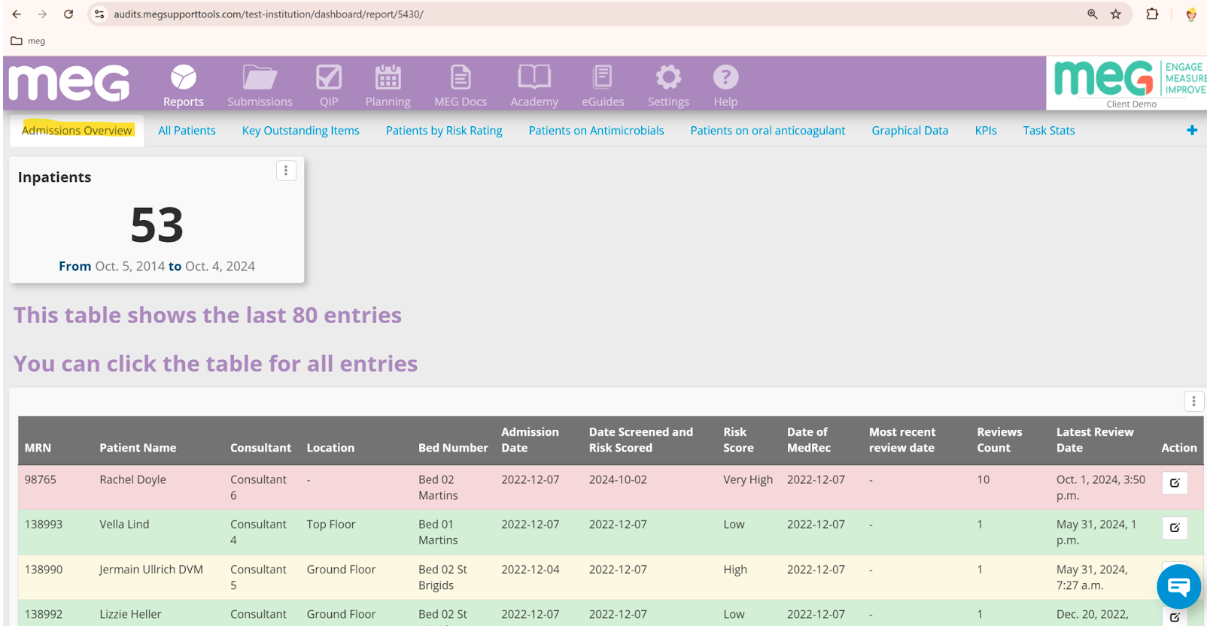
Main Dashboard Interface AND Patient Admissions (demo account)

Patients by Risk Rating (demo account)

Task Status (demo account)

Tasks by Handler (demo account)

Key Takeaways From St. John’s Hospital’s Success with MEG

Key Insight 1: Streamlined Workflow with Customisable Dashboards

  • MEG’s Clinical Pharmacy Module provided St. John’s Hospital with a dashboard that displayed essential patient information, such as bed numbers, risk scores, and medicines reconciliation status. Pharmacists could filter patients by risk, location, or ward, allowing them to prioritise tasks and manage workloads more efficiently. This helped reduce time spent on manual data management and improved decision-making processes.

Filtering by Risk Level (demo account)

Filtering by Location (demo account)

Key Insight 2: Streamlined Risk Scoring and Medicine Reconciliation

  • One of the major challenges for St. John’s was the manual risk scoring of patients, which was prone to inconsistency. MEG’s solution streamlined medicine reconciliation and task tracking, allowing pharmacists to efficiently prioritise high-risk patients and ensure they received prompt attention. The system also provided the ability to upload documentation and create standardised workflows for medicines reconciliation, which improved accuracy and safety.

Risk Scoring System Showing Patient Risk Categories (e.g. high, medium, low)

The medicines reconciliation status for each patient showing which patients have been reconciled or are pending (demo account)

The ability to upload documents related to patient care and medicine reconciliation tasks, showcasing how standardised workflows are integrated into the system.

Sample of the attached document (above)

Key Insight 3: Real-Time Task Management and Reporting

  • With MEG’s Clinical Pharmacy Module, St. John’s pharmacists could log, monitor, and complete tasks, from medicines reconciliation to risk assessments. The system’s tasks feature allowed pharmacists to assign tasks to specific team members, track the status of interventions, and ensure no patient was overlooked. This structured approach ensured clear communication across the pharmacy team and other healthcare professionals.

Tasks linked to a patient

Details of the task with handler, due date, status, and relevant intervention code.

Key Insight 4: Improved Multidisciplinary Communication

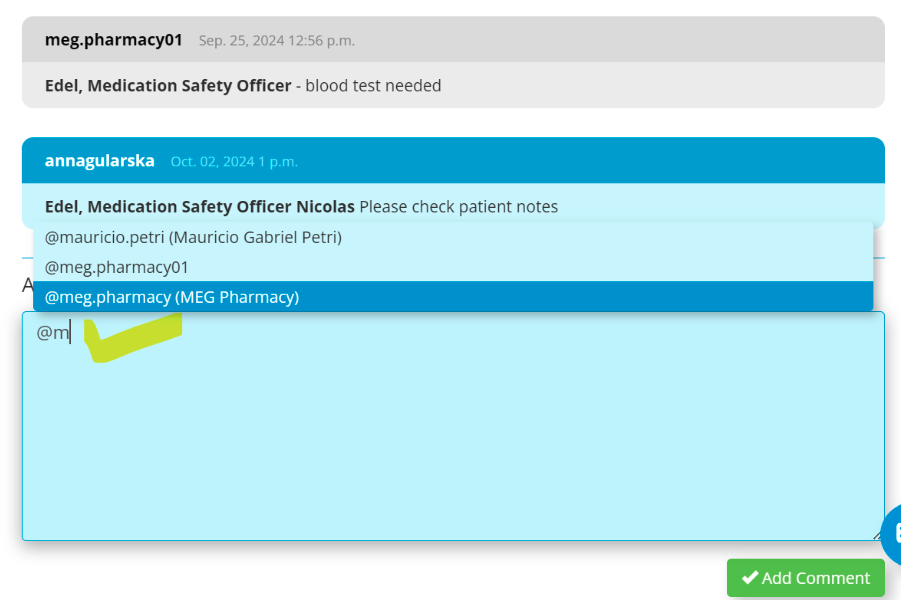
  • One of the module’s highlights was its ability to facilitate communication between the pharmacy team and other healthcare providers. Pharmacists could leave notes within patient records, alert colleagues to important updates, and tag team members to notify them of pending tasks. This streamlined handovers and ensured continuity of care, even when team members were absent.

Sample handover notes 

Easily tag colleagues in notes and alert them to messages.

Boosting Patient Safety and Justifying Resources with Data-Driven Insights:

Since implementing MEG’s Clinical Pharmacy Module, St. John’s Hospital has seen a remarkable improvement in both efficiency and patient safety. In just two and a half years:

  • 5,000 patients were screened through the system.

  • 14,400 interventions were logged, including changes to medication, clinical reviews, and antimicrobial optimisations.

  • These interventions included over 5,500 related to medicines reconciliation, ensuring that patients were on the correct medications upon admission.

These results not only demonstrated the value of clinical pharmacy in improving patient care but also helped justify increasing staff resources, as the data showed a high volume of critical tasks that required pharmacist intervention.

Example of a KPI dashboard

Overview of task status

Action Planning overview dashboard

'Quick launch' of relevant forms and tools in other MEG modules (e.g. Medications Incident Report, Risk Register, MEG Patient Database) without leaving the Clinical Pharmacy module

Best Practices and Actionable Advice:

Prioritise High-Risk Patients with Custom Filters

  • The ability to filter patients by risk scores or location was crucial in ensuring that St. John’s pharmacists could focus their attention on those at the highest risk of medication errors. Carol Johansson emphasised the importance of configuring risk score settings within the module to reflect the hospital’s unique needs, ensuring the team remained focused on the most vulnerable patients.

Integrate Task Management into Daily Workflow

  • By automating tasks and assigning them to specific pharmacists, the team ensured accountability and transparency. This practice prevented tasks from being missed and allowed better prioritisation, as pharmacists were able to focus on urgent cases based on patient data.

Use Accessible Data to Support Resource Allocation

  • St. John’s Hospital was able to justify adding more pharmacists to their team by leveraging the easy access to comprehensive data provided by MEG’s Clinical Pharmacy Module. Before MEG it would have been very challenging to gather and organise the necessary data to highlight patient acuity and workload. With MEG, Carol Johansson and her team could easily access detailed information on interventions, task management, and patient needs, allowing her to compile accurate insights to support a strong business case for additional resources. The module provided clear visibility into the pharmacy team's activities and impact, enabling hospital management to make informed, data-driven decisions about resource allocation based on precise, accessible information.

Ensure Multidisciplinary Collaboration

  • Integrating the pharmacy module into the broader hospital workflow facilitated smoother communication between pharmacists, doctors, and other healthcare providers. Ensuring everyone had access to up-to-date patient information helped improve collaboration and patient outcomes.

Explore the Full Webinar to Transform Your Pharmacy Operations:

To learn more about how MEG’s Clinical Pharmacy Module can transform your hospital’s pharmacy operations, watch the full webinar recording here. For a deeper dive into the features, schedule a personalised demo with our team and discover how this solution can improve patient safety and streamline workflows in your healthcare organisation.

Patient Experience in Latin America: Challenges and Opportunities to Ensure Safety

Healthcare is an essential part of our lives, aimed at preventing diseases, treating conditions, and improving our quality of life. However, in this noble effort to care for our health, healthcare systems can sometimes make errors that result in harm to patients. These errors not only cause physical and emotional suffering but also negatively impact people's trust in the healthcare system. In Latin America and around the world, patient safety has become a critical issue requiring urgent attention. In this blog, we will explore the current landscape of patient safety in Latin America, addressing common challenges and the solutions that organisations can implement to ensure optimal care.

Where Are We in Latin America?

Patient safety is a topic that cannot be overlooked. Harm to patients occurs even in advanced healthcare systems due to increasing complexity and the possibility of human errors. Process errors, lack of communication, and the absence of active patient involvement can be underlying factors in these issues. It is crucial to recognize that solely blaming the active provider does not address latent system errors. Instead of expecting individual perfection, it is necessary to create a safe environment with well-designed systems. This is where a shared and transparent safety culture comes into play, an essential component for preventing and improving healthcare errors.

Patient Safety: What Does It Mean?

Patient safety is not just an abstract concept but a concrete focus in healthcare. As healthcare systems become more complex, the likelihood of risks and errors associated with healthcare increases. The purpose of patient safety is simple yet fundamental: to prevent and reduce hazards, errors, and harm that patients may face during their healthcare. The foundation of this initiative is continuous learning from mistakes and adverse events to continuously improve and evolve.

Latin America: Confronting the Burden of Healthcare-Related Harm

Millions of patients in Latin America experience harm or even die due to unsafe healthcare. The situation is alarming, with examples including medication errors, healthcare-associated infections, and risky surgical procedures. Unsafe practices such as unsafe injections and misdiagnoses contribute to this burden. These problems not only jeopardize patient safety but also affect the overall quality of healthcare in the region.

The Data Speaks for itself 

  • Medication errors result in an annual cost of approximately $42 billion worldwide. Healthcare-associated infections affect 7-10% of hospitalised patients. 

  • Up to 25% of surgical patients experience complications, with one million surgical patients dying annually. 

  • Unsafe injection practices lead to 9.2 million years of disability-adjusted life lost. 

  • Diagnostic errors affect 5% of adults in outpatient care, with more than half of them potentially causing serious harm. 

  • Errors in radiation and septicemia cause preventable harm and deaths.

  • Venous thromboembolism is responsible for common and preventable harm.

Transformative Technology: Improving Patient Safety

In the digital age, technology plays a crucial role in healthcare improvement. Implementing patient safety and quality systems can make a difference. Through specialised software, effective audits can be conducted, and accreditations of high standards like those of the Joint Commission International (JCI) can be tracked. These systems not only monitor quality but also identify areas for improvement and prevent future incidents.

MEG: Offering Solutions

Through MEG, we present effective solutions to address common challenges in patient safety in the medical field:

1. Medication Management: We offer the Antibiotic Administration Survey to address common errors in medication administration.

2. Surgical Errors: To prevent surgical errors, responsible for 10% of preventable harm, we provide efficient access to the World Health Organization's Surgical Safety Checklist, available digitally in the context of Safe Surgery for Latin America and Spain.

3. Healthcare-Associated Infections: In response to healthcare-associated infections, accounting for 0.14% of cases, we implement measures to reduce antibiotic resistance and control infections in the medical field.

4. Sepsis: Sepsis is a critical concern, with approximately 23.6% of cases occurring in hospitals. We offer specialized audits in infection prevention and control to address this issue.

Looking to the Future

The data confirms that patient safety is a critical priority in Latin America and globally. Preventing and reducing adverse events in healthcare is possible through effective strategies and global collaboration. Our ultimate goal is to ensure that every patient receives safe and high-quality care. Through awareness, a focus on vulnerable groups, robust health policies, a safety culture, and ongoing research, we can move towards a future where patient safety is constant. The adoption of advanced technologies, such as audit and tracking software, will be crucial for continuously improving the quality and safety of care provided. Ultimately, we all play an important role in this process, from healthcare professionals to informed patients, collaborating to achieve optimal and safe care for patients.

Sources:

  1. World Health Organization (WHO). Patient Safetyhttps://www.who.int/en/news-room/fact-sheets/detail/patient-safety. Accessed September 11, 2023.

  2. IBEAS Study. IBEAS: A Pioneer Study on Patient Safety in Latin America: Towards Safer Hospital Care. May 4, 2011. https://www.who.int/publications/i/item/WHO-IER-PSP-2010.3


5 Tips for Digital Transformation in Type IV and Type II Hospitals

The digital transformation of hospitals is essential to enhance efficiency, improve patient care, and stay ahead in a rapidly evolving healthcare environment. Whether it's a large Type IV hospital with more than 300 beds or a mid-sized Type II facility with 60 to 150 beds, understanding the specific needs and challenges of each hospital type is crucial for a successful transition. Here are some key tips to guide the digital transformation process for these types of hospitals.

1. Technology Selection and Risk Management

Choose technologies tailored to the hospital's size and complexity, considering both current infrastructure and future needs.

  • Type IV Hospitals: A Type IV hospital, with over 300 beds and a wide range of services, should implement a comprehensive hospital management system that integrates all departments, enhancing coordination and streamlining operations across the board. This might include systems that manage patient records, inventory, scheduling, and more.

  • Type II Hospitals: For a Type II hospital with 60 to 150 beds, a modular system is ideal. This allows the hospital to start with essential components, such as document management, and gradually expand as needed. This approach ensures that the hospital can scale its digital capabilities in line with its growth.

2. Risk Assessment

Conduct thorough risk assessments before implementing new technologies, tailored to the hospital's scale and type.

  • Type IV Hospitals: Before rolling out a new digital system across the entire hospital, consider piloting it in a specific unit to ensure compatibility with existing systems and to avoid data loss. This step allows for any necessary adjustments before a full-scale implementation.

  • Type II Hospitals: For a Type II hospital, assess the risks associated with integrating a patient management system. A pilot test in a high-traffic area, such as the emergency department, can provide valuable insights into the system’s effectiveness and highlight any potential issues.

3. Enhancing Operational Efficiency

Adopt digital solutions that streamline internal processes and boost operational efficiency, customized to the hospital's specific needs.

  • Type IV Hospitals: Implement a real-time inventory management system to track and optimize the use of medical supplies and medications across various departments. For instance, integrating a pharmacy management system can significantly improve resource allocation and reduce waste.

  • Type II Hospitals: Introducing a hand hygiene auditing system or an incident risk management tool can reduce administrative burdens and improve patient flow management. These systems are particularly beneficial in hospitals with moderate patient volumes, where efficiency is crucial.

4. Patient Safety and Risk Management

Leverage advanced technologies to enhance patient safety, ensuring staff are trained to follow digital safety protocols.

  • Type IV Hospitals: Utilize detailed dashboards, heat maps, and issue-tracking features to identify and prioritize risks, plan interventions, and monitor progress. These tools are vital in large hospitals where managing a high volume of patients and data can be challenging.

  • Type II Hospitals: A pharmacy monitoring system with automated alerts for medication administration can significantly reduce errors and enhance patient safety, especially in critical care units. These systems help maintain high safety standards even in smaller hospital settings.

5. Training and Education

Provide ongoing training for staff on new technologies and safety protocols to ensure a smooth transition.

  • Type IV Hospitals: Offer comprehensive training workshops and online resources for all hospital staff on using the new hospital management system and understanding cybersecurity protocols. Continuous education is essential in large institutions to ensure that all employees are proficient with new systems.

  • Type II Hospitals: Implement targeted training sessions for administrative and clinical staff on using electronic medical records (EMRs) and scheduling tools. These sessions should be practical and focused on day-to-day operations to help staff adapt quickly to the new systems.

"The tool allowed us to evaluate more processes, involve more teams, and focus more efficiently on critical points, making our efforts more effective."

-Dr. Hugo Siu, Director of Quality, Anglo Americana Clinic, Peru.

Conclusion

Digital transformation in hospitals, whether large Type IV facilities or smaller Type II institutions, requires careful planning, risk management, and ongoing education. By selecting appropriate technologies, conducting thorough risk assessments, enhancing operational efficiency, prioritising patient safety, and investing in staff training, hospitals can successfully navigate the challenges of digital transformation. This process not only improves patient outcomes but also positions hospitals to meet future healthcare demands with agility and resilience.