
Every interaction within healthcare is a patient safety moment. For someone living with a long-term condition, those moments can extend across years of appointments, medications, tests, referrals, hospital admissions, discharge and ongoing care.
That is why World Patient Safety Day 2026, focuses on “Safe care for noncommunicable diseases”, under the slogan “Safe care for life!”
The World Health Organization (WHO) highlights the particular patient safety challenges associated with noncommunicable diseases (NCDs), including diabetes, cardiovascular diseases, cancers and chronic respiratory diseases. Because these conditions often require long-term treatment and repeated interactions with health systems, people living with NCDs can encounter safety risks across the entire continuum of care.
Globally, WHO estimates that 1 in 10 patients experiences harm during healthcare, with around half of that harm considered preventable. For people living with NCDs, long-term treatment needs, complex care and frequent interactions with health services can increase exposure to these risks over time.
But World Patient Safety Day also presents an opportunity to look beyond individual safety events.
When something goes wrong, can healthcare organisations connect what happened to what they already know? Can they learn from it? And can they demonstrate that learning has resulted in safer care?
For healthcare leaders, the challenge is not simply collecting more patient safety information. It is connecting the dots between reporting, learning and improvement.
One patient. Many safety moments.
Consider Sarah.
Sarah is 58 and lives with Type 2 diabetes and hypertension. Like millions of people living with long-term conditions, medications are an important part of managing her health.
During a routine medication round in hospital, a medication error occurs.
The error is identified and Sarah receives the appropriate care.
The immediate priority is, of course, Sarah's safety.
But from an organisational patient safety perspective, another important process is only beginning.
What happens next?
Is the medication error reported?
Is it investigated?
Can the organisation establish why it happened?
Have similar medication incidents occurred before?
Are corrective actions assigned?
Does a process or policy need to change?
And, crucially, can the organisation demonstrate that those actions resulted in improvement?
One medication error can represent many different patient safety moments.
How an organisation connects those moments can determine how much it learns from the event.
Medication safety demonstrates why connected patient safety matters
Medication safety is particularly relevant to World Patient Safety Day 2026.
WHO specifically identifies medication errors among the sources of harm that should be proactively addressed across NCD care. Its calls to action for health practitioners also emphasise reporting incidents, sharing good practices and contributing to a culture of continuous improvement.
For healthcare facility managers, WHO calls for organisations to establish a safety culture, promote incident reporting by health workers and patients, and use data and lived experience to drive improvement. That distinction is important.
Incident reporting is not the same as organisational learning.
Capturing the incident gives the organisation a valuable piece of information. But the value of that information depends on what happens afterwards.
If Sarah's medication error is reported but the report becomes another record sitting within a database, the organisation has captured what happened without necessarily reducing the likelihood of it happening again.
Effective patient safety management therefore needs to move beyond simply asking:
“Was the incident reported?”
It must also ask:
“What did we learn, what changed and did it make care safer?”
Reporting an incident should be the beginning, not the end
A strong incident reporting culture enables healthcare workers to raise concerns, report near misses and document adverse events without the process becoming centred on individual blame. That creates an opportunity to investigate the wider conditions surrounding an incident.
In Sarah's case, an investigation into a medication error might consider factors such as workflows, communication, staffing conditions, medication processes, clinical guidance or other contributing system factors.
The goal is not simply to establish who was involved. It is to understand why the system allowed the incident to happen.
That shift from individual blame towards systems learning is critical to building a stronger patient safety culture. But investigation itself is still only part of the process.
Once contributing factors have been identified, healthcare organisations need a reliable way to turn findings into action.
That might involve:
assigning corrective and preventive actions;
reviewing or updating a policy or procedure;
communicating changes to relevant teams;
providing additional education or training;
changing a workflow or process;
conducting follow-up audits; or
monitoring whether similar incidents continue to occur.
The patient safety loop is only truly closed when organisations can move from incident → investigation → action → evidence of improvement.
What if Sarah's incident isn't an isolated event?
Now imagine Sarah's medication error has been reported. On its own, the incident tells the organisation something important about Sarah's care. But what happens if three similar medication incidents were reported in another department?
What if patient feedback contains recurring concerns about medication information?
What if an audit has identified inconsistent compliance with a relevant procedure?
What if corrective actions relating to an earlier medication incident remain outstanding?
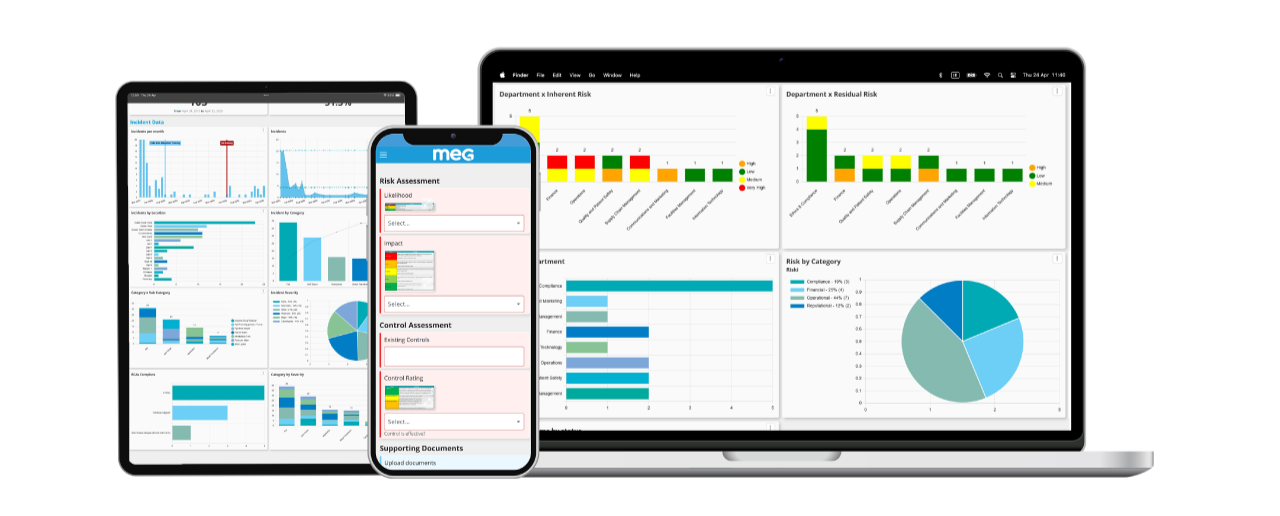
Individually, these may appear to be separate quality records. Together, they could represent something much more significant: an emerging patient safety signal.
This is one of the challenges facing healthcare quality and patient safety teams. Valuable information can exist across incident reports, near misses, patient feedback, complaints, audits, risk registers, policies and improvement actions.
When these activities are managed in isolation, seeing the bigger picture becomes harder. Connecting them allows organisations to move beyond individual events and ask more meaningful questions.
Are we seeing a pattern?
Where is risk increasing?
Have previous interventions worked?
Are the same contributing factors appearing repeatedly?
What are patients telling us that our other safety data isn't?
These are the questions that turn patient safety data into patient safety intelligence.
From patient safety data to patient safety intelligence
Healthcare organisations are not short of data. The challenge is making that data useful.
An organisation may have hundreds or thousands of incident reports, audit findings, complaints, feedback comments and improvement actions. Manually reviewing that volume of information and identifying meaningful connections can place a considerable burden on quality teams.
This is also where artificial intelligence can increasingly support patient safety and quality management. Within MEG, AI can help teams make sense of large volumes of quality information, including analysing patient feedback to identify themes that may warrant further investigation. AI should not replace clinical judgement, investigation or human decision-making.
Instead, AI can help healthcare teams surface the information that deserves their attention, making it easier to move from large volumes of safety data towards actionable insight. AI-powered analysis of patient feedback can help identify sentiment, recurring themes within the patient voice, providing another source of intelligence for quality improvement.
The objective is ultimately the same:
See the signal. Understand the risk. Act earlier.
Read our blog on AI sentiment analysis
Patient voice is part of the safety picture
Another central message of World Patient Safety Day 2026 is that people living with NCDs must be partners in safe care. WHO encourages healthcare organisations to use lived experience and data to improve care, while giving patients meaningful opportunities to raise concerns and contribute to safer systems.
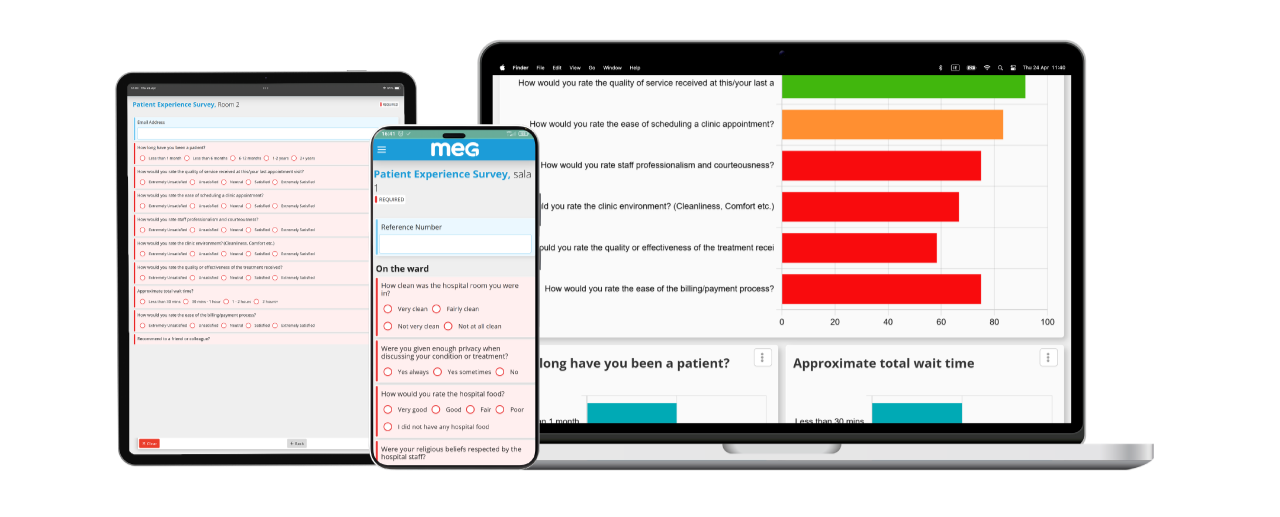
Patient feedback therefore shouldn't exist entirely separately from patient safety. A complaint about confusing medication information may initially appear to be an experience issue. One comment may be anecdotal. But repeated comments about the same issue, particularly when combined with incident or audit data, may indicate something that deserves closer attention.
Patient feedback can therefore provide an important additional perspective on risk.
Connecting the patient voice with other sources of quality and safety information helps organisations understand not just what their systems are reporting, but what patients are experiencing.
Closing the patient safety loop
For World Patient Safety Day 2026, WHO is calling on healthcare organisations to establish systems that enable safe NCD care, support health workers, promote incident reporting and use data and lived experience for continuous improvement.
Achieving that requires more than capturing information.
It requires a connected cycle of learning:
REPORT
Make it straightforward for staff to report incidents and near misses at the point of care.
↓
INVESTIGATE
Understand what happened and identify the system factors that contributed.
↓
CONNECT
Look beyond the individual incident for related risks, trends, previous incidents, patient feedback and quality findings.
↓
ACT
Assign corrective actions, update processes and policies, and ensure responsibilities are clear.
↓
MEASURE
Use audits, safety indicators and ongoing monitoring to establish whether interventions have worked.
↓
LEARN
Share learning and use the evidence to drive continuous improvement.
Then repeat. Because patient safety isn't a project with an end date. It is a continuous organisational capability.
Safe care for life requires systems that learn for life
Sarah's medication error began as one patient safety event. But its potential impact doesn't have to end with Sarah. When an incident is reported, investigated and connected with other sources of safety information, it can create an opportunity for organisational learning.
When that learning leads to corrective action, updated processes and measurable improvement, one patient's experience can contribute to safer care for the next. That is ultimately what a mature patient safety system should enable.
Not simply more reporting.
More learning from what is reported.
Not simply more data.
Greater visibility of what the data is telling us.
And not simply responding to individual incidents.
Building safer systems as a result of them.
This World Patient Safety Day, the challenge for healthcare organisations is therefore not only to ask whether they have systems for capturing patient safety information.
It is to ask:
Are those systems connected well enough to turn information into learning, and learning into safer care?
At MEG, we believe healthcare quality and patient safety are strongest when the dots are connected. By bringing incident management, audits, patient feedback, policies and procedures, risk and improvement activity into a connected digital quality management environment, healthcare organisations can gain greater visibility across the patient safety journey and support a closed-loop approach to continuous improvement. Because safe care for life requires systems that learn for life.