
Last year saw substantial growth for MEG, with a doubling of our team and significant expansion of our global user base. Excitement builds as we embark on groundbreaking developments in enhanced interoperability, advanced data analysis, and mobile-driven tools customised for healthcare.
A Practical Guide to the NHS Patient Safety Incident Response Framework (PSIRF)
The Patient Safety Incident Response Framework (PSIRF) has transformed how NHS organisations respond to patient safety incidents, shifting the emphasis from investigation targets towards proportionate, system-based learning and meaningful improvement.
Introduced in August 2022 and implemented across services covered by the NHS Standard Contract, PSIRF is now an established part of patient safety governance in England. NHS England's Patient Safety Incident Response Standards were most recently updated in January 2026.
For NHS patient safety teams, the priority is no longer simply preparing for PSIRF implementation. It is ensuring that learning responses are proportionate, improvement actions are effective and governance processes demonstrate sustained learning.
This guide explains the PSIRF framework, its requirements, the national learning response toolkit and how MEG helps NHS organisations manage PSIRF-aligned workflows.
What Is the Patient Safety Incident Response Framework (PSIRF)?
The Patient Safety Incident Response Framework (PSIRF) sets out the NHS approach to responding to patient safety incidents for the purpose of learning and improving patient safety.
It replaced the Serious Incident Framework (2015), moving away from investigation thresholds and prescribed response times towards an approach informed by organisational safety priorities, system-based learning and the potential for improvement.
PSIRF is built around four key principles:
Compassionate engagement with patients, families and staff affected by incidents.
System-based approaches to understanding how incidents occur.
Proportionate responses based on learning and improvement opportunities.
Supportive oversight focused on improving the effectiveness of patient safety response systems.
Importantly, PSIRF does not require every reported incident to undergo a formal investigation. Organisations must select appropriate responses based on their patient safety incident response plans, national requirements and the learning available.

How Is PSIRF Different from the Serious Incident Framework?
The previous Serious Incident Framework relied on thresholds for determining which incidents required formal investigation.
PSIRF takes a different approach, recognising that the severity of an incident does not always indicate the greatest opportunity for learning.
For example, recurring medication near misses may reveal system weaknesses that warrant a thematic review, even where no patient harm has occurred.
Under PSIRF, organisations can select proportionate learning methods that examine contributory factors and identify opportunities for sustainable improvement.
The emphasis shifts from the number of investigations completed to the quality of learning and the effectiveness of resulting safety actions.
Who Does PSIRF Apply To?
PSIRF is a contractual requirement for healthcare services provided under the NHS Standard Contract, including acute, ambulance, mental health, community and specialist services.
It also applies to relevant NHS-funded care delivered by independent providers. Primary care services outside the NHS Standard Contract are not automatically required to adopt PSIRF, although providers may choose to apply its principles in collaboration with their integrated care board (ICB).
What Are the Current PSIRF Requirements for NHS Organisations?
Organisations must maintain two core documents: a Patient Safety Incident Response Policy and a Patient Safety Incident Response Plan.
The policy describes how the organisation responds to incidents, engages those affected, manages governance responsibilities and connects learning with improvement. The plan identifies local patient safety priorities, explains the learning response methods to be used and provides the rationale for selecting them.
Both documents must remain aligned with organisational safety intelligence, available resources and emerging improvement priorities. NHS England's January 2026 Patient Safety Incident Response Standards also cover competence and capacity, compassionate engagement, proportionate responses and oversight responsibilities.
For patient safety leaders, the ongoing challenge is ensuring these requirements are reflected in everyday workflows rather than existing only within approved documents.
What Is Included in the PSIRF Learning Response Toolkit?
The NHS England Patient Safety Learning Response Toolkit provides system-based methods and practical resources to help organisations understand contributory factors and identify improvement opportunities.
The toolkit incorporates principles from the Systems Engineering Initiative for Patient Safety (SEIPS) and includes:
Preparation tools: Stakeholder mapping, information gathering and terms of reference.
Learning response methods: Patient Safety Incident Investigation (PSII), After Action Review (AAR), multidisciplinary review and swarm huddles.
Work system analysis: Interviews, observations, walkthroughs and methods for exploring everyday clinical practice.
Learning synthesis and safety actions: Thematic analysis, identification of contributory factors and development of improvement actions.
Organisations should select methods according to the nature of the concern and the learning required, rather than treating the toolkit as a checklist of activities that must be completed for every incident.
How Can NHS Trusts Apply PSIRF in Practice?
Effective PSIRF implementation requires a connected process from incident identification through learning response, safety action development and effectiveness evaluation.
1. Identify and Review Patient Safety Concerns
Incident reports, risk registers and wider safety intelligence help organisations recognise emerging concerns and recurring patterns.
MEG's Incident Reporting and Risk Management module supports structured incident capture, configurable reporting workflows and analysis of safety trends across departments.
2. Select a Proportionate Learning Response
Patient safety teams must determine whether an incident requires a formal investigation, an alternative learning response or consideration within existing improvement activity.
MEG supports configurable incident management workflows, enabling teams to document decisions, manage investigations and retain relevant evidence within a central system.
3. Engage Patients, Families and Staff
Compassionate engagement is fundamental to PSIRF. Organisations should provide appropriate support and opportunities for those affected to contribute to the learning process.
MEG can support the recording and tracking of stakeholder involvement within incident workflows, helping teams maintain oversight of engagement activities and relevant follow-up.
4. Translate Learning into Safety Actions
Learning responses should lead to improvements that address the contributory factors identified. MEG's action planning tools enable teams to assign safety actions, establish accountability and monitor implementation across departments.
Where learning identifies the need to update clinical procedures, actions can also be connected with the Policy and Document Management module.
5. Evaluate Whether Improvements Are Working
Completing an action does not necessarily demonstrate that the underlying safety concern has been addressed.
For example, a revised medication administration procedure may require follow-up clinical audits to establish whether practice has changed.
MEG connects action management with clinical audits and reporting dashboards, helping governance teams monitor implementation and gather evidence of improvement.
Download PSIRF supporting documentation
How Can MEG Support PSIRF Implementation and Ongoing Governance?
PSIRF requires NHS organisations to coordinate several activities that are often managed through separate systems: incident reporting, learning responses, stakeholder engagement, safety actions and governance oversight.
MEG provides a connected healthcare quality management platform that supports these processes without requiring patient safety teams to manage each activity in isolation.
Incident reporting and LFPSE integration: MEG's LFPSE-compliant incident reporting capabilities support national data submission alongside local incident management and reporting requirements.
PSIRF-aligned learning workflows: Configurable workflows allow organisations to manage incident reviews, investigations, evidence and follow-up activities in line with local governance processes.
Safety action management: Improvement actions can be assigned to responsible individuals, tracked through implementation and connected with relevant risks, policies and audits.
Governance reporting: Configurable dashboards provide visibility into incident patterns, outstanding actions and improvement activity across services.
By linking these processes, MEG helps NHS organisations maintain a clearer record of how patient safety concerns progress from reporting through learning and improvement.
Importantly, PSIRF and LFPSE serve different but complementary purposes. LFPSE supports national patient safety event data collection and learning, while PSIRF establishes how organisations respond to incidents and use that learning to improve care.
Explore MEG's LFPSE-compliant and PSIRF-compatible software.
What do early adopters of the PSIRF have to say?
NHS England interviewed some of the early adopters of the PSIRF within their organisation to understand their experience with the new framework and their advice to providers who are now implementing PSIRF. Here's what some of them had to say:
Lucy Winstanley, Head of Patient Safety and Quality, West Suffolk NHS Foundation Trust
According to Lucy, West Suffolk NHS Foundation Trust identified an opportunity for change with the PSIRF while recognising the limitations of the Serious Incident Framework. She attributes the successful implementation of PSIRF to the organisation's board, which demonstrated an early commitment, embraced change, and remained open to collective learning.
That said, the organisation faced the challenge of spending considerable time on quantitative investigations that weren't high quality. To overcome this, they recruited specialised patient safety incident investigators who brought a wealth of experience and a different approach, significantly improving staff and patient engagement in the process. This strategic move ensured better support, enhancing the overall effectiveness of the system.
Lucy's advice to those transitioning to the PSIRF:
"You have to approach it as a collective with the freedom to know that you are making a change and doing it for the right reason. Flexibility and appetite for change have to be the drivers here because it is very different from what you know already — there will be questions and grey areas. Still, as a collective, if you're confident of your approach and keep patients at the heart of it all, it will be successful."
Megan Pontin, Patient Safety Incident Investigator, West Suffolk NHS Foundation Trust
Megan believes the PSIRF significantly differs from the Serious Incident Framework in many ways. Specifically, she finds involving patients, families, and staff right at the beginning of an investigation a game-changer.
Here's what Megan wants providers to bear in mind during the transition:
"Remember that this is quite a long journey, and you can't set it all out at the start. We all focus on doing the investigations correctly and learning from them. But the part about then transferring that into an improvement activity is perhaps the part that none of us had a strong framework on before. The PSIRF now allows us to do that, and that's where we need to focus."
Saranna Burges, Director for Patent Safety and Quality, Norfolk and Suffolk NHS Foundation Trust
According to Saranna, the PSIRF has empowered clinical staff to participate actively in every phase of the incident investigation process — from the early screening or the review of the incident to the debriefing and decision-making. This involvement has fostered a sense of ownership and engagement among them, offering valuable insights into the range of incidents within the trust and their effects on patients and caregivers.
Saranna's advice for mental trusts who are now implementing the PSIRF is:
"Get it right from the start what you're looking to do. You're looking to target areas where you have the most care and treatment concerns, not areas where you have the most incidents. Although that has to feature in your decision-making, it's the areas of care and treatment you must focus on. Be prepared for the fact that it won't reduce the activity levels. You're just going to be doing something different."
Lisa Falconer, Head of Clinical Quality and Patient Safety, NHS Derby and Derbyshire ICB
Lisa believes that the adoption of the PSIRF has resulted in trusts becoming more targeted in their approach to improvement plans. They now aim to embed and sustain these plans within their organisation, as opposed to merely identifying actions and documenting them in an investigation report, never to be revisited.
Lisa's advice to ICB leads is:
"The key is to get providers together and work alongside them every step of the way, guiding and supporting them by ensuring their plans are fit for purpose. Make sure to do every part of the journey; make sure you do all of it to get the most out of the PSIRF."
From PSIRF Implementation to Continuous Patient Safety Improvement
PSIRF represents a sustained change in how NHS organisations learn from patient safety incidents.
The challenge is ensuring that proportionate learning responses translate into meaningful safety actions, that those actions are evaluated and that governance teams can demonstrate the impact of improvement activities.
MEG supports this process by connecting incident reporting, LFPSE data submission, investigations, risk management, action planning and clinical audits within one platform.

Strengthen PSIRF-aligned patient safety management with MEG.
The Role of Advanced Healthcare Quality Management Solutions in KPI Management

In today's dynamic world of healthcare, the pursuit of high-quality care takes centre stage. Healthcare providers are tasked with delivering value-based care while ensuring patient safety and compliance with regulatory requirements. To help them achieve this and measure, manage, and enhance performance, healthcare institutions are increasingly turning towards Key Performance Indicators (KPIs).
Advanced healthcare quality management solutions have emerged as the unsung heroes of this mission, empowering organisations to create, monitor, and analyse KPIs with precision and efficiency. In this blog post, we'll explore the crucial role of modern QMS in KPI management and its contribution in achieving excellence in patient care.
Why Do Key Performance Indicators (KPIs) Matter?
KPIs aren't just mere numbers; they are critical markers or signposts that help healthcare providers and organisations assess the various aspects of healthcare delivery and evaluate how they're doing. They also serve as catalysts for the implementation of data-driven quality improvement strategies to enhance patient care.
For instance, tracking a KPI like the Hospital Acquired Infection (HAI) rate can help institutions identify infection hotspots, respond to outbreaks quickly, allocate resources better, and more.
That being said, legacy or paper-based quality management systems make it nearly impossible to track these KPIs. The abundance of fragmented data scattered across Excel spreadsheets, Google Drive, emails, and paper documents makes analysing data and deriving meaningful insights a Herculean task. It's like a jigsaw puzzle with no beginning and no end. That's where advanced healthcare quality management solutions come to the rescue, allowing organisations to create, measure, and understand these signposts, in turn, making healthcare better and safer.
Digital Quality Management Systems: The Game Changer
In a nutshell, an advanced healthcare quality management solution such as MEG helps with KPI management in three main ways:
1. Creation
Crafting Key Performance Indicators (KPIs) that align with your organisation's objectives and quality improvement efforts is the first crucial step in improving patient care. A comprehensive QMS provides valuable assistance in this regard by:
Providing industry-specific predefined templates that suggest KPIs based on best practices, regulatory standards, and the unique demands of healthcare settings. These templates act as a guide to help pinpoint the most relevant metrics to track.
Allowing seamless integration with various data sources such as clinical protocols and patient satisfaction surveys, in turn, simplifying the process of information gathering for accurate KPI measurement and analysis.
Providing the flexibility to modify or add new KPIs to align with shifting goals or emerging needs. This iterative approach ensures KPIs remain in sync with the organisation's evolving objectives.
2. Monitoring
Once Key Performance Indicators are defined, continuous monitoring is vital to assessing performance and identifying areas for improvement. An advanced healthcare quality management solution facilitates this through:
A centralised data repository or hub where information from various systems forms a single, reliable source of information, ensuring that the data for measuring KPIs is readily accessible and always up-to-date.
Real-time data capture that guarantees data is current and accurate, especially in the case of dynamic KPIs that require continuous monitoring.
Automated notifications and alerts when KPIs exceed predefined thresholds or targets. This ensures that any performance issues receive immediate attention and corrective actions.
3. Analysis and measurement
The analysis of Key Performance Indicators (KPIs) is the cornerstone of quality management in healthcare. Advanced quality management solutions excel in this aspect, providing a range of in-depth data analysis and visualisation tools that healthcare providers can use to deep-dive into performance metrics.
These features can generate a wealth of informative resources, including reports, interactive dashboards, historical data, and comparative data analysis, all of which are instrumental in helping healthcare organisations spot patterns, outliers, and areas needing attention.
This, in turn, allows organisations to gain the necessary knowledge to make informed, data-driven decisions, streamline processes, and refine strategies for patient care.
A Guide to Implementing Advanced Healthcare Quality Management Solutions
Are you ready to say goodbye to outdated legacy systems and embrace modern technology that can help your organisation revolutionise patient care, streamline operations, measure and monitor KPIs, and lead the charge in the ever-evolving world of healthcare? Then our whitepaper is for you.
Our whitepaper breaks down:
The key considerations to bear in mind when evaluating a new QMS from the myriad of solutions available
Best practices to help your organisation seamlessly adopt a new quality management system
What the end-to-end process of implementing a QMS looks like
Real-life case studies on how multi-site healthcare organisations replaced their legacy systems with MEG, the results from that transition, and more.
Download " Beyond Legacy Systems: The Path to Digital Transformation in Healthcare" now!
Transforming Healthcare: MEG and Blue Mirror Unite to Revolutionise PPE Training and Compliance

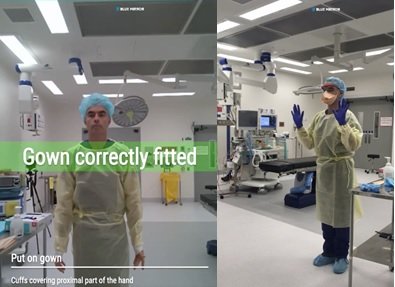
In healthcare, the safety of patients and staff is paramount. This is where the intersection of technology and healthcare compliance marks a new era — one where artificial intelligence (AI) isn't just a buzzword but a practical tool for enhancing infection control and adherence to regulations. Enter the strategic partnership between MEG and Blue Mirror, a collaboration redefining the meaning of "compliance reimagined."
The Power of Real-Time AI in PPE Monitoring
Integrating MEG's cutting-edge Quality, Compliance, and Patient Safety software with Blue Mirror’s virtual PPE Trainer is more than an advancement; it's a transformation. The AI-driven virtual mirror provides immediate, corrective feedback, guiding healthcare workers to perfect their PPE practices in real-time. This isn't just about checking boxes; it's about ensuring that frontline healthcare workers have the knowledge and skills to protect themselves and their patients effectively.
Informed Decisions with Data-Driven Insights
Data is the currency of improvement, and this partnership is rich in it. By harnessing the comprehensive data analysis capabilities of MEG's software, facilities can now dig deeper into their compliance strategies. This means the decision-making process is informed, strategic, and proactive, leading to better outcomes for all involved.
Efficiency in Training: A New Standard
Training healthcare workers on proper PPE usage has always been critical, but with this integrated approach, it becomes more efficient. The immediate feedback from the AI Trainer shortens the learning curve, ensuring that the healthcare staff are not just trained but are PPE-competent. The result is a more confident, safer workforce ready to face the challenges of patient care head-on.
Unified Reporting for Simplified Compliance
One of the most daunting aspects of compliance management is the disparate nature of data. MEG's software serves as a centralised hub, integrating the data from Blue Mirror's AI PPE Trainer into a user-friendly dashboard. This seamless integration means that data isn't just available; it's readily actionable.
As we look towards the future of healthcare, it’s clear that integrating MEG's software with Blue Mirror's AI technology isn't just a step forward — it's a leap into a new dimension of infection control and safety, positioning both companies at the forefront of this important innovation.
Healthcare facilities looking to stay ahead of the curve in patient and staff safety need not wait any longer. The future is here, and it's ready to be deployed. Contact MEG today for more information on how this partnership can benefit your facility.
Stay Ahead of the Game
The healthcare landscape is constantly evolving, and staying informed is key to maintaining a competitive edge. For more insights into healthcare innovation and compliance strategies, subscribe to our newsletter and join the conversation with industry leaders shaping the future of patient safety.
Our final event of 2023 is the IHI Forum Orlando!

For our final event of 2023, we are going stateside to Orlando for the IHI Forum for 4 days of networking and learning. The event takes place from December 10th - 13th in Orlando World Center Marriott Resort & Convention Center, Orlando, Florida and will bring together over 3,500 attendees from more than 55 countries.
The 5 keynote speakers include the iconic activist, environmentalist and author Erin Brokovich, IHI President and CEO Kedar Mate and Olympian and Maternal Health Advocate Allyson Felix. There are over 160 sessions to choose from with a range of topics, some that stood out to us include;
Workforce and patient safety
Equity
Building improvement capability, and
Person centred care
MEG will be exhibiting on booth number 232 and our founder and CEO Kerrill and Head of Customer Success Helga, are really looking forward to meeting some familiar faces and making new connections with healthcare professionals who share our goal and commitment to Quality Improvement & Patient Safety.
Stop by our booth to learn how our end-to-end, digital Quality Management System helps healthcare organizations all around the world drive a culture of quality improvement and deliver great care. See for yourself how we can help put time back into your team's day for the most important aspects of the job.
Kerrill and Helga will be on hand to showcase our modules including, Incident Reporting and Risk Management, Audit Management, Action Planning, Document Management and much more. If you would like to arrange some time to meet with them at the event email us here with your details and suitable time and day. Alternatively, if you can’t make the event and would like to learn more about MEG and arrange a call with a member of our team, you can arrange a demo call below.

Kerrill Thornhill

Helga Morrow
4 Strategies to Boost the Adoption of New Digital Quality Management Solutions in Healthcare Organisations

Today, healthcare organisations are undergoing an essential transformation by moving away from archaic paper-based and legacy quality management systems and embracing advanced, technology-driven solutions. Systems notorious for their manual processes, volumes of paper records, and time-consuming workflows are slowly but surely being replaced with modern software that streamlines processes and provides real-time data capture, analysis, and reporting.
This transition is vital because it empowers healthcare organisations across the globe to enhance care quality, improve patient safety, and ensure compliance with regulatory standards.
That being said, the shift from outdated systems to advanced digital quality management solutions in healthcare is more than just a matter of updating technology. It is a holistic change that impacts processes, people, and culture. The linchpin of success in this digital transformation journey is organisation-wide adoption. And that's where Nursing and Quality leaders emerge as important catalysts.
In this blog post, we will explore how Nursing and Quality leaders can lead the charge in the implementation and adoption of new digital quality management solutions within their organisation.
Choose the right software
While this may seem a no-brainer, finding and implementing a healthcare digital quality management solution that best aligns with your organisation's strategic and operational needs is critical to successful adoption. A recent Deloitte survey revealed that 80% of all digital transformation projects fail, with choosing the wrong solution being one of the key reasons. Though this statistic affects various sectors, extending well beyond healthcare, it underscores the significance of selecting the right digital tools from the get-go.
But what does 'choosing the right software' mean? In a nutshell, it means choosing a digital quality management solution specifically designed to meet the ever-evolving requirements of the healthcare industry. This includes features like configurability, scalability, security, and the ability to integrate with existing systems. We've covered this topic in detail in our whitepaper 'Beyond Legacy Systems: The Path to Digital Transformation'.
Another key feature to consider when evaluating software is User Experience (UX). Quality management systems with superior UX and an intuitive design largely eliminate the need for extensive frontline user training. An intuitive and user-friendly interface allows staff to confidently navigate the system, reducing the learning curve and expediting proficiency with the new software, ultimately, increasing adoption.
Pilot the new system
A pilot program refers to the testing of a new digital quality management solution on a smaller scale before committing to a full-scale implementation. This approach is great for risk mitigation, as it helps in the early identification of potential issues or vulnerabilities with the system, thereby reducing the risk of widespread problems in the future.
However, they can also be incredibly helpful in enhancing user adoption in the following ways:
A successful pilot program serves as proof of concept. When users see the benefits the new system brings to their daily work and how it fits into their existing workflows and processes, they are more likely to support its adoption.
Pilot programs help identify 'champions', a.k.a the enthusiastic early adopters who can positively influence their peers. Champions play a large role in encouraging staff to embrace the new system, in turn, boosting adoption rates.
Pilot programs allow for user testing and feedback. Staff who participate in the development and testing of the system can provide valuable feedback on how to make the system even better. Making the necessary adjustments and improvements will further increase the likelihood of user acceptance when fully deployed.
Create a thorough communication plan
Having a clear communication plan in place when rolling out a new digital quality management solution is crucial for many reasons. For starters, it ensures that everyone in the organisation, right from top-level management to frontline staff, receives consistent and factual information about the new system, in turn, eliminating confusion or misunderstanding. It is also a crucial component in change management to mitigate resistance and outline expectations, responsibilities, and timelines.
A thorough communication plan typically involves:
A kick-off meeting with senior leadership
Departmental meetings with middle management and frontline staff to discuss department-specific changes with the new QMS
Intranet and email updates to all staff on the progress of the implementation process and key milestones
Training workshops in the form of in-person sessions, online sessions, or self-paced modules for frontline staff on the new QMS, processes, and procedures
Feedback mechanisms through surveys, suggestion boxes, online forms, or a dedicated email address where staff can provide suggestions, highlight concerns, or report issues.
The key is to remember that effective communication is an ongoing process, and the communication plan may need to evolve to address new needs and challenges throughout the QMS implementation proces
Education and Training
One of the key factors in ensuring the adoption of a new digital quality management solution within an organisation is education and training. As mentioned earlier, while intuitive and user-friendly software minimises the learning curve, it is still important for Quality and Nursing Leaders to equip their teams with a deep understanding of the software, its benefits, and how to use it effectively.
Something that is often overlooked is the training of software administrators within the organisation. While the vendor’s customer support team should always be responsive and available to handle any requests, the goal should be to ensure that the organisation is as self-sufficient as possible. Thus, it is crucial to train admins with the basic knowledge required to effectively manage and troubleshoot the system and support other staff members when needed.
Comprehensive training programs that cover all aspects of the QMS, from basic navigation to advanced features, hands-on workshops, online learning resources such as video tutorials and e-learning modules, and even peer-led training sessions, are all great ways to boost adoption. It's also equally important to keep staff informed about system updates and changes over time to ensure they use all the features effectively.
Want to learn more change management strategies?
Check out our latest whitepaper!

Media Release: Adeney Private First Asia Pacific Hospital to Engage Full MEG Quality Management System for Patient Care

30 October 2023: The ground-breaking Adeney Private Hospital, a doctor-led venture with Medibank Private in Kew, Victoria, due to be completed in mid-2024, has announced it will be the first hospital in the Asia-Pacific region to implement the full suite of MEG Quality Management Systems for patient care.
The MEG system allows nursing and administrative staff to access apps and records at the point of care on devices so they can log incidents, complete audits and check policies at the time and place they need to without losing time or focus. For example, incidents can be logged as soon as they happen whereas with manual systems clinical staff will need to remember to write up incidents at the end of the day and forget or misremember some key details resulting in lost opportunities for system or process improvements. The system will also integrate with fellow Irish provider Oneview Healthcare’s system allowing patients to provide feedback from their beds.
“The MEG system will mean the hospital is fully and always compliant from the very beginning,” explains Adeney Private Hospital CEO Louise O’Connor. “With live access in their pockets, clinical staff can complete all of their forms on the go and we can be confident all paperwork is complete and up to date . This means audits will not be as onerous as they can be in traditional hospitals which can take up to 6 months to complete and up to $1m in staff time.
In addition, the mobile solution will help us provide the patient centred high quality care that is core to our vision as clinicians will have more time to spend bed-side with patients”.
The MEG system was chosen for its cloud-based solution. “As a brand-new greenfield site, we have the amazing opportunity to do this differently and build in innovation from the ground up, “says Paul Gladwell, ICT Project Director, Adeney Private Hospital. “We don’t want a big data centre footprint so the mobile-friendly and fully-cloud solution from MEG answers all our needs. In addition the MEG solutions covers a number of different requirements for us so it also reduces the number of systems we need to manage”.
MEG’s ecosystem will integrate with the Hospital’s Patient Administration System to ensure minimum replication or duplication of data entry.
Kerrill Thornhill, MEG Founder and CEO adds “"We are thrilled to partner with Adeney Private, a forward-thinking organisation that recognises the transformative power of modern cloud solutions. Their strong digital focus aligns seamlessly with our commitment to providing user-friendly and mobile-optimised solutions, ensuring that healthcare professionals have the tools they need at their fingertips.
“Thanks to Enterprise Ireland, we connected with Adeney Private Hospital, distinguishing itself as the first in Australia to adopt all modules available in MEG's Quality & Patient Safety suite - including audit, incident, risk, document management, action planning, training, and patient experience. This partnership highlights our commitment to the Australian healthcare sector and the versatility of our platform, tailored to streamline Adeney's operations and reduce the number of separate systems they require.
In a market where many still rely on outdated systems, this collaboration positions MEG at the forefront of healthcare innovation in Australia. Our solutions, built in line with Australian health standards, signal a new era in the quality management of healthcare delivery."
Judith Harrington, Senior Market Advisor – Digital Technologies & Services for Enterprise Ireland who is supporting MEG‘s entry into the Australian market comments: “We are delighted that such a state-of-the-art hospital is using two Irish partners MEG and Oneview to provide the best in support for patients and staff. We are very proud of the innovations Irish companies are making in digital healthcare and look forward to seeing that in action when Adeney opens”.
Medibank Private has plans to replicate the Adeney Private model across the Eastern seaboard. With its cloud-based model, the MEG system will be easy to rollout across new hospitals.
ENDS

Photo 1 Pictured at the site of the Adeney Private Hospital are from left to right: Mark Cox, MEG; Louise O’Connor, CEO, Adeney; Paul Gladwell, ICT Project Director, Adeney

Photo 2: Pictured left to right: Mark Cox, MEG; Louise O’Connor, CEO, Adeney; Paul Gladwell, ICT Project Director, Adeney; Judith Harrington, Senior Market Advisor, Enterprise Ireland
Media Enquiries:
Louise Nealon, Louise Nealon PR, 0403 569 177, louise@louisenealon.com
About MEG:
MEG is a cloud-based quality management system for healthcare. Its suite of integrated mobile/cloud-based tools enables providers to manage their care quality, patient safety, risk and compliance processes across multiple sites, bringing data into a centralised platform. megit.com
About Adeney Private Hospital:
Adeney Private Hospital is an exciting new way of thinking about health care. A joint venture between a group of doctors and Medibank Private, the hospital is majority owned by the doctors, providing, high quality, affordable healthcare. It will be the first hospital in Australia that aims not to charge insured patients any out of pocket expenses, across all specialities.
It is a short stay hospital, where both the prehab and rehab care are to be delivered outside the hospital, providing continuity for patients when they are discharged. adeneyprivate.com.au
MEG Down Under! Catch us at these events...
We are delighted to be attending 2 wonderful healthcare events in Australia this October and November. Mark Cox and Lauren D’Souza from the MEG team will be in Melbourne and Adelaide and look forward to meeting many existing clients and making new connections.

Their first stop is the IHI International Forum in Melbourne from October 30th to November 1st in the Melbourne Conference and Exhibition Centre. The theme for the event is ‘People powered change – a healthier life, a fairer system, a sustainable future.’ The aim of the event programme is to show how transforming healthcare is only possible when everyone comes together to power change. The event is hybrid and will be streamed online for those who cannot attend in person, you can also connect with us via our virtual stand on the virtual event platform.
If you will be in Melbourne at the event we would love to meet you. You will find Mark and Lauren on Stand #11, in front of the Wellbeing and Networking area. Stop by our stand to learn how our end-to-end, digital Quality Management System helps healthcare organisations all around the world drive a culture of quality improvement and deliver great care. See for yourself how we can help put time back into your team's day for the most important aspects of the job. The team will be on hand to showcase our modules including, Incident Reporting and Risk Management, Audit Management, Action Planning, Document Management and much more.

Less than 2 weeks later, Lauren and Mark will touch down in Adelaide for the ACIPC International Conference from 12th - 15th of November. The event will also be hybrid, with the physical event taking place in the Adelaide Convention Centre.
The 4 day event boasts an impressive and intense programme of workshops, sessions and presentations for delegates including, Challenges and joys of an IPC Lead – Tips for Success, Antimicrobial Stewardship in Australian Residential Aged Care Facilities and IPC leadership & value in a post-pandemic world: survival of the fittest.
Visit Mark and Lauren on Stand #27 where they will be showcasing our extensive range of Audits including Environmental Audits and WHO Hand Hygiene Audits as well as our PPE Compliance Tool and Action Planning Tool. You can learn how MEG’s mobile friendly app is helping healthcare organisations reduce data collection times and improve reporting, compliance and outcomes all while replacing those inefficient paper based processes.
If you will be at either event in Melbourne or Adelaide and would like to arrange a chat with the MEG team, drop us a message here with which event you will be at when you would like to meet and we will get it in the diary.
Patient Experience in Latin America: Challenges and Opportunities to Ensure Safety
Healthcare is an essential part of our lives, aimed at preventing diseases, treating conditions, and improving our quality of life. However, in this noble effort to care for our health, healthcare systems can sometimes make errors that result in harm to patients. These errors not only cause physical and emotional suffering but also negatively impact people's trust in the healthcare system. In Latin America and around the world, patient safety has become a critical issue requiring urgent attention. In this blog, we will explore the current landscape of patient safety in Latin America, addressing common challenges and the solutions that organisations can implement to ensure optimal care.
Where Are We in Latin America?
Patient safety is a topic that cannot be overlooked. Harm to patients occurs even in advanced healthcare systems due to increasing complexity and the possibility of human errors. Process errors, lack of communication, and the absence of active patient involvement can be underlying factors in these issues. It is crucial to recognize that solely blaming the active provider does not address latent system errors. Instead of expecting individual perfection, it is necessary to create a safe environment with well-designed systems. This is where a shared and transparent safety culture comes into play, an essential component for preventing and improving healthcare errors.
Patient Safety: What Does It Mean?
Patient safety is not just an abstract concept but a concrete focus in healthcare. As healthcare systems become more complex, the likelihood of risks and errors associated with healthcare increases. The purpose of patient safety is simple yet fundamental: to prevent and reduce hazards, errors, and harm that patients may face during their healthcare. The foundation of this initiative is continuous learning from mistakes and adverse events to continuously improve and evolve.
Latin America: Confronting the Burden of Healthcare-Related Harm
Millions of patients in Latin America experience harm or even die due to unsafe healthcare. The situation is alarming, with examples including medication errors, healthcare-associated infections, and risky surgical procedures. Unsafe practices such as unsafe injections and misdiagnoses contribute to this burden. These problems not only jeopardize patient safety but also affect the overall quality of healthcare in the region.
The Data Speaks for itself
Medication errors result in an annual cost of approximately $42 billion worldwide. Healthcare-associated infections affect 7-10% of hospitalised patients.
Up to 25% of surgical patients experience complications, with one million surgical patients dying annually.
Unsafe injection practices lead to 9.2 million years of disability-adjusted life lost.
Diagnostic errors affect 5% of adults in outpatient care, with more than half of them potentially causing serious harm.
Errors in radiation and septicemia cause preventable harm and deaths.
Venous thromboembolism is responsible for common and preventable harm.
Sources: WHO, IBEAS Study, IBEAS, OPS
Transformative Technology: Improving Patient Safety
In the digital age, technology plays a crucial role in healthcare improvement. Implementing patient safety and quality systems can make a difference. Through specialised software, effective audits can be conducted, and accreditations of high standards like those of the Joint Commission International (JCI) can be tracked. These systems not only monitor quality but also identify areas for improvement and prevent future incidents.
MEG: Offering Solutions

Through MEG, we present effective solutions to address common challenges in patient safety in the medical field:
1. Medication Management: We offer the Antibiotic Administration Survey to address common errors in medication administration.
2. Surgical Errors: To prevent surgical errors, responsible for 10% of preventable harm, we provide efficient access to the World Health Organization's Surgical Safety Checklist, available digitally in the context of Safe Surgery for Latin America and Spain.
3. Healthcare-Associated Infections: In response to healthcare-associated infections, accounting for 0.14% of cases, we implement measures to reduce antibiotic resistance and control infections in the medical field.
4. Sepsis: Sepsis is a critical concern, with approximately 23.6% of cases occurring in hospitals. We offer specialized audits in infection prevention and control to address this issue.
Looking to the Future
The data confirms that patient safety is a critical priority in Latin America and globally. Preventing and reducing adverse events in healthcare is possible through effective strategies and global collaboration. Our ultimate goal is to ensure that every patient receives safe and high-quality care. Through awareness, a focus on vulnerable groups, robust health policies, a safety culture, and ongoing research, we can move towards a future where patient safety is constant. The adoption of advanced technologies, such as audit and tracking software, will be crucial for continuously improving the quality and safety of care provided. Ultimately, we all play an important role in this process, from healthcare professionals to informed patients, collaborating to achieve optimal and safe care for patients.
From Chaos to Clarity: Simplifying Document Management for Healthcare with MEG Docs
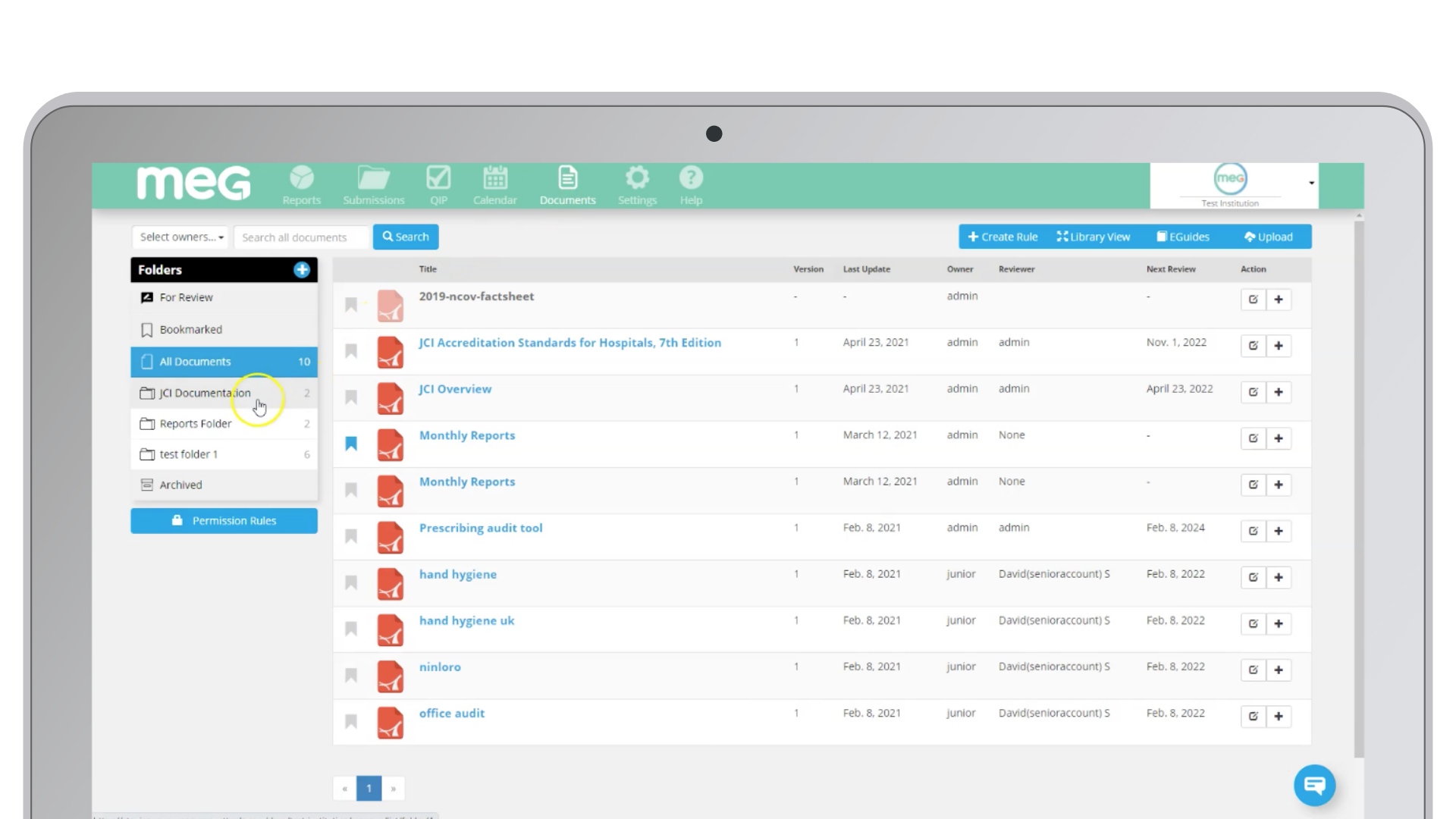
This blog post is the third in the series "Healthcare Document Management Systems: Everything You Need To Know" — a comprehensive guide where we discuss the importance of document management in healthcare, the benefits of a modern solution, must-have features, compare different solutions on the market, and more.
Check out the previous blogs here:
#1 Does Your Organisation Need a Digital Healthcare Document Management System?
#2 7 Essential Features of A Healthcare Document Management Software
This piece is a deep dive into MEG's Document Management System for healthcare — MEG Docs. We'll discuss some of the key features and functionalities of the software, what makes it different from other solutions on the market, and how it can simplify document management within your organisation.
The Art of Simplified Document Management
A healthcare document management system should be more than just a digital filing cabinet where documents languish forgotten. It should be a holistic solution capable of simplifying the complex landscape of policy management into a simple, organised, and easy-to-access system.
The right software will help healthcare professionals navigate the intricacies of healthcare documentation, ensuring that critical information is always at their fingertips. It's not just about reducing paperwork; it's about streamlining and simplifying processes, enhancing efficiency, improving patient care, and ensuring compliance with evolving regulations.
MEG's Document Management System for Healthcare
Specifically designed keeping the needs of healthcare organisations and providers in mind, MEG Docs is a comprehensive document management tool with the following key features:
1. Accessibility
"Access anytime, anywhere" is the guiding principle that MEG Docs stands by, and here's what we mean:
Staff can seamlessly access the platform from any device — whether that's a desktop, laptop, or smartphone — ensuring they always have instant access to critical policies and documents, even while on the move.
Staff can use MEG Docs both online and offline, eliminating concerns about losing access in areas with unreliable or poor connectivity. And it's not limited to textual documents; you can also retrieve tables, images, and 'how-to videos' when offline, making it a comprehensive resource at your fingertips.
2. Searchability
Research indicates that, on average, staff spend 18 minutes searching for a document. This leads to a substantial productivity loss of 21%.
MEG Docs efficiently eliminates this through its intuitive interface, powerful search capabilities, and simplified folder system. When storing documents, administrators have full freedom to create and name folders according to their preference, and can even nest folders within others. The Document Management dashboard provides a bird's eye view of the folders, making access a breeze.
But that's not all.
MEG's search function allows staff to quickly find specific documents using keywords, phrases, document type, name, date, author, or category. You can also bookmark location shortcuts of frequently used or important sections within documents.

This feature significantly reduces the time spent on manual folder navigation or sifting through extensive policy lists. And because users can find the information they need within minutes, they are more likely to use the system, ultimately boosting user adoption.
““MEG’s Document Management tool is amazing, along with their passion to make this product as client-friendly as possible. Totally appreciate how they receive feedback from clients to fine-tune things on MEG and always look at bettering the best!””
3. Version Control
According to research, as much as 83% of staff struggle with version issues daily. And given the complexity of healthcare documentation, managing policies and procedures often involves multiple revisions. Here's how MEG's version control feature empowers organisations to stay on top of all document modifications:
Gain access to a detailed log that records the nature of changes or updates made, when, by whom, and which version of the document was affected by the action.
Obtain historical insights into the evolution of a particular policy over time.
Stay in the know with real-time notifications delivered across all your devices whenever policies or documents are updated. This ensures you're always working with the most current and up-to-date version. You can also use the checkbox property to acknowledge and track which staff have read and understood new content.
View document modifications effortlessly with the side-by-side feature, enabling you to compare two documents to understand the changes made.
Archive outdated documents systematically, allowing for effortless retrieval when the need arises.

4. Policy Review and Approval
Recognising the collaborative nature of healthcare policy development and management, MEG Docs provides an array of collaborative tools to enable multiple individuals or teams to work together on policy creation, review, approval, and updates. These include the ability to:
Assign reviewers and approvers to policies and set up follow-up workflows for smooth collaboration.
Add comments, annotations, and notes to specific sections of the document, streamlining the feedback process.
Notify relevant team members when changes are made, new versions are uploaded, or approvals are required, ensuring timely awareness and response.

5. Security
Document management systems for healthcare must have robust security measures in place, given the highly sensitive nature of healthcare data. Here's how MEG Docs ensures that your organisational data is safe and secure:
Role-based access controls based on designations, teams, and departments to regulate who can view, modify, and interact with policy documents.
Strong authentication methods, such as multi-factor authentication (MFA), so only authorised personnel can access documents.
Regular backups and a robust disaster recovery plan to ensure uninterrupted access to critical documents.
Leveraging cloud storage to eliminate the need for on-premise hardware and mitigating the risks associated with hardware failures, in turn, ensuring data security.
Regular security updates to prevent vulnerabilities from being exploited.

6. Integration
Document management systems for healthcare must be able to connect and exchange data with other applications and systems that are used within an organisation to enable a seamless flow of information and eliminate data silos.
MEG Docs allows you to efficiently transition between policies, audit reports, incident forms, and training materials, placing relevant documents, videos, and web resources at your fingertips. You can easily link policy documents to audits, incidents, training logs, and patient surveys, ensuring that the right resources reach the right healthcare personnel and wards.
You can also integrate your document management and auditing systems to empower staff to quickly reference policies and guidelines for compliance assessments, action planning, and quality enhancement. This proactive approach improves patient safety and elevates the quality of care delivered.
Keen to see MEG Docs in action? Schedule a demo now!