
Each year, the NHS Staff Survey provides the most comprehensive insights into how care is delivered on the front line. With over 700,000 responses in 2025, the survey reflects the staff experience, the realities of patient safety and quality across the system.
This year’s results show continued progress in building a culture where staff feel encouraged to report incidents and raise concerns, but the data also highlights a more persistent challenge – ensuring that what is reported is consistently followed through and leads to meaningful action, in an environment where teams are already stretched.
To understand where the gap lies, let’s look at three key areas highlighted in the survey and how they impact patient safety and improvement.
1. Strong reporting culture, but weak follow-through
According to the NHS Staff Survey 2025:
33% of staff have seen incidents that could have harmed patients, yet only 67% say action is taken to prevent them from happening again, and just 61% receive feedback on changes made.
What this means
Patient safety risks are being identified, but not consistently translated into action or learning. Without clear follow-through and feedback, the same types of incidents are more likely to recur, and opportunities to strengthen safety systems are missed.
How MEG helps:
With MEG’s Incident Reporting & Risk Management Software:
Log incidents at the point of care via mobile or tablet, reducing delays and underreporting
Standardise reporting with configurable workflows and structured forms, ensuring consistent data capture
Each incident is automatically linked to action plans, risks, and investigations, ensuring it doesn’t sit in isolation
Assign, track, and escalate follow-up actions with clear ownership, deadlines, and real-time visibility
Automated escalations and alerts ensure overdue actions are flagged and followed up
Real-time dashboards give visibility into incident trends, action status, and resolution rates
Impact
Clear ownership, visible follow-through, and stronger trust that reporting leads to real change.
2. Patient feedback is collected, but not consistently actioned
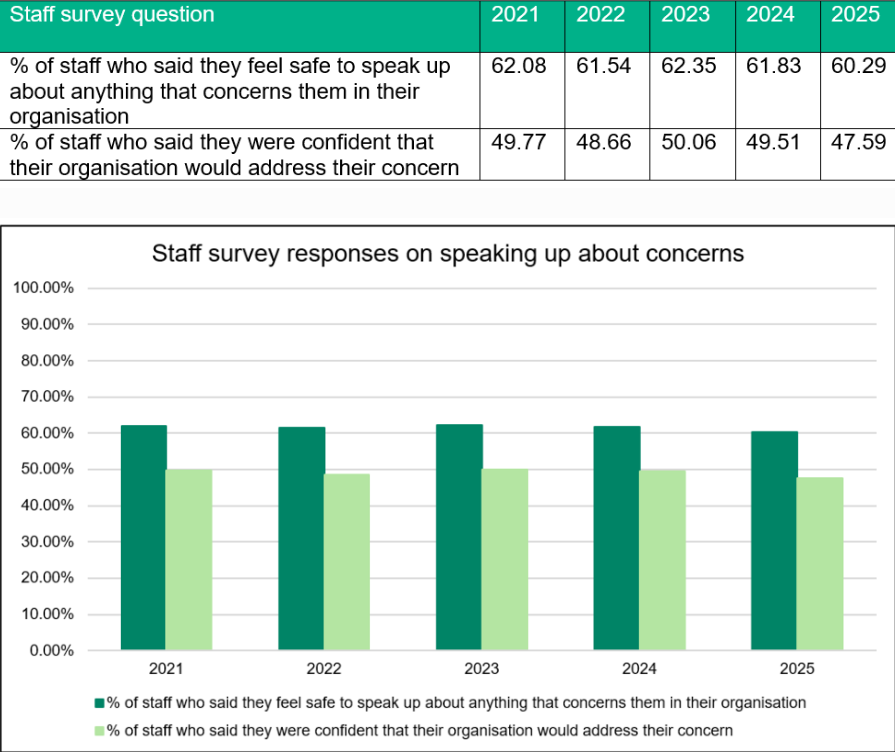
According to the NHS Staff Survey 2025
From 72% in 2021 to 69% in 2025 (-3%), there has been a steady decline in staff who believe organisations act on patient concerns
Source: Patient Safety Learning
What this means
Patient insight is being captured, but not always used to drive improvement. When feedback is not linked to action, organisations miss valuable signals about emerging risks, patient experience gaps, and areas requiring immediate attention.
How MEG helps
With MEG’s Friends and Family Test (FFT) tool, part of our Patient Experience software:
Capture patient feedback across multiple channels, including SMS, QR codes, kiosks, email and web, improving response rates
Use AI-powered analysis to automatically identify themes, sentiment, and emerging patient safety risks from free-text feedback, delivering actionable insight in real time
Automatically route feedback to the right teams with instant notifications, ensuring clear ownership, faster response, and timely resolution of concerns
Connect feedback directly to action plans, incidents, and risk registers within a single system, enabling trackable, measurable improvement
Impact
Patient voice becomes actionable insight, not just collected data, driving continuous service improvement.
3. Patient care is the priority, but resources are stretched
According to the NHS Staff Survey 2025
72% say patient care is the top priority, but only 56% feel they have adequate materials, supplies, and equipment to deliver that care
Only 33% say there are enough staff, and only 47% of staff said that they can meet demands on time at work
What this means
Teams are committed to delivering safe, high-quality care, but limited time and resources make it difficult to act on incidents, feedback, and improvement plans. As a result, actions are delayed, follow-through becomes inconsistent, and improvement efforts struggle to keep pace with day-to-day demands.
How MEG helps
With MEG’s End-to-End Quality Management Platform - your digital extension of the team:
Capture data at the point of care with a mobile-first platform across incidents, audits, risks, and feedback
Automate workflows to reduce manual admin and remove reliance on spreadsheets and emails
Connect incidents, risks, audits, and feedback in one system, feeding directly into action planning
Provide real-time visibility through centralised dashboards for both frontline teams and leadership
Enable structured action planning and tracking, ensuring tasks are assigned, monitored, and completed without added burden
Impact
Less admin, faster follow-through, and more capacity for teams to focus on delivering safe, high-quality care.
When these gaps persist, the impact is felt across staff experience and patient safety.
❌ Incidents are more likely to be repeated, as underlying risks are not fully addressed
❌ Learning is delayed, with insights not consistently translated into action
❌ Confidence in reporting systems begins to erode
High-performing healthcare teams take a different approach. They move beyond capturing data and focus on connecting it, bringing incidents, risks, audits, and feedback into one system that feeds directly into clear, trackable action plans with defined ownership and real-time visibility. This means issues are not just recorded, but resolved, trends are identified earlier, and teams can act before risks escalate.
👉 If you’re looking to strengthen follow-through and make every insight count, book a 15-minute discovery call to see how MEG can support your team.