
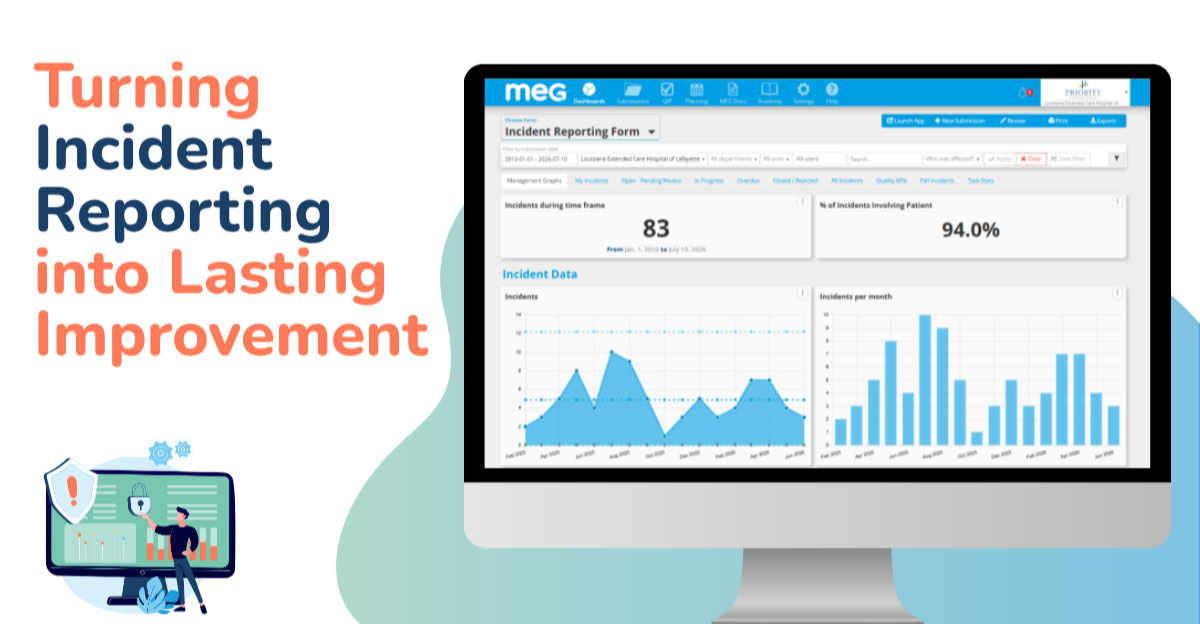
Patient safety doesn't improve because incidents are reported.
It improves because organisations learn from them, investigate their causes, implement corrective actions that tackle the systemic issues, and then monitor to ensure that the improvements stick.
Unfortunately, this is where many healthcare organisations struggle. Incident reports are often captured in one system, investigations managed elsewhere, actions tracked on spreadsheets and evidence stored across multiple locations. Valuable learning becomes fragmented, accountability is lost and the same risks continue to recur.
Modern healthcare incident reporting should do far more than record adverse events and near misses. It should provide healthcare organisations with a structured way to identify risk, support best practice in investigation of incidents, assign ownership of actions, demonstrate regulatory compliance and be able to track the impact on patient safety metrics.
Hospital Incident Reporting Is About More Than Capturing Events
Hospital incident reporting is the structured process of documenting patient safety events, near misses, adverse events, staff incidents and other situations that could affect the quality or safety of care.
However, effective incident reporting is not measured by the number of reports submitted. It is measured by what happens next. The purpose is not to assign blame but to build organisational learning.
Effective reporting allows healthcare providers to identify trends, investigate root causes, reduce future risk and improve patient outcomes. Organisations with mature reporting cultures treat incidents as opportunities to strengthen systems rather than identify individual fault. This aligns with international patient safety guidance, including WHO recommendations and the NHS Patient Safety Incident Response Framework (PSIRF), which emphasise learning and system improvement over blame.
What is an Incident in Healthcare?
An incident is any event or circumstance that:
resulted in harm to a patient
had the potential to cause harm (near miss)
affected staff safety
disrupted clinical operations
compromised regulatory compliance
created organisational risk
Examples include:
Medication errors
Patient falls
Pressure injuries
Equipment failures
Patient identification errors
Violence and aggression
Data breaches
Clinical documentation errors
Security incidents
Occupational injuries
Capturing both adverse events and near misses is essential because near misses often reveal weaknesses before patients are harmed.
Why Incident Reporting Matters in Hospitals
Healthcare is one of the most complex operational environments in the world. Every day, thousands of clinical decisions, handovers, procedures and communications occur across multiple departments. Even well-designed systems can experience failures. Without structured incident reporting, organisations lose visibility of emerging risks.
An effective incident reporting system enables hospitals to:
Detect patient safety risks earlier
Identify recurring themes and trends
Support root cause analysis
Meet accreditation and regulatory requirements
Improve organisational learning
Strengthen governance
Increase accountability
Demonstrate continuous quality improvement
Research and international patient safety guidance consistently highlight incident reporting as a critical component of organisational learning, while also recognising that reporting alone is insufficient unless organisations act on the findings.
Reporting Incidents in Healthcare Isn't Enough
One of the biggest misconceptions is that reporting an incident improves safety. It doesn't. Reporting simply creates information.
Real improvement happens when organisations:
Investigate what happened
Understand why it happened
Identify root causes
Assign corrective actions
Monitor progress
Verify effectiveness
Share organisational learning
This "closed-loop" approach is increasingly expected by regulators and accreditation bodies because it demonstrates that healthcare organisations are learning from incidents rather than simply documenting them. JCI and PSIRF, for example, place strong emphasis on learning, proportionate response and safety improvement following incidents.
Characteristics of an Effective Incident Reporting System in Hospitals
Not all incident reporting systems deliver meaningful improvement. The most effective systems combine usability with governance and analytics.
Key capabilities include:
Simple Reporting
Staff should be able to submit incidents quickly from desktop or mobile devices using intuitive forms.Complicated reporting processes discourage reporting.
Standardised Workflows
Consistent categorisation ensures data quality and makes trend analysis more reliable across departments and sites.
Immediate Notifications
Appropriate stakeholders should automatically receive alerts when serious incidents are reported.
Investigation Management
Investigations should be documented within the same system, including timelines, evidence and findings.
Root Cause Analysis
The system should support structured investigation methodologies rather than relying solely on narrative descriptions.
Action Management
Every recommendation should become a tracked action with:
ownership
deadlines
escalation
completion monitoring
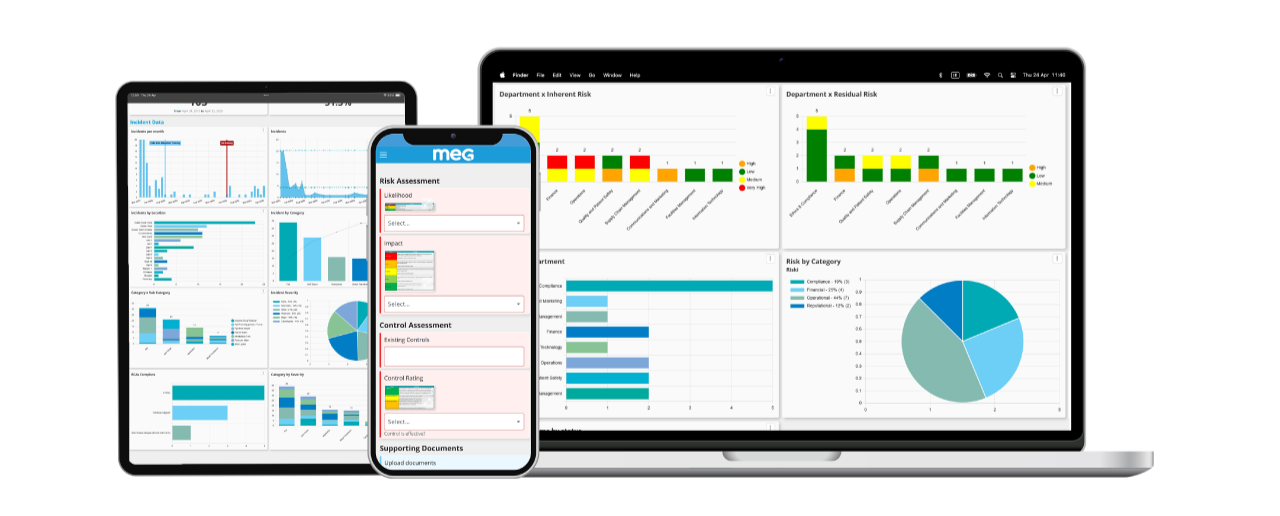
Analytics and Dashboards
Healthcare leaders need real-time visibility into:
incident volumes
severity
recurring themes
overdue actions
departmental performance
organisational risk
Regulatory Reporting
Evidence should be readily available for inspections, accreditation surveys and governance meetings.
Building a Strong Incident Reporting Culture
Technology alone cannot create safer healthcare. Organisational culture plays an equally important role.
Hospitals with high reporting rates are not necessarily less safe.
In many cases, they are safer because staff feel confident reporting issues without fear of blame.
High-performing organisations typically:
encourage near miss reporting
provide timely feedback to reporters
communicate lessons learned
recognise improvement opportunities
involve frontline staff in solutions
demonstrate visible leadership commitment
How MEG Helps Hospitals Close the Loop
At MEG, we believe incident reporting should be the starting point not the end point of continuous improvement.
Our healthcare quality management software connects incident reporting with every stage of the quality improvement process, helping hospitals move from identifying risks to demonstrating measurable outcomes.
With MEG, organisations can:
Capture incidents from anywhere across the organisation
Manage investigations and root cause analysis
Generate corrective action plans
Track progress within the software
Monitor overdue actions and accountability
Identify trends through real-time dashboards
Produce evidence for inspections and accreditation
Demonstrate continuous quality improvement
Unlike standalone incident reporting software, MEG integrates incident management with the wider healthcare governance ecosystem.
For example, an incident can trigger:
an Audit to verify compliance across departments
an Action Plan to assign, monitor and verify corrective actions
updates to Policies and Documents to reflect new procedures
a Patient Experience review where complaints or feedback relate to the same issue
accreditation evidence showing how risks were identified, addressed and monitored over time
Ready to modernise your hospital incident reporting process?
Discover how MEG's integrated Healthcare Incident Reporting & Risk Management solution helps hospitals capture incidents, investigate causes, track actions and demonstrate continuous quality improvement.